Clarissine Church in Bratislava: a Gothic gem with a rare tower
The Clarissine Church (Kostol klarisiek, officially the Church of the Exaltation of the Holy Cross) stands in the Old Town of Bratislava, the Slovak capital, as part of a former Poor Clares convent founded in 1297. It is one of the oldest and most important Gothic buildings in the city, famous for its tower, and today it serves as an exhibition and concert hall.
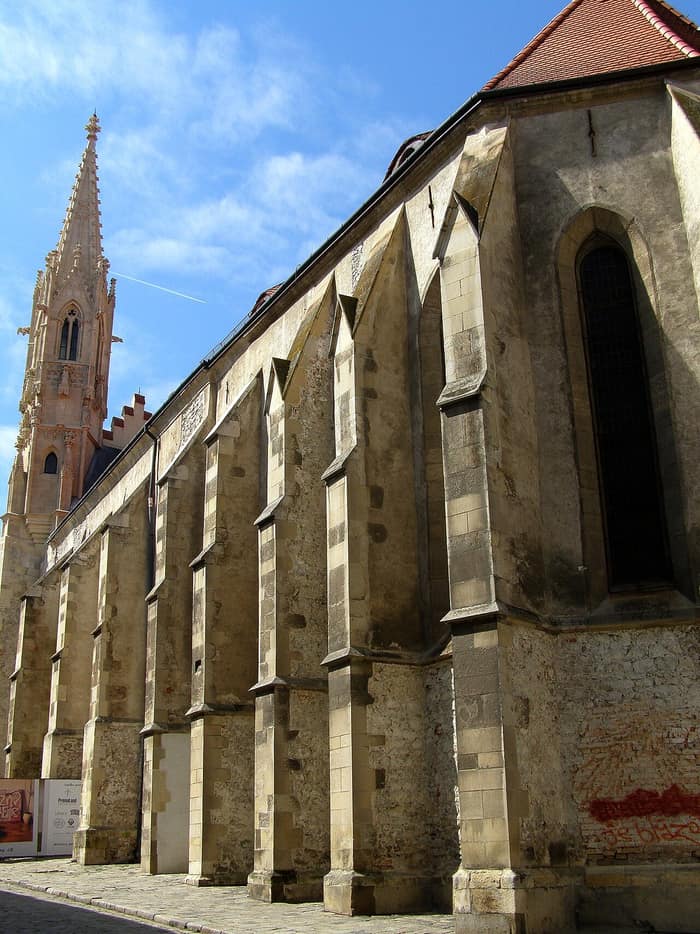
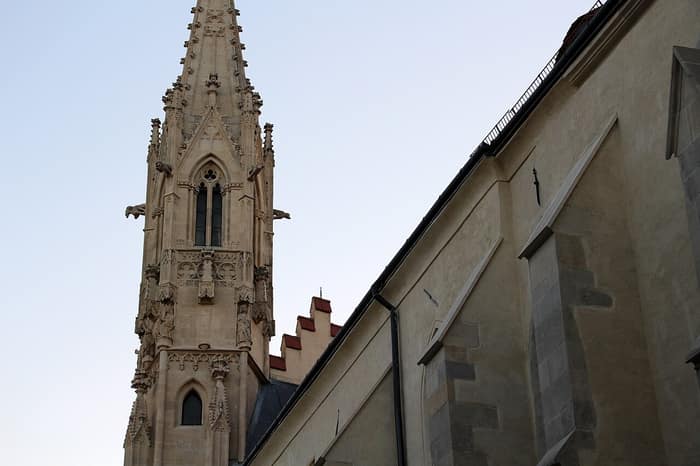
The slender pentagonal tower of this Bratislava church does not rise from the ground: it sits on piers at the corner of the nave, a clever Gothic way round a ban on towers.
The history of the Clarissine Church
Archaeological research in 2007 showed that a Celtic oppidum with a fortified acropolis stood on this spot in the 1st century BC. The medieval story begins in 1297, when the Poor Clares, a contemplative order inspired by St Francis of Assisi, settled in Bratislava. King Andrew III gave them an abandoned Cistercian convent by the western town walls, damaged by Bohemian troops in 1271 and 1273. The nuns repaired it and began a church dedicated to the Exaltation of the Holy Cross.
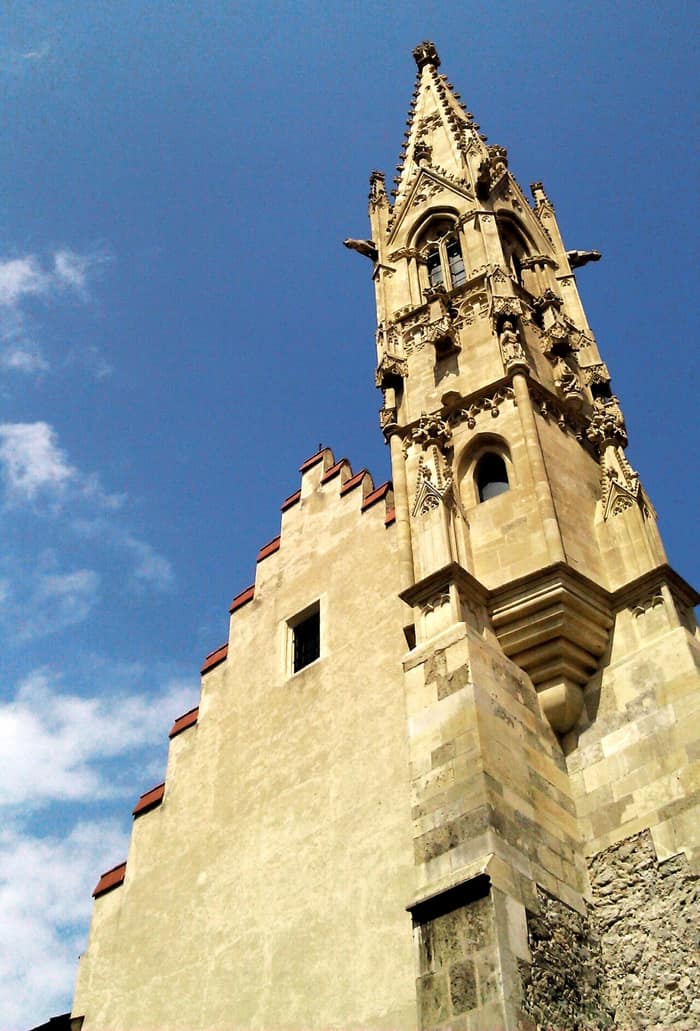
The outer walls date from the early 14th century. After the middle of the century the nave gained another vaulted bay, a triumphal arch and the presbytery, and the work ended around 1370 with a cross vault. The tower, the architectural jewel of the church, took until the 15th century. It is a pentagonal prism, a rare form in Gothic architecture, and it does not start at ground level but sits on reinforced piers at the south-western corner of the nave, a way of sidestepping the rule that churches of mendicant orders had no tower.
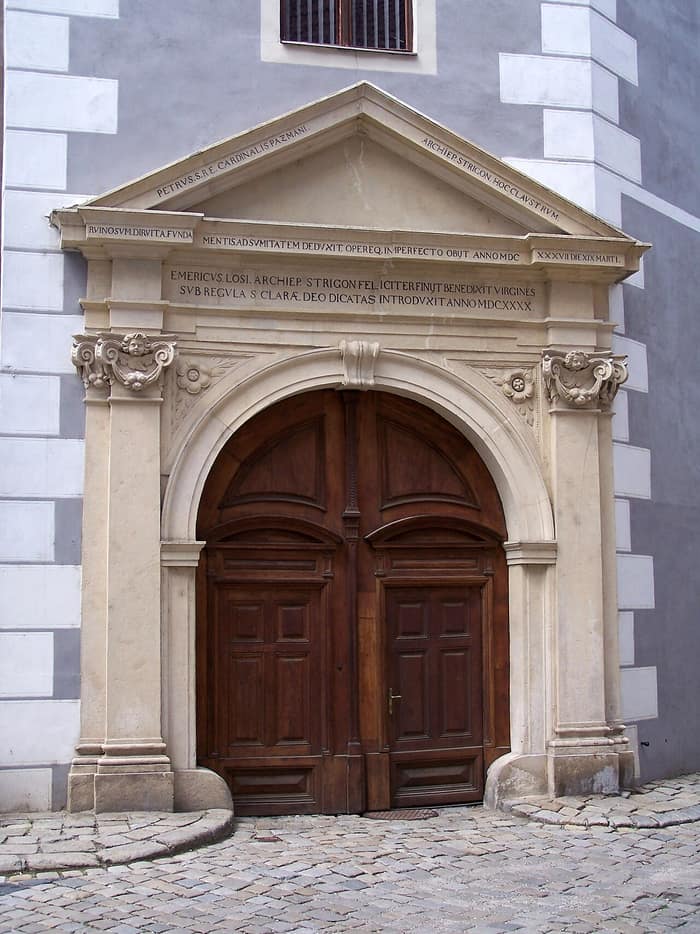
Fires in 1515 and 1590 damaged the convent, and after the defeat at Mohács in 1526 the nuns withdrew to Trnava while the building served as a hospital and later a poorhouse. A new chapter opened in the 17th century with the Counter-Reformation drive of Archbishop Péter Pázmány, who in 1637 commissioned a renovation to plans by the architect Jakub Rava. After his death Imrich Lósy finished it in 1640, giving the two-storey late Renaissance convent building and its richly decorated corner portal. An earthquake in 1700 weakened the tower; Abbess Eva Barbora Balassa had it rebuilt in 1702 and capped with a Baroque onion dome, and in the 18th century the interior was refashioned in the Rococo spirit.
In 1782 Emperor Joseph II dissolved the order. The law academy moved here from Trnava in 1784 and stayed until 1851, and from 1786 a Catholic grammar school occupied the buildings; the composer Béla Bartók and the priest and inventor Jozef Murgaš studied here. In 1898–1899 the architect Frigyes Schulek rebuilt the tower in a Gothic form, but its weight overloaded the nave corner and a new travertine buttress was needed after 1900. The city took over the complex in 1914, the former convent has served the University Library since 1919, and since 1964 the church has belonged to the Gallery of the City of Bratislava, which uses it for exhibitions and concerts.
Curiosities about the Clarissine Church
- The tower seems to float: it is not founded on the ground but rests on reinforced piers at the corner of the nave, which let the builders skirt the ban on towers for mendicant orders.
- For about two centuries, from the reconstruction of 1702 to the restoration of 1898–1899, the tower wore a Baroque onion dome instead of today's Gothic pyramid roof.
- Bohemian Queen Sophia of Bavaria, widow of King Wenceslas IV, took refuge in the convent in 1419 under the protection of King Sigismund and lived here until her death in September 1425. She is buried in the nearby Cathedral of St Martin.
- The middle storey of the tower has stone consoles that once each carried a sculpture. Four survive: the Madonna and Child, a kneeling king, a black king and St Elizabeth. Those outside are copies, while the originals were moved indoors.
- When the Rococo pulpit by the Bratislava sculptor Jozef Sartory was restored, a parchment dated 1761 was found inside it.
- Two famous pupils of the school that occupied the convent were the composer Béla Bartók and the priest and inventor Jozef Murgaš. A memorial plaque to Bartók hangs on the former convent.
Tours near Clarissine Church
Experiences in the area that you can book online with Viator:


Visiting the Clarissine Church
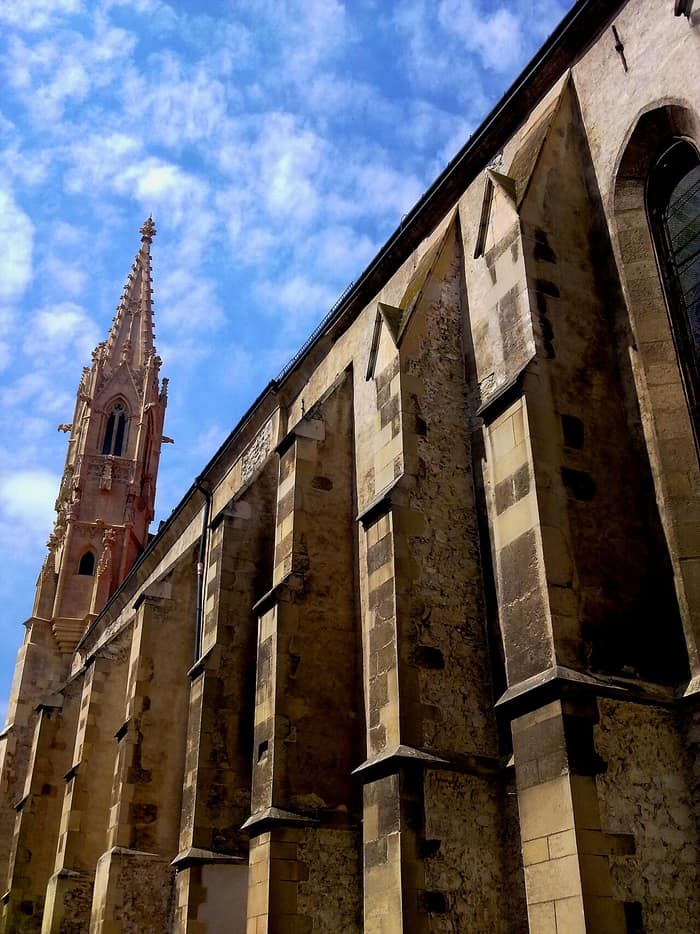
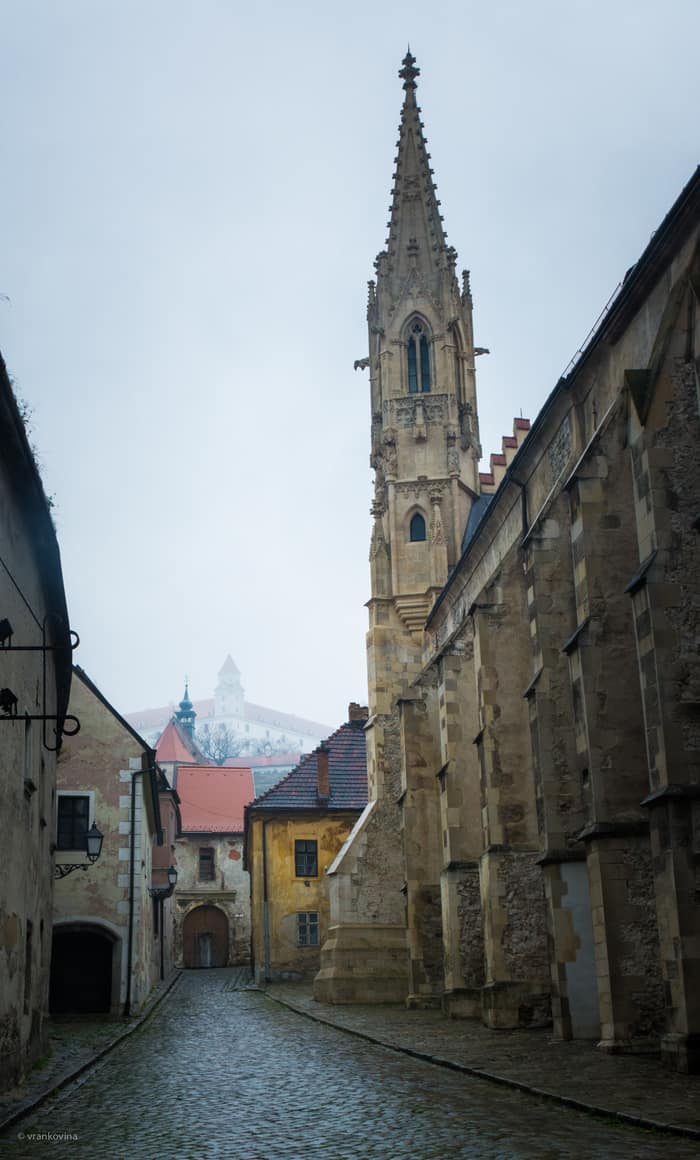
- Start outside: the pentagonal tower with its three storeys, stone water spouts and cross-topped pyramid roof, and the heavy buttresses that support the whole church.
- Inside, the single-nave church has rib vaults, three altars in the sanctuary with altarpieces by František Anton Palko, a Rococo pulpit, stained-glass windows, painted ornament in the sanctuary and several marble epitaphs.
- The former convent next door has a richly decorated Renaissance corner portal with Latin inscriptions naming the builders. The building around the cloister court now houses the University Library, so check what is open to visitors.
- The church is used for exhibitions and concerts, so what you can see depends on the programme. Check the current opening hours and events before you go.
- Other places on this site in the same part of Bratislava include Esterházy Palace, the Great Moravian Basilica in Bratislava Castle, Johann Pálffy Palace and Laurinc Gate.
Opening hours, access and conditions can change. Check before you go.
Map: where Clarissine Church is
Photos of Clarissine Church
Questions
Where is the Clarissine Church in Bratislava and what is it?
The Clarissine Church (Kostol klarisiek) is a Gothic church in the Old Town of Bratislava. It belonged to a Poor Clares convent and is now used for exhibitions and concerts.
How old is the Clarissine Church?
The Poor Clares settled here in 1297 and the church walls date from the early 14th century. The tower was finished later, by the 15th century, and was given its present Gothic look in 1898–1899.
Why is the tower of the Clarissine Church unusual?
It is a pentagonal prism, which is rare in Gothic architecture, and it stands on piers at the corner of the nave rather than rising from its own foundations. This was a way of getting round the rule that churches of mendicant orders should have no tower.
Can you go inside the Clarissine Church?
The interior is used for exhibitions and concerts, so access depends on what is on. Check the current programme and opening hours before you visit.
Who studied at the Clarissine convent?
After the nuns left, the buildings housed a law academy and a Catholic grammar school. The composer Béla Bartók and the priest and inventor Jozef Murgaš were among the pupils.
What happened to the convent in 1782?
Emperor Joseph II dissolved the Poor Clares in 1782, like other contemplative orders in his lands, and the nuns had to leave. The buildings passed to the state and were later used by schools.
Also nearby
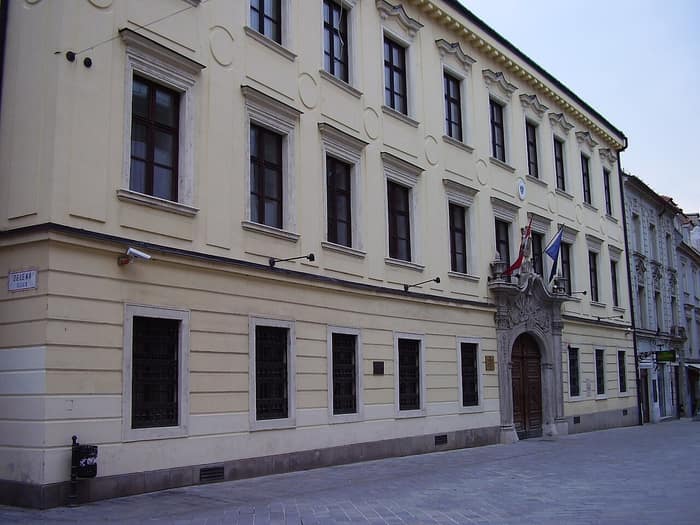
Pálffy Palace (Ventúrska)
Bratislava Old Town · Baroque palace, mint and Mozart legend
150 m away
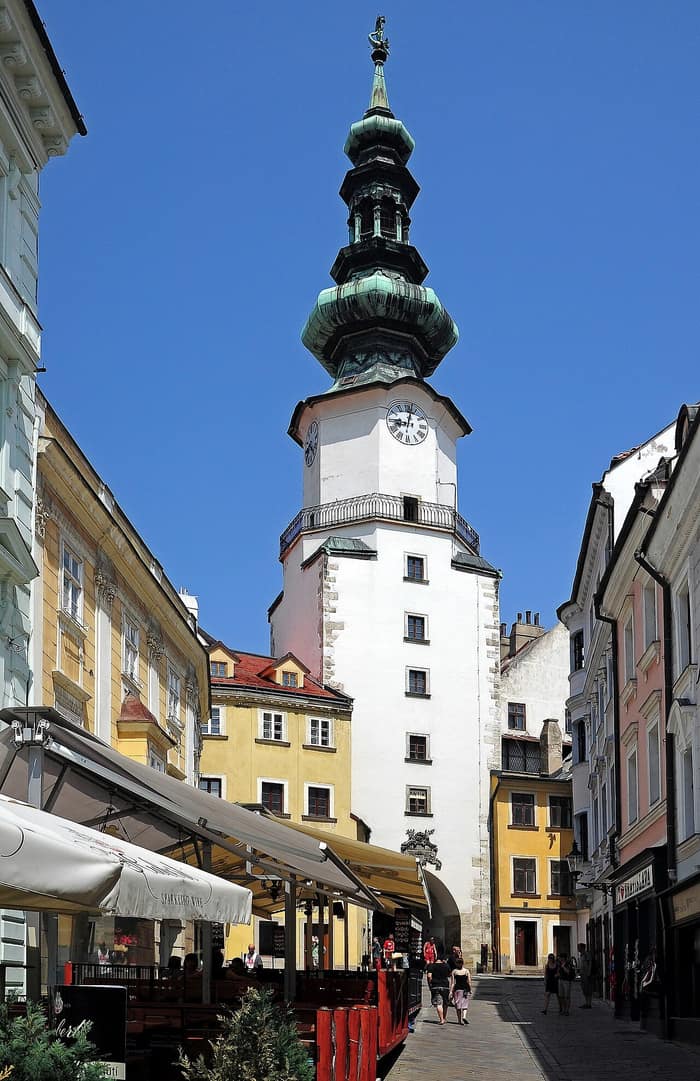
Michael's Gate
Bratislava · the only surviving gate of the old city walls
150 m away
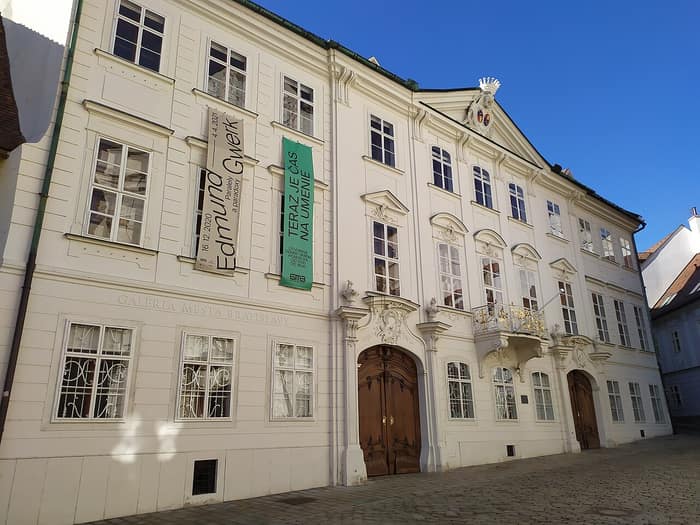
Mirbach Palace
Bratislava · Rococo palace built by a brewer, now a gallery
200 m away
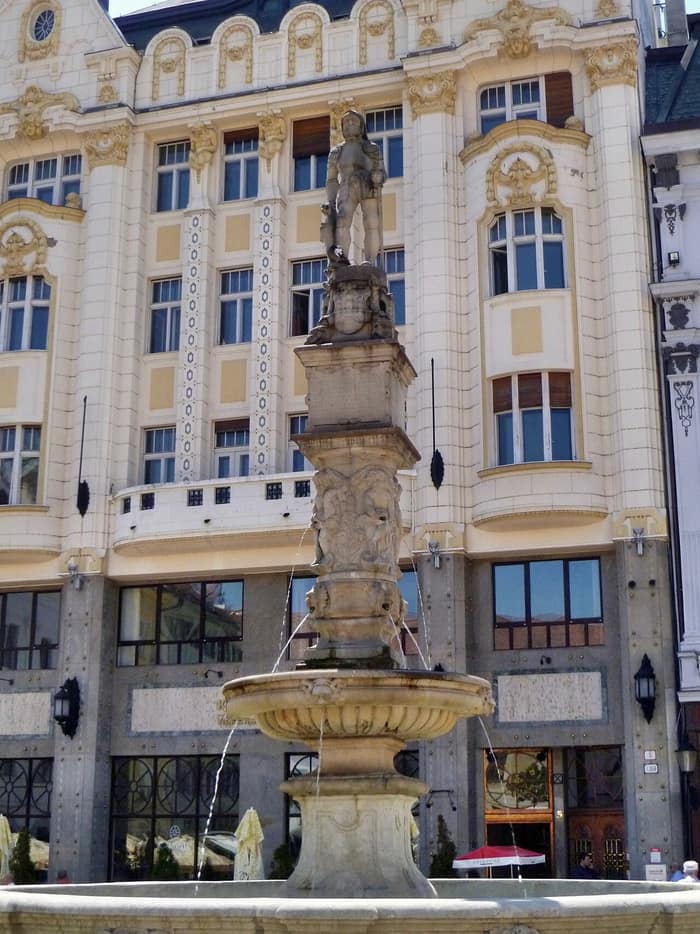
Roland Fountain
Bratislava · the 1572 fountain where a king plays the knight
200 m away