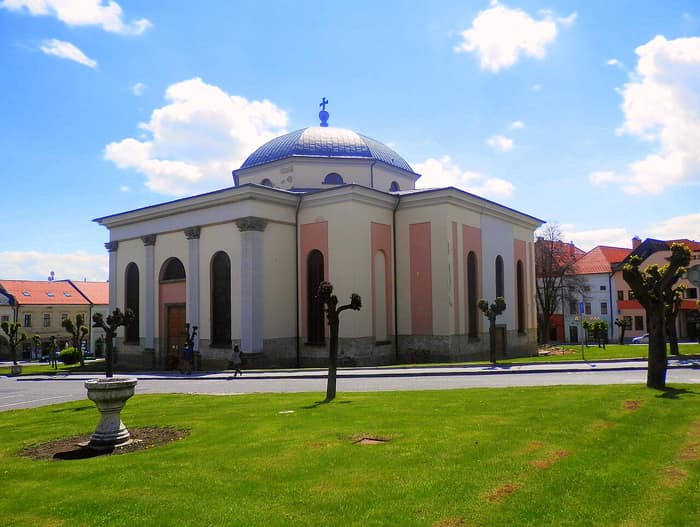
Evangelical Church in Levoča: a Neoclassical church on the square
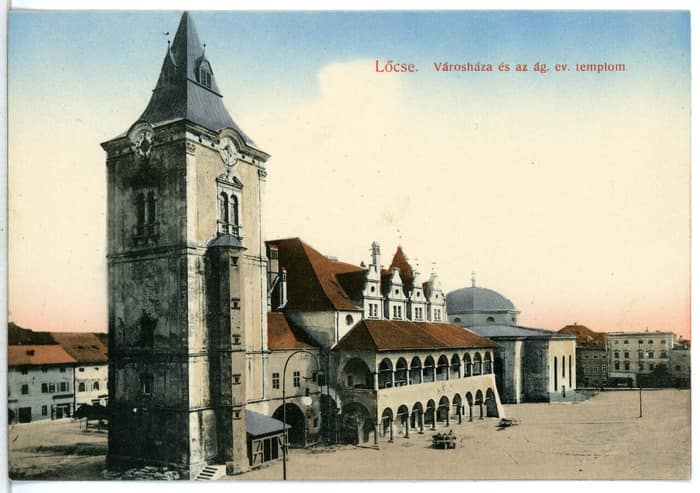
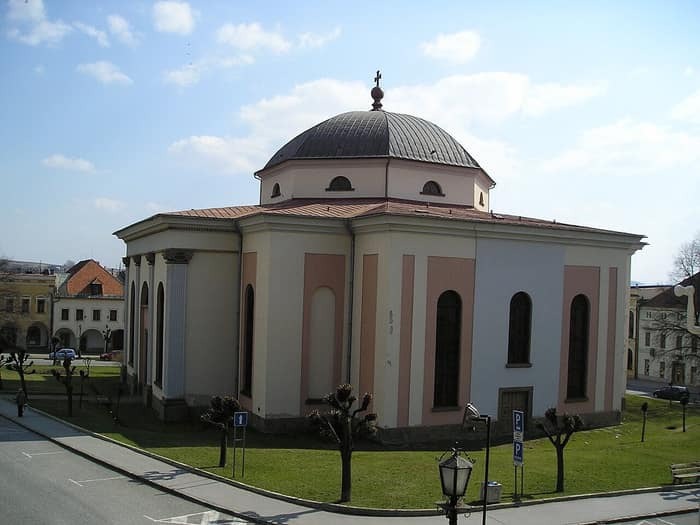
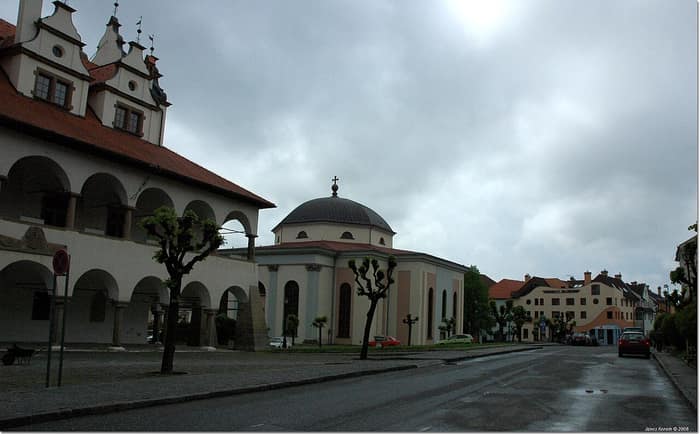
The Evangelical Church of the Augsburg Confession in Levoča (Evanjelický a. v. kostol) is a Neoclassical Lutheran church at the southern end of the main square, Námestie Majstra Pavla, close to the town hall. Built in the first half of the 19th century on the plan of a Greek cross under a large dome, it tells the story of Protestants in a Spiš town, from wooden churches outside the walls to a landmark in the heart of the old town.
Lutherans in Levoča once had to build their church outside the town walls, in wood; their grand domed church on the main square came only after the Edict of Tolerance.
The history of the Evangelical Church in Levoča
The Reformation took hold in the royal free towns of Spiš soon after it began in the early 16th century, and by the end of the century Levoča (German Leutschau) was a Protestant town. During the Counter-Reformation the Protestants lost all their churches. Under the decisions of the Sopron diet of 1681, the Lutheran community was allowed to build a church outside the town walls, a so-called articular church, named after Articles 25 and 26 of that diet.
The first wooden articular church was built in 1687–88 on the site of today's Evangelical cemetery, south-east of the Menhard Gate. It burned down in 1709, during the siege of the town, and in 1712–13 it was replaced by a new wooden church on the same spot. Only the Edict of Tolerance of Emperor Joseph II, issued in 1781, finally made it possible to build a church inside the town. In 1823 the congregation bought a plot on the main square, on the site of the former butchers' stalls.
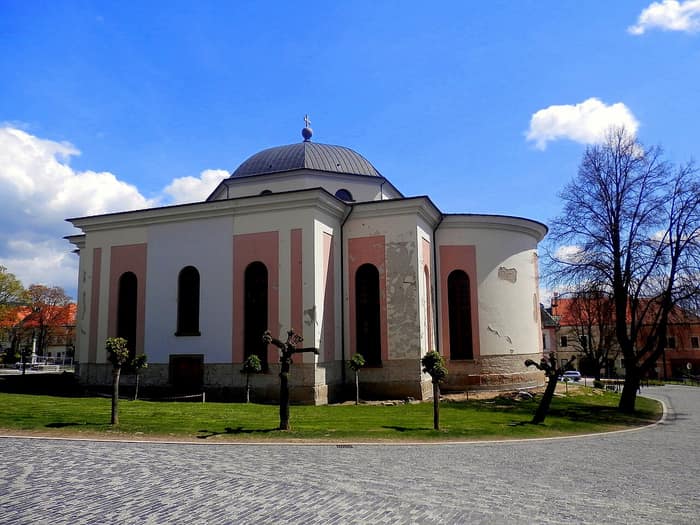
The architect was Anton Povolný, who also designed the town's County Hall (Župný dom), built between 1802 and 1822, in the same Neoclassical style. Despite several difficulties, building began in 1825. Money was raised in part from the sale of Bibles printed in the town. The church was designed as a Greek cross crowned with a large dome on an octagonal drum, with tall round-headed windows between pilasters. It was consecrated in 1837, and the old articular church was demolished the following year.
Several items were moved from the old wooden church to the new building: thirteen paintings, a late 17th-century pulpit, a baptismal font of 1714, an iron cross and a Baroque cross, and a Baroque organ of 1697, a gift of the merchant Johann Ujházi. In 1932 the congregation acquired a larger organ from the firm Rieger. The church also keeps the archive and library of the former Evangelical grammar school. Around the church, other buildings tell the story of the community, from the former seminary and the parsonage to the hospital, orphanage and cemetery outside the walls.
Curiosities about the Evangelical Church in Levoča
- The first Lutheran church of Levoča had to stand outside the town walls: this was the rule for the 'articular churches' allowed after the Sopron diet of 1681.
- Part of the money for the new church came from selling Bibles printed in Levoča itself.
- The large altar painting shows Christ walking on the water; it hangs in the Neoclassical altar of the church.
- The Baroque organ of 1697, with 13 stops, was given by the merchant Johann Ujházi and moved from the old wooden church; it now stands on a side gallery and is no longer played, although almost all its pipes survive.
- The seminary building on the main square, once Hain's House, was given to the Lutheran community in 1796 and became a stronghold of Slovak nationalism in the 1840s among followers of Ľudovít Štúr; it now houses exhibition halls of the Spiš Museum.
- The parsonage on Vysoká Street holds pews and other items from the Evangelical church of Dvorce, a nearby village that disappeared in the 1950s when the Javorina military training area was created.
Tours near Evangelical Church of the Augsburg Confession, Levoča
Experiences in the area that you can book online with Viator:


Visiting the Evangelical Church in Levoča
- The church stands on the main square, so it fits easily into a walk through the old town together with the town hall and the nearby church of St James.
- Inside, look for the Neoclassical altar, the pulpit and baptismal font moved from the old church, the three galleries, and the two organs, the Baroque one on the side gallery and the larger instrument of 1932.
- The seminary on the same square, now an exhibition site of the Spiš Museum, and the parsonage are linked to the church's story. The Evangelical cemetery outside the eastern walls keeps a gateway of 1722 and a single-nave church of 1895.
- The church is a place of worship of a living congregation, so respect services and any restrictions on access. Check the current opening hours before you go.
Opening hours, access and conditions can change. Check before you go.
Map: where Evangelical Church of the Augsburg Confession, Levoča is
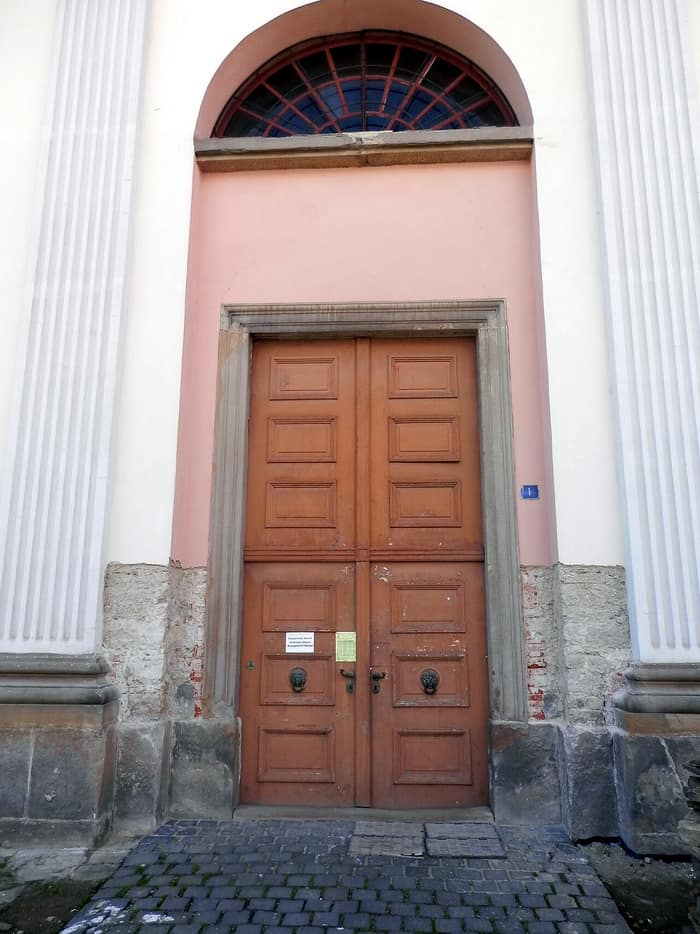
Photos of Evangelical Church of the Augsburg Confession, Levoča
Questions
Where is the Evangelical Church in Levoča?
It stands at the southern end of the main square of Levoča, Námestie Majstra Pavla, close to the town hall. Levoča lies in the Spiš region of eastern Slovakia.
When was the Evangelical Church in Levoča built?
Building began in 1825 to plans by Anton Povolný, and the church was consecrated in 1837. It replaced two earlier wooden churches that stood outside the town walls.
What style is the Evangelical Church in Levoča?
It is Neoclassical, laid out as a Greek cross with a large dome. Its tall round-headed windows are separated by pilasters.
What is an articular church?
An articular church was a wooden Lutheran church that Protestants in the Kingdom of Hungary were allowed to build, usually outside town walls, after the Sopron diet of 1681. Levoča's first Lutheran church of this kind dates from 1687–88.
What can you see inside the church?
The interior has a Neoclassical altar with a painting of Christ walking on the water, a late 17th-century pulpit, a baptismal font of 1714, three galleries and two organs. The church also keeps the library and archive of the old Evangelical grammar school.
Are there other Lutheran sites in Levoča?
Yes, the former seminary on the main square, the parsonage on Vysoká Street and the Evangelical cemetery outside the eastern walls are all connected with the church and the town's Lutheran community.
Also nearby
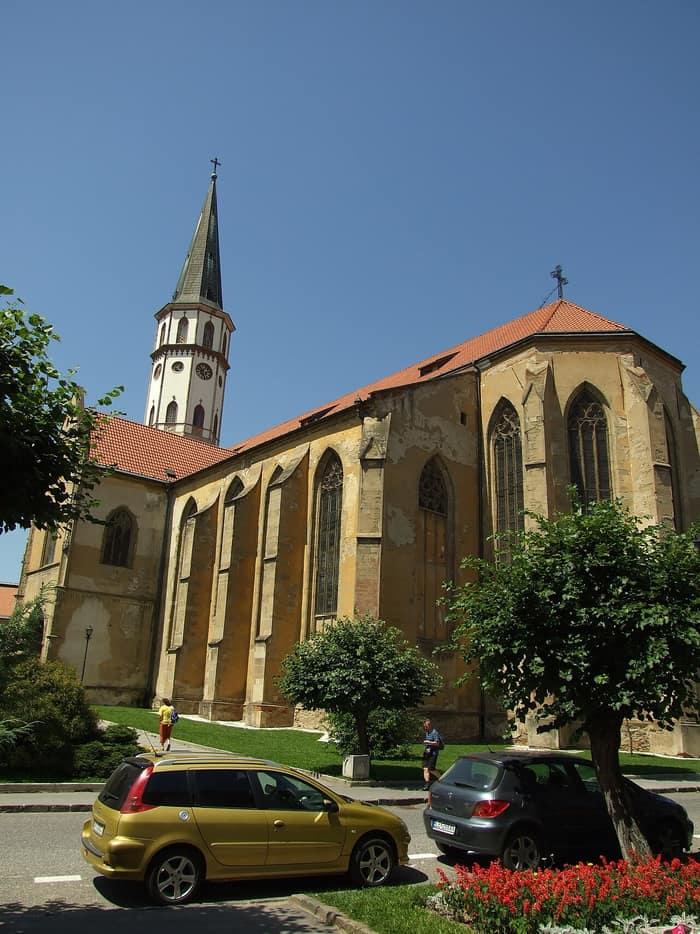
Basilica of St James, Levoča
Levoča · Gothic basilica with the world's tallest wooden altar
150 m away
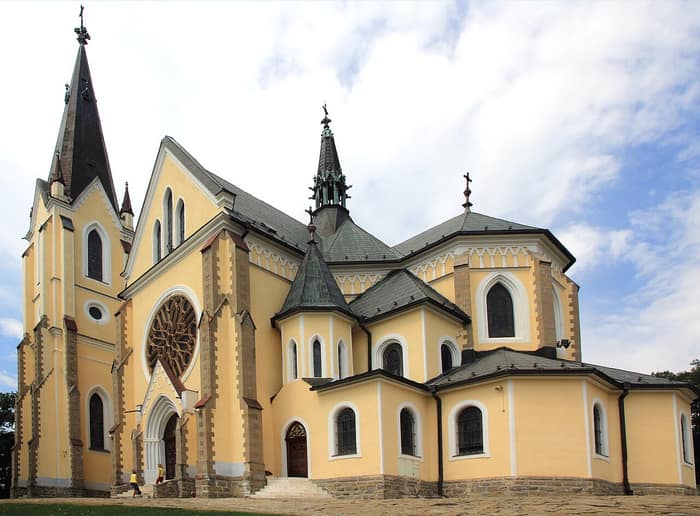
Mariánska hora
Levoča · pilgrimage hill where 650,000 gathered in 1995
2 km away
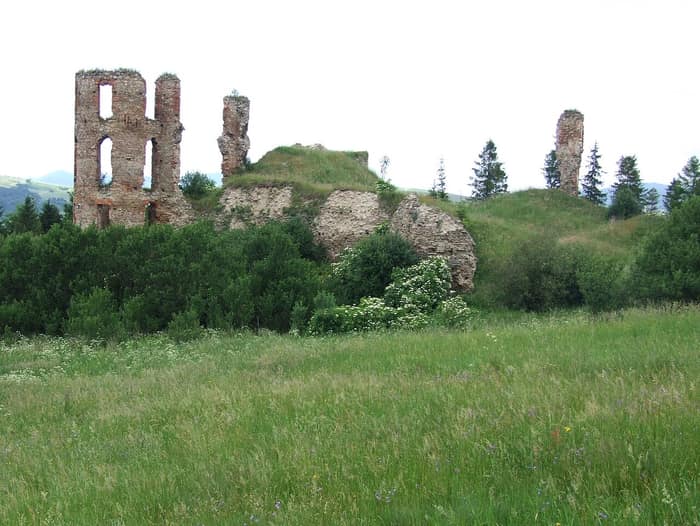
Plaveč Castle
Plaveč · ruined castle that escaped demolition in 1715
32 km away
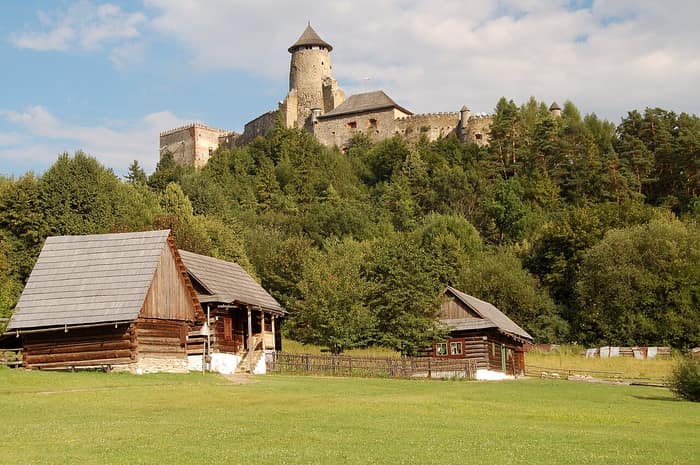
Ľubovňa Castle
Stará Ľubovňa · border castle that hid the Polish crown jewels
33 km away