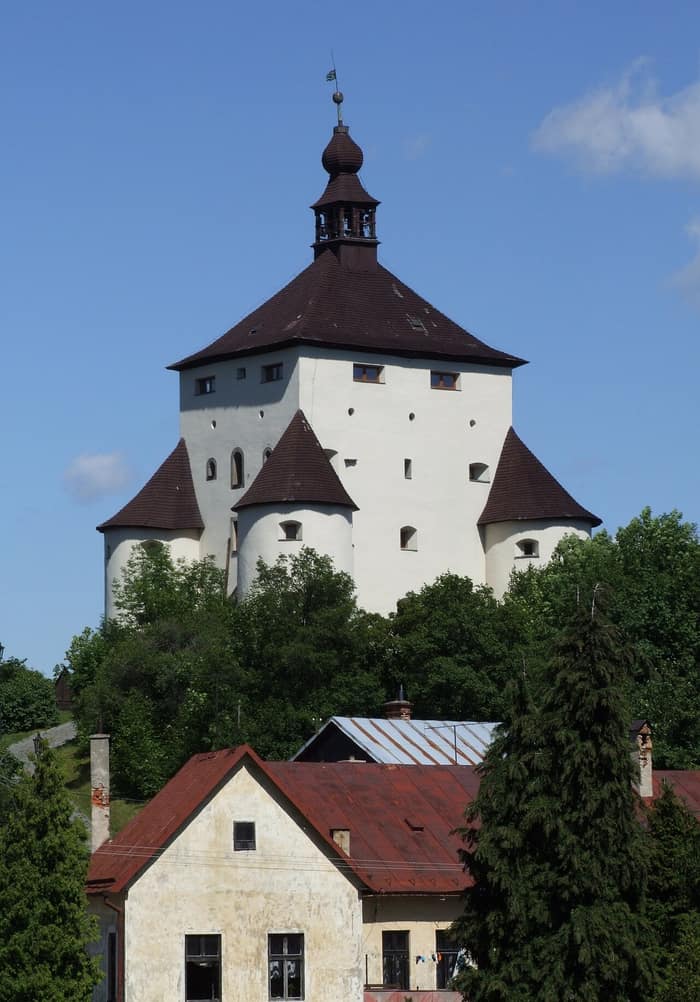
Nový zámok: the Renaissance watchtower above Banská Štiavnica
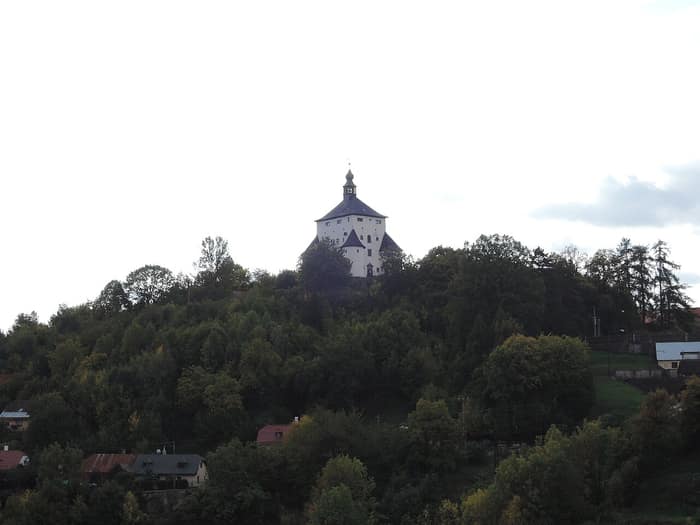
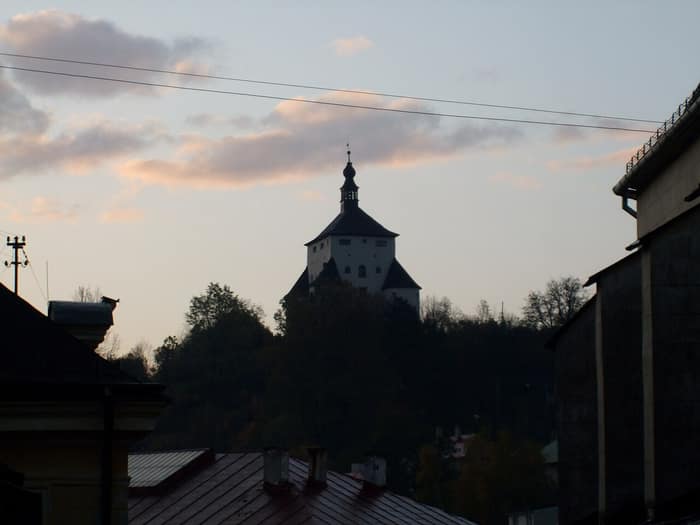
Nový zámok (New Castle) stands on a hill south of the centre of Banská Štiavnica, central Slovakia, at about 630 metres above sea level, the highest point of the town centre. Built in 1564–1571 as a Renaissance tower with four bastions against the Ottoman threat, it is now a museum branch with a panoramic terrace on its top floor.
The New Castle of Banská Štiavnica was never a noble home: it was a watchtower that blew a trumpet every quarter of an hour, and its name may come from a girl who gave her dowry to build it.
The history of Nový zámok
After the Hungarian army was defeated by the Ottomans at the battle of Mohács in 1526, the northern parts of the kingdom had to reinforce their defences. The mining region around Banská Štiavnica, then a great source of precious metals, began its own preparations soon afterwards, and in 1541 the town council decided on the fortification of the town. Besides turning the Gothic church that is known today as the Old Castle into a fortress, the townspeople chose to build a second stronghold on Frauenberg hill, above the road towards the settlement of Štiavnické Bane. To tell the two apart, it was called the New Castle.
The building went up between 1564 and 1571, as the threat from the Ottoman Empire grew more real. Its shape and position followed from its purpose: it was meant to be part of an optical signalling system that passed word of approaching danger from Pukanec as far as Ľubietová. By day the signals were red or black flags, by night fires. The structure is essentially a massive tower with four round corner bastions, pierced by many loopholes for firearms, and it guarded the road into the town from the south and east. It was connected to the town walls in two places, running towards the Piarg Gate and towards the Kammerhof; these walls no longer exist. On the terrace around the castle stood 24 cannons, which were taken away in the revolutionary year 1848.
When the Ottoman danger faded after the battle of Vienna in 1683, the castle served until the end of the 18th century as a gunpowder store for the mines of Banská Štiavnica. After that it became a fire-watch and signal tower, which it remained until the beginning of the Second World War. Its position made it the town's living clock: the time was announced on a trumpet every quarter of an hour, a bell was struck on the hour, and at six in the morning a drum sounded the wake-up call. The castle was thoroughly renovated in the 1960s.
Today Nový zámok belongs to the Slovak Mining Museum and houses an exhibition devoted to the anti-Turkish wars. The highest floor of the main block works as a viewing terrace over the whole town, a fitting end for a building that was designed to see danger coming from far away.
Curiosities about Nový zámok
- The castle is also called the Maiden Castle (Dievčenský hrad or Panenský hrad) after the hill it stands on, Dievčenský vrch, known in German as Frauenberg.
- A second story says the name honours Barbora Rössl, the daughter of one of the richest burghers, who gave the money meant for her dowry to the building when the Turkish danger grew. This is a local tale, which appears in the novel Zlaté mesto by the local writer Jozef Horák.
- The castle was part of a chain of signals: by day the news of approaching enemies travelled by red or black flags, by night by fires, from Pukanec as far as Ľubietová.
- Its roof is topped by an openwork turret with an onion-shaped dome, and all roofs are covered with shingles.
- Once the Turks were no longer a threat, the castle spent over a century as a gunpowder store for the town's mines.
- One of its exhibits belongs to the volunteer fire brigade of Banská Štiavnica, founded in 1873 as one of the first on the territory of today's Slovakia.
Tours near Nový zámok
Experiences in the area that you can book online with Viator:




Visiting Nový zámok
- The permanent exhibition on the anti-Turkish wars fills several floors and shows weapons and armour of Hungarian and Turkish troops, fortress equipment, a collection of painted shooting targets and portraits of the Kohary family, who fought against the Turks.
- A separate exhibition presents items of the local volunteer fire brigade.
- The highest floor is a viewing terrace with a panoramic view of Banská Štiavnica and its surroundings.
- The castle sits on a small hill south of the old town and a narrow street leads up to it, so expect a short uphill walk. Check the current opening hours before you go.
- The Church of St Catherine in Banská Štiavnica is another place of this guide in the same town.
Opening hours, access and conditions can change. Check before you go.
Map: where Nový zámok is
Photos of Nový zámok
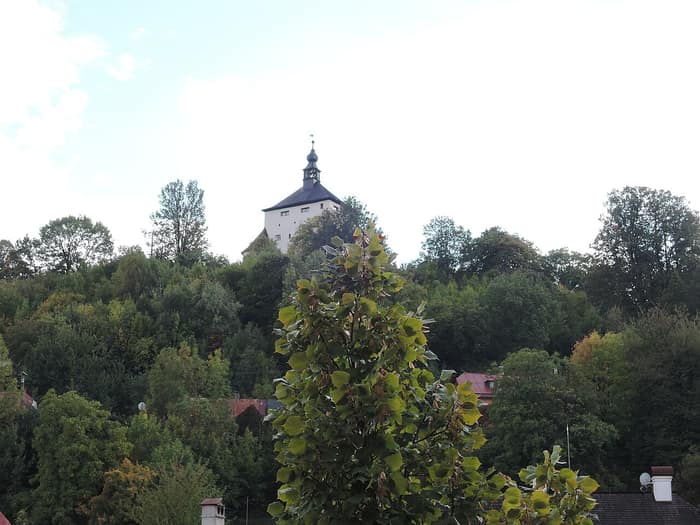
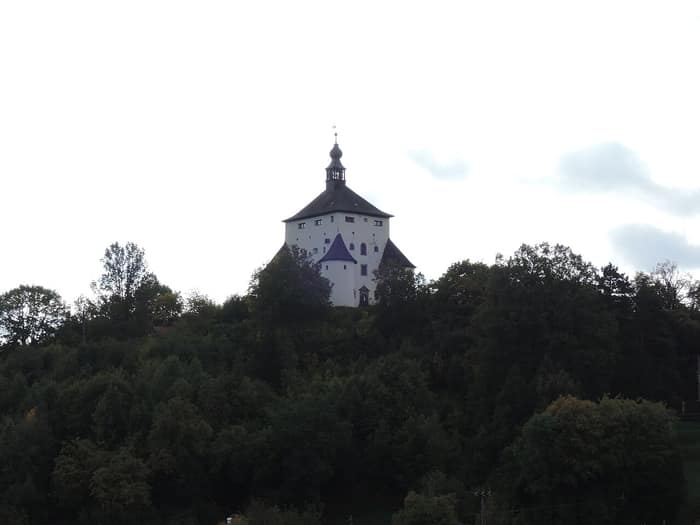
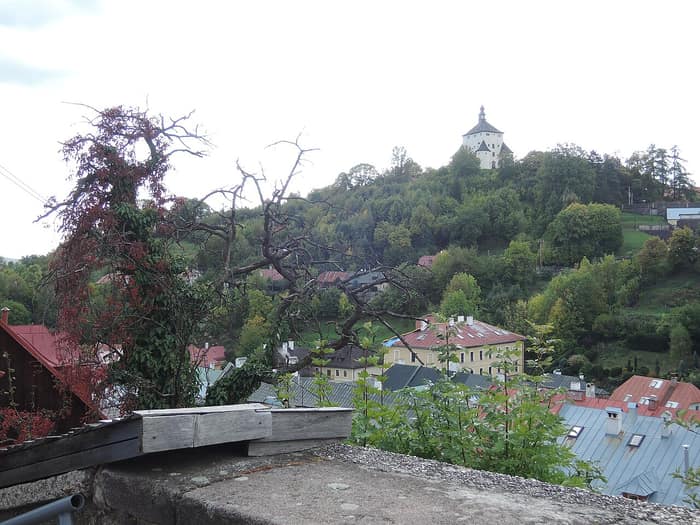
Questions
Where is Nový zámok in Banská Štiavnica?
Nový zámok stands on a hill south of the town centre of Banská Štiavnica, at about 630 metres above sea level. A narrow street, Novozámocká, leads to the castle.
Why was Nový zámok built?
It was built in 1564–1571 as an anti-Turkish watchtower, after the Ottoman victory at Mohács in 1526 made the mining region's defence urgent. It was also part of a signalling system warning of approaching enemies.
What can you see inside Nový zámok?
The castle houses an exhibition on the anti-Turkish wars with weapons, equipment of fortresses and portraits of the Kohary family, plus an exhibit about the local fire brigade. The top floor is a viewing terrace.
Why is it called the Maiden Castle?
The name comes from the hill, Dievčenský vrch (Frauenberg in German). One local tale links it to Barbora Rössl, who gave her dowry money for the building.
Did the castle really keep the time for the town?
Yes. Because of its dominant position it served as the town's live clock, announcing the time on a trumpet every quarter of an hour and ringing a bell every hour.
Who runs Nový zámok today?
The castle belongs to the Slovak Mining Museum (Slovenské banské múzeum), which shows an exhibition on its original purpose.
Also nearby
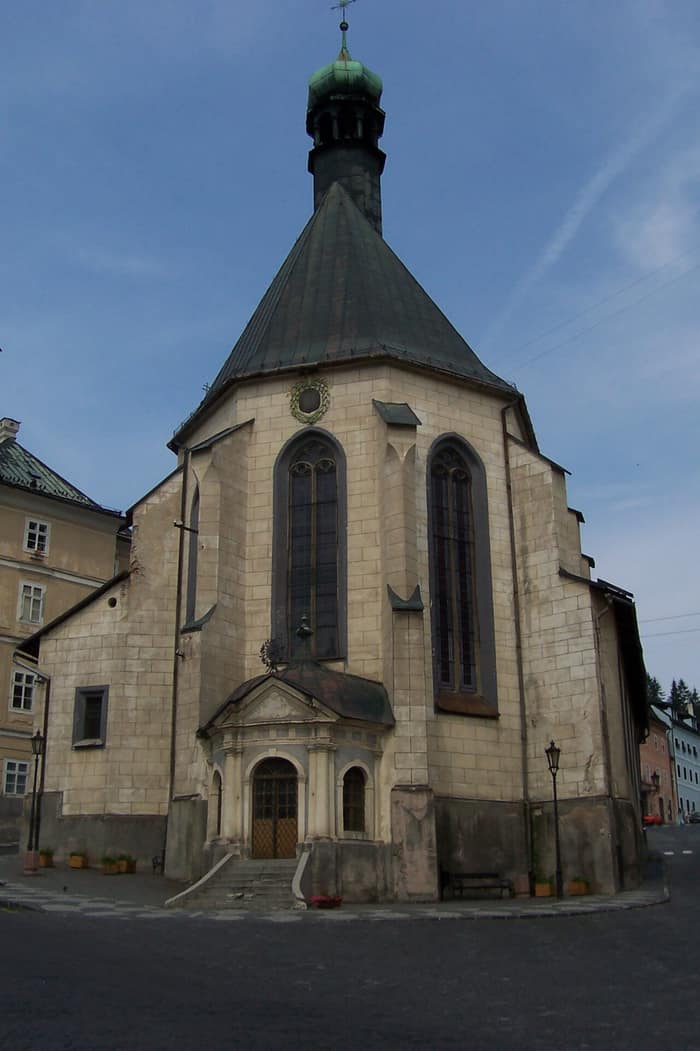
Church of St Catherine, Banská Štiavnica
Banská Štiavnica · Late Gothic church with a Last Judgement
450 m away
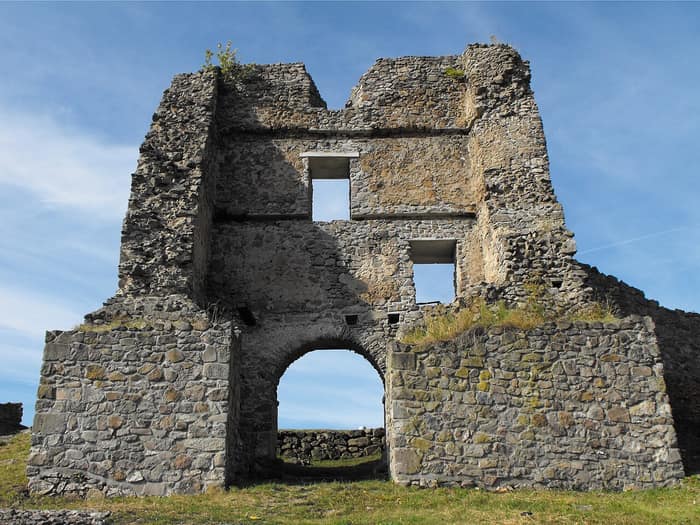
Pustý hrad
Zvolen · ruins of one of Europe's largest medieval castles
19 km away
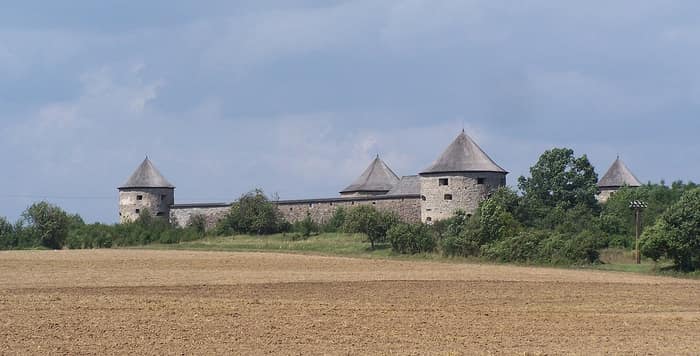
Bzovík Fortified Abbey
Bzovík · Romanesque abbey rebuilt as a bastioned fortress
21 km away
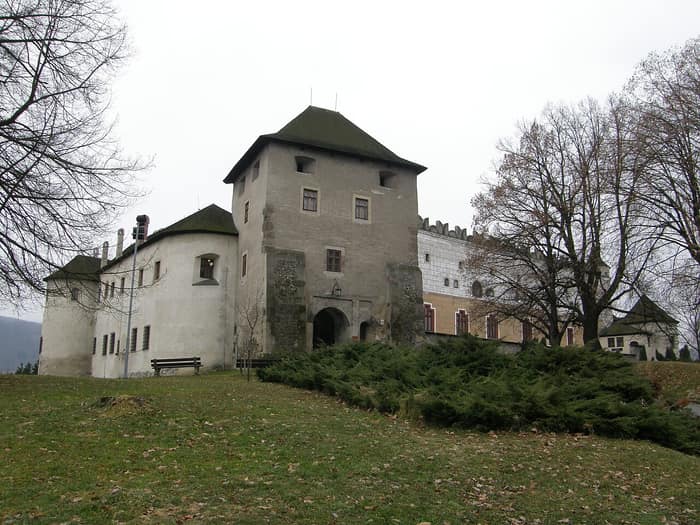
Zvolen Castle
Zvolen · Anjou hunting castle with a painted ceiling and Rubens
21 km away