St Catherine's Church in Banská Štiavnica: the Slovak church
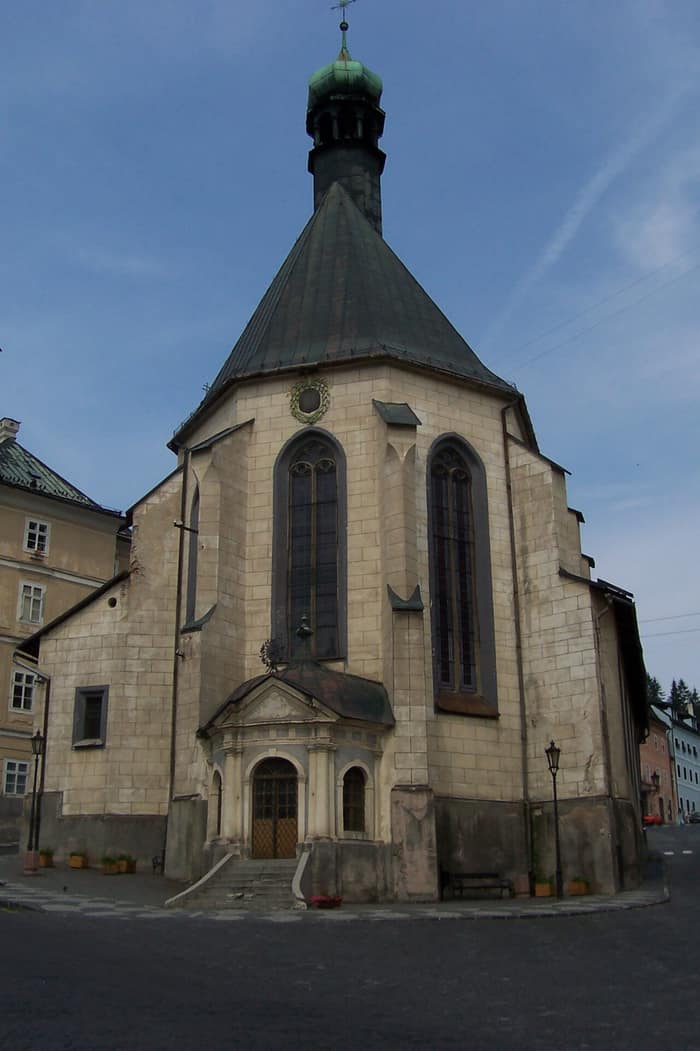
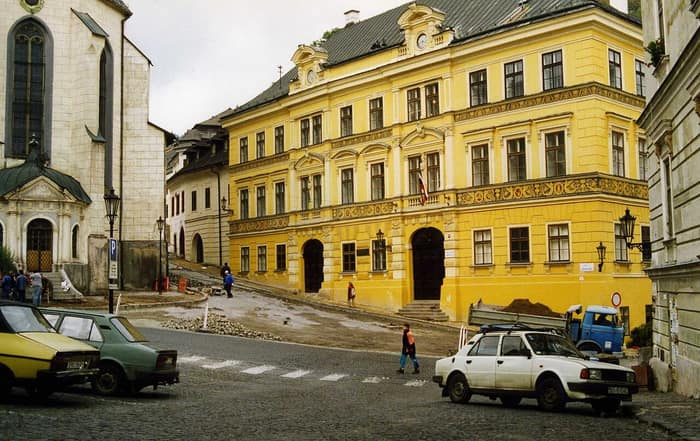
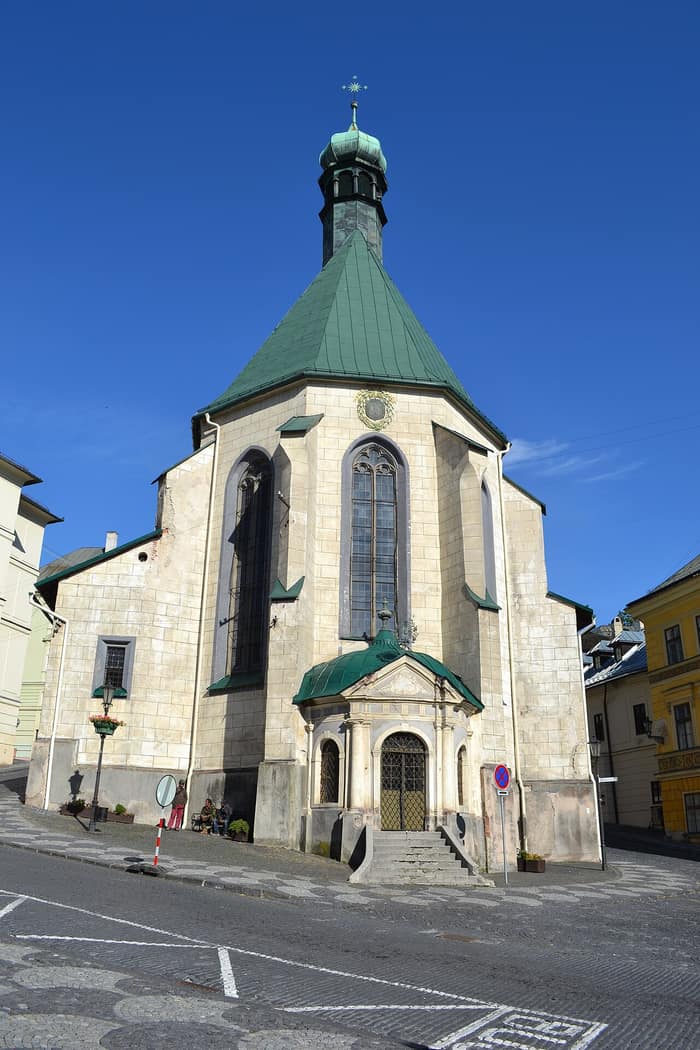
St Catherine's Church (Kostol svätej Kataríny) closes the lower end of Holy Trinity Square in the centre of Banská Štiavnica, at the crossroads of the town's two most important medieval roads. Built between 1488 and 1491 by wealthy mining families, this Late Gothic church is known as the Slovak church and keeps a star-shaped vault, a stone font and a large Last Judgement wall painting.
A Late Gothic church in a mining town became known as the Slovak church after 1658, and its chancel hides a Last Judgement, discovered only in the 1970s, said to be the largest of its kind in Slovakia.
The history of St Catherine's Church in Banská Štiavnica
The church of St Catherine was built between 1488 and 1491 and consecrated in 1500, although 1491 is also given as the year of its foundation. Older sources even date the start of construction to 1443 or 1444, when the people of Banská Štiavnica moved to the area of today's town after the old town had been destroyed. The investors were most probably wealthy families of mining entrepreneurs who owned houses on Holy Trinity Square. The chapel of St Anne, built in 1488, became part of the future church.
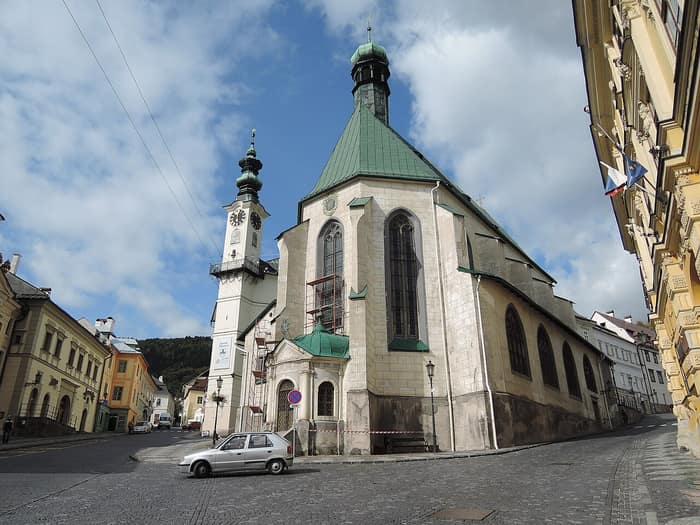
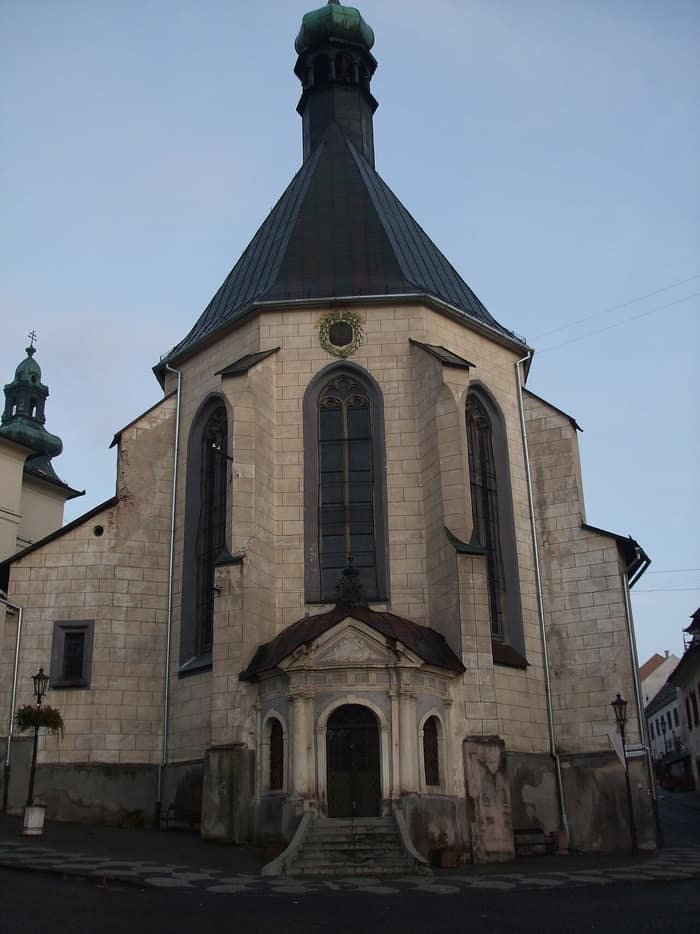
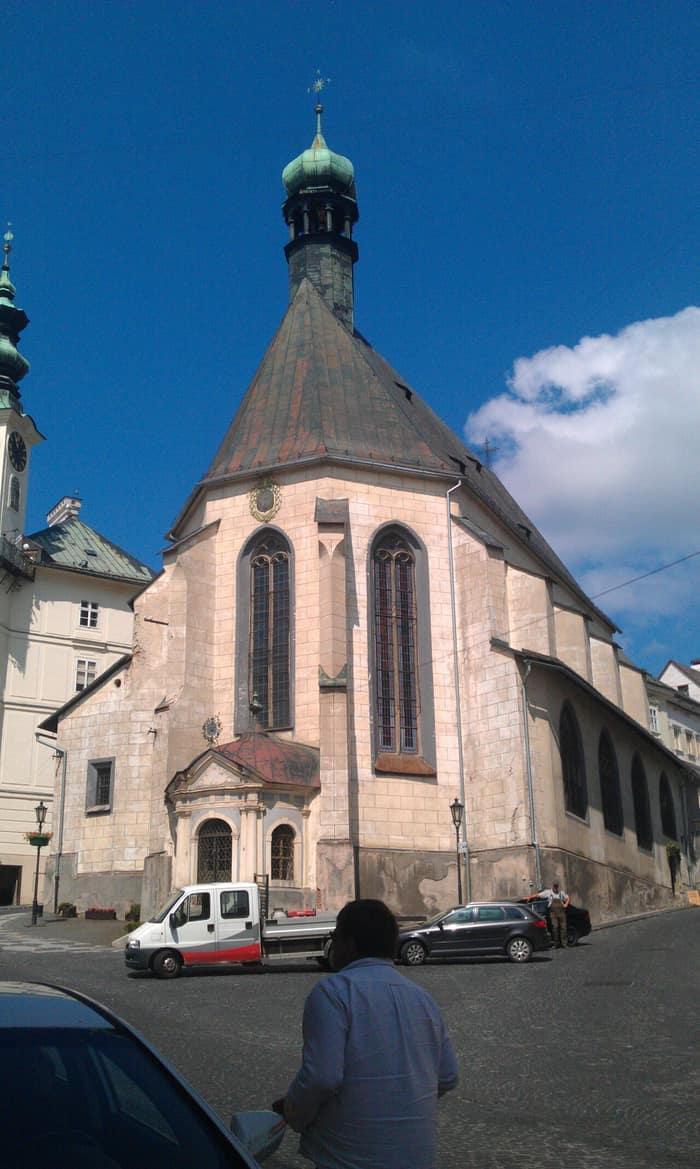
The church stands on a fairly steep slope as a free-standing building that closes the lower part of the square. Because the ground is sloping and the church lies above shallow mining tunnels dug under the square, there was no room for a broad system of buttresses or for towers. The row of side chapels between the buttresses therefore helps to support the walls of the single nave. The only accent outside is a round staircase turret and a small ridge turret, and beneath the church a crypt was built for mayors and wealthy burghers. Above the western portal a painted coat of arms carries the year 1555, when the church became the parish church.
The religious history of the building is a story of changing congregations. From 1580 until the 1670s it belonged to the Lutherans, and in 1658 sermons began to be preached in Slovak, which is why it is called the Slovak church, in contrast to the German church of the Assumption of the Virgin Mary. In 1656 the roof was covered with copper sheet. In 1776 the Baroque chapel of St John of Nepomuk was added beside the chancel, and at the end of the 19th century the interior was re-Gothicised. The stained glass of the windows dates from 1894 and 1907.
The inside of the church was transformed in the 18th century, when seven Baroque altars were installed. Only the main altar of St Catherine from 1727, restored in 1887, has survived. Its picture of the betrothal of St Catherine to Christ is attributed to the painter J. G. Grossmayr. The greatest discovery came during the reconstruction of 1971–1973, when a huge Last Judgement was uncovered on the south wall of the chancel. It is thought to have originally covered other walls too, and it is regarded as the largest of its type in Slovakia.
Curiosities about St Catherine's Church
- It is called the Slovak church because in 1658 sermons began to be preached in Slovak here; the German church of the Assumption of the Virgin Mary served as its counterpart.
- The Last Judgement on the south wall of the chancel mixes fresco and painting a secco, and was discovered only during the reconstruction of 1971–1973.
- In the Last Judgement the devils carry flags with animals that symbolise the seven deadly sins, while the saved walk towards the gates of Heaven accompanied by a choir of angels.
- The star-shaped vault of the nave is very similar to that of the Church of the Holy Cross in Kežmarok, so the same stonemasons are assumed to have worked on both churches.
- The wooden Madonna of 1506, from the original main altar, was heavily repainted in the 19th century and moved to a wall; the church also keeps a 16th-century stone font.
- The Baroque chapel of St John of Nepomuk, added in 1776, stands out against the grey walls with its pastel violet colour, like a little jewel.
Tours near Church of St Catherine, Banská Štiavnica
Experiences in the area that you can book online with Viator:




Visiting St Catherine's Church in Banská Štiavnica
- The church stands in the old town on a steep slope at the lower end of Holy Trinity Square, at the junction with Andrej Kmeť Street, so it is easy to include in a walk through the historic centre.
- Outside, look at the Late Gothic buttresses and the chapels set between them, the round staircase turret and the western portal with its figural corbels and the painted town coat of arms of 1555.
- Inside, the main features are the star-shaped vault resting on figural corbels, the chapels with their own vaults, the stone font, the Gothic cross of the 15th century and the Last Judgement on the south wall of the chancel.
- The main altar of St Catherine of 1727 and the Baroque chapel of St John of Nepomuk are further highlights. Check the current opening hours before you go.
- Other places on this site nearby include the New Castle (Nový zámok) in the same town, Pustý Castle (about 19 km), Zvolen Castle (about 21 km) and Bzovík (about 22 km).
Opening hours, access and conditions can change. Check before you go.
Map: where Church of St Catherine, Banská Štiavnica is
Photos of Church of St Catherine, Banská Štiavnica
Questions
Where is St Catherine's Church in Banská Štiavnica?
It stands in the centre of Banská Štiavnica on a steep slope at the lower end of Holy Trinity Square, at the crossroads with Andrej Kmeť Street.
Why is it called the Slovak church?
From 1658 sermons here were preached in Slovak, so the church became known as the Slovak church, in contrast to the German church of the Assumption of the Virgin Mary.
When was St Catherine's Church built?
It was built between 1488 and 1491 and consecrated in 1500. Older sources give 1443 or 1444 as the start of construction. In 1555 it became the parish church.
What is the Last Judgement in St Catherine's Church?
It is a wall painting on the south wall of the chancel, combining fresco and painting a secco, uncovered during the reconstruction of 1971–1973. It is regarded as the largest of its type in Slovakia.
What else is worth seeing inside?
Look for the star-shaped vault, the 16th-century stone font, the 15th-century cross, the Madonna of 1506 and the main altar of St Catherine from 1727.
Who built St Catherine's Church?
The investors were most probably wealthy families of mining entrepreneurs who owned houses on Holy Trinity Square. The stonemasons are thought to be the same as those who worked on the Church of the Holy Cross in Kežmarok.
Also nearby
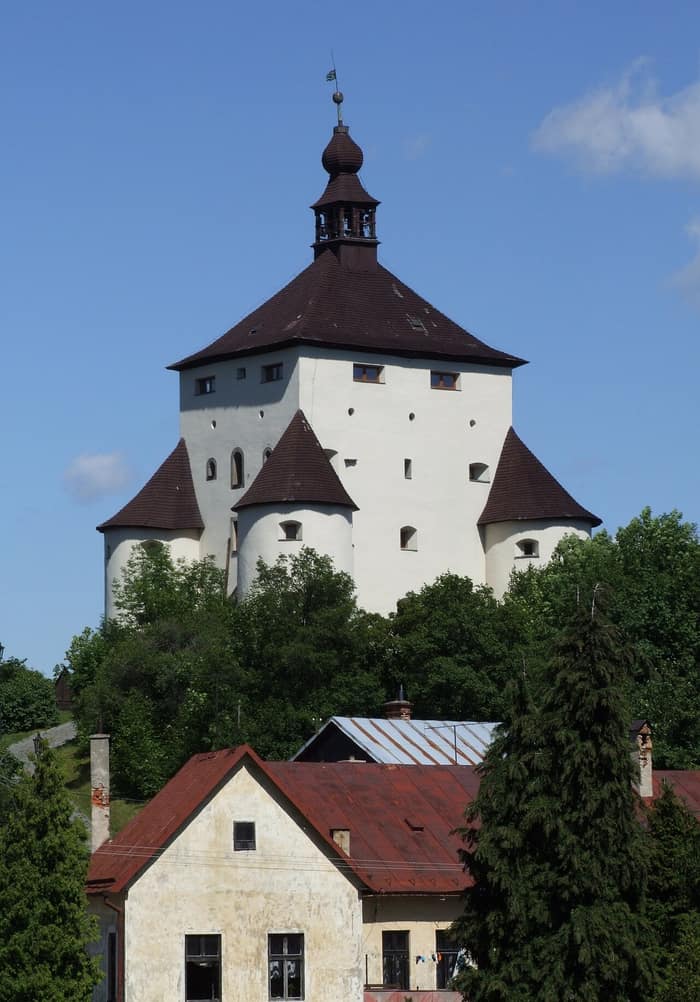
Nový zámok
Banská Štiavnica · tower built against the Turks, now a museum
450 m away
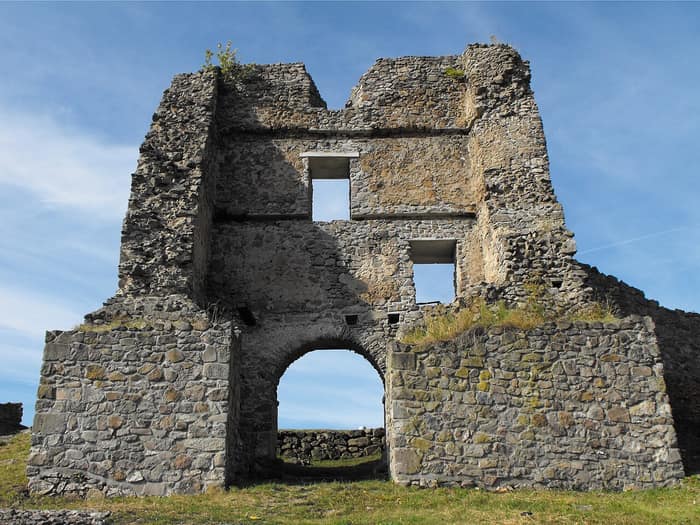
Pustý hrad
Zvolen · ruins of one of Europe's largest medieval castles
19 km away
Zvolen Castle
Zvolen · Anjou hunting castle with a painted ceiling and Rubens
21 km away
Bzovík Fortified Abbey
Bzovík · Romanesque abbey rebuilt as a bastioned fortress
22 km away