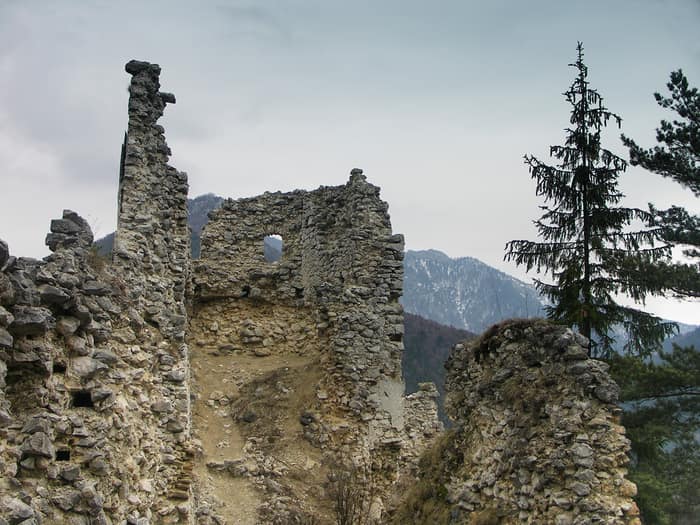
Blatnica Castle: a Gothic ruin hidden in the forest
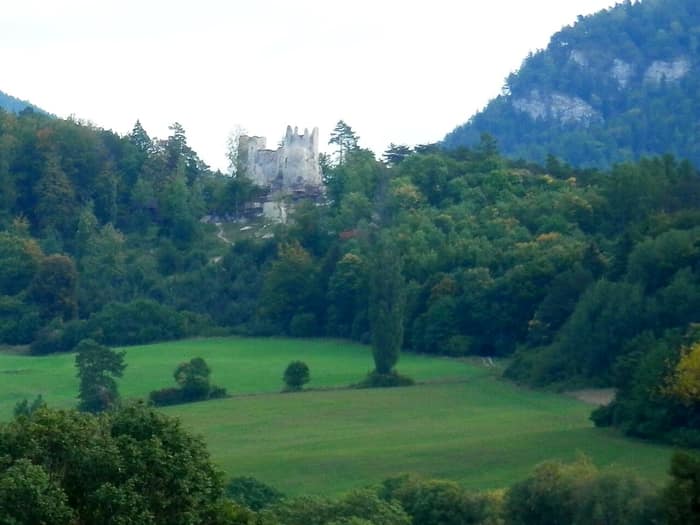
Blatnica Castle (Blatnický hrad) is a Gothic ruin on a low limestone ridge about 2 km from the village of Blatnica, at the foot of the Greater Fatra in northern Slovakia. It is reached on foot along a marked path and rewards walkers with tall tower walls, a wooded setting and views over the Gader valley, a fine hidden gem in the Turiec region.
This castle once guarded a medieval trade road from Nitra to the north, until the traffic moved elsewhere. Left behind, it was never demolished, and a tall tower still stands in the forest.
The history of Blatnica Castle
Blatnica Castle was built in the second half of the 13th century on a steep, low limestone ridge that separates the Turiec basin from the valley of Gader in the Greater Fatra. Its purpose was to protect an important trade road known as the magna via, which ran from Nitra towards the north. The first written record dates from 1300, when the castle belonged to Peter of Brezovica. Soon afterwards it passed into royal hands.
The castle's fortunes changed when a more comfortable route was opened farther west, from Nitra through Mošovce to Martin. The old road, now called the antiqua via, lost its importance, and with it the castle. The kings showed little interest in it and often pledged it. In the 15th century and the first half of the 16th it passed through the hands of several holders, among them Pongrác of Sv. Mikuláš, Peter Komorovský and the Necpal family, who tended to use and manage the castle rather than maintain it.
A new chapter began in 1540, when the Révay family took over. As hereditary lords of the Turiec county they extended the castle in the second half of the 16th and early 17th centuries, building a large outer castle with new residential and farm buildings and two half-open towers. These works did not turn Blatnica into a strong fortress: insurgents of Stephen Bocskay took it in 1604 and the troops of Gabriel Bethlen in 1619.
Late in the 17th century the castle was occupied by the followers of Imre Thököly, and during their stay a great fire destroyed much of the buildings. At the start of the 18th century it was taken again, this time by the forces of Francis II Rákóczi. The Révays recovered it in 1708. Because they had not joined Rákóczi's uprising, the castle did not end up on the imperial list of strongholds to be demolished, which explains why so much masonry still stands.
The castle was repaired once more in 1744, but it had lost its defensive purpose, and by 1790 it was no longer inhabited. It has slowly decayed since then. According to the Polish Wikipedia, the hill was bare while the castle was in use and was afforested with pine only after it was abandoned, which is why the ruin now hides among trees.
Curiosities about Blatnica Castle
- The castle was built to guard the magna via, a medieval trade road from Nitra to the north. When traffic moved to a route through Mošovce and Martin, the old road became the antiqua via and the castle lost its role.
- Blatnica probably escaped demolition because the Révay family stayed out of Rákóczi's uprising and so the castle was not put on the imperial list of strongholds to be destroyed.
- The tall western tower is much larger than the eastern one because it stood on the more vulnerable side; it had its own spiral staircase on its south side.
- The hill is wooded today, but the Polish Wikipedia says it was bare while the castle was inhabited and was planted with pine after it was abandoned.
- The castle is first named in a record of 1300, when it belonged to a certain Peter of Brezovica.
Tours near Blatnica Castle
Experiences in the area that you can book online with Viator:




Visiting Blatnica Castle
- The ruin is freely accessible on a marked footpath from the village of Blatnica. Sources give the distance as about 3.4 km from the centre; the Polish article estimates 45 to 50 minutes through the Gader valley (yellow trail) or 15 to 20 minutes from the Blatnica to Necpaly road.
- Look for the high wall of the west tower with arrow slits, the remains of the narrow palace between the two towers and the carved corner stones of the farm buildings in the lower castle.
- Climbing the remains of the tower bases offers views of the Gader valley and of Tlstá mountain opposite, although the forest limits the panorama. As at any ruin, visitors enter at their own risk, so take care near the steep slope and loose masonry.
- Wear walking shoes and check conditions on the path before you go. Nearby places on this site include Sklabiňa Castle (about 13 km away) and Strečno Castle (about 26 km).
Opening hours, access and conditions can change. Check before you go.
Map: where Blatnica Castle is
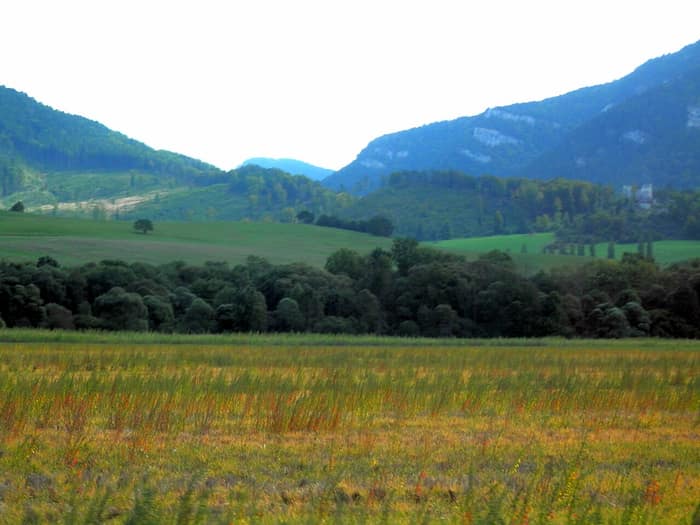
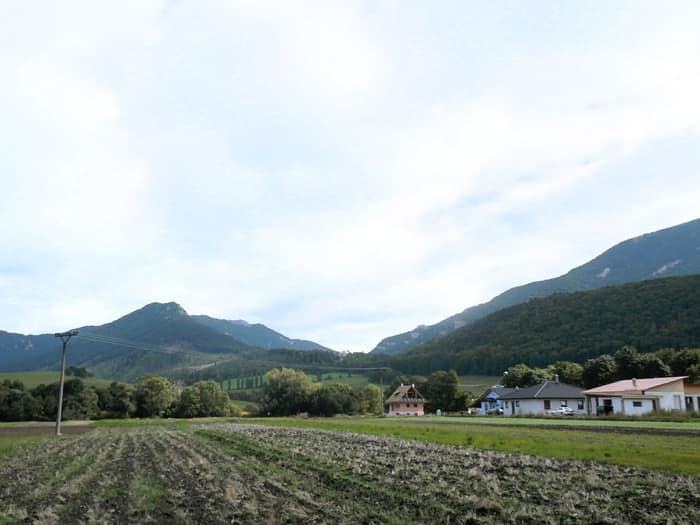
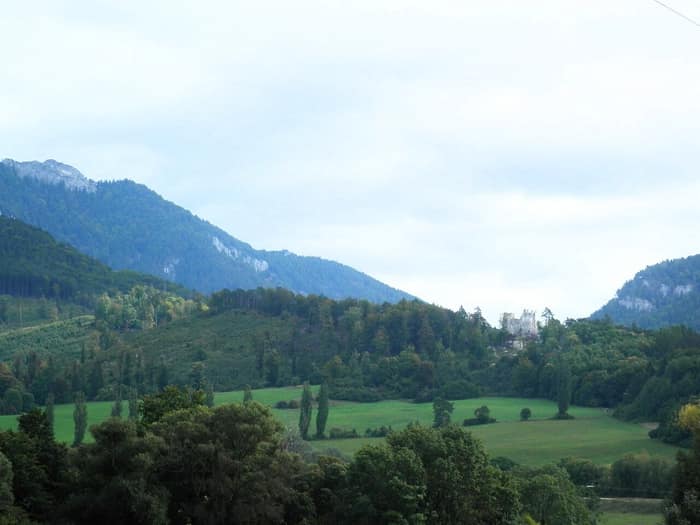
Photos of Blatnica Castle

Questions
Where is Blatnica Castle and how do you get there?
Blatnica Castle is a ruin about 2 km from the village of Blatnica in the Turiec region, at the foot of the Greater Fatra. It can only be reached on foot along a marked path from the village.
How old is Blatnica Castle?
It was built in the second half of the 13th century, and the first written mention dates from 1300. It was extended by the Révay family after 1540 and abandoned in the 18th century.
Why was Blatnica Castle built?
It was built to protect a medieval trade road, the magna via, which ran from Nitra to the north. When a more convenient route opened to the west, the castle lost its importance.
Can you go inside Blatnica Castle?
The ruin is freely accessible, with no entry gate. Visitors go at their own risk and should be careful near the steep slope and crumbling walls.
What can you see at Blatnica Castle?
The most striking part is the tall west tower with arrow slits. You can also see the remains of the narrow palace, the courtyard walls and the farm buildings of the lower castle, plus views of the Gader valley.
Is Blatnica Castle worth a detour?
For walkers and ruin enthusiasts it is a quiet, forested spot with real medieval masonry still standing. It combines well with other castles in northern Slovakia such as Sklabiňa.
Also nearby
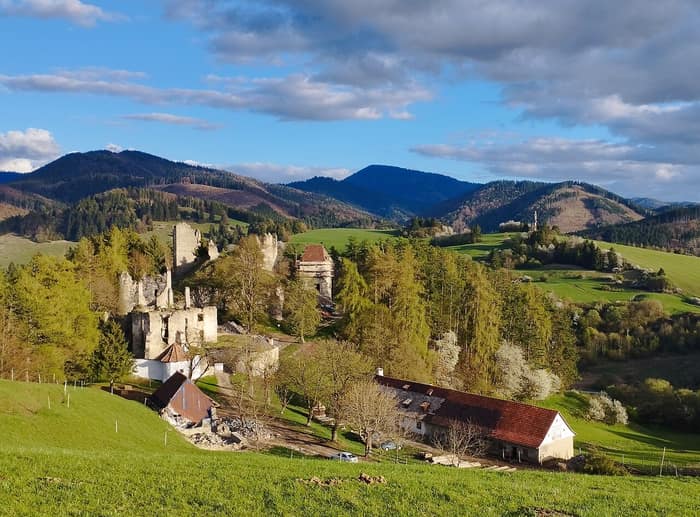
Sklabiňa Castle
Sklabinský Podzámok · ruined county seat revived by volunteers
13 km away
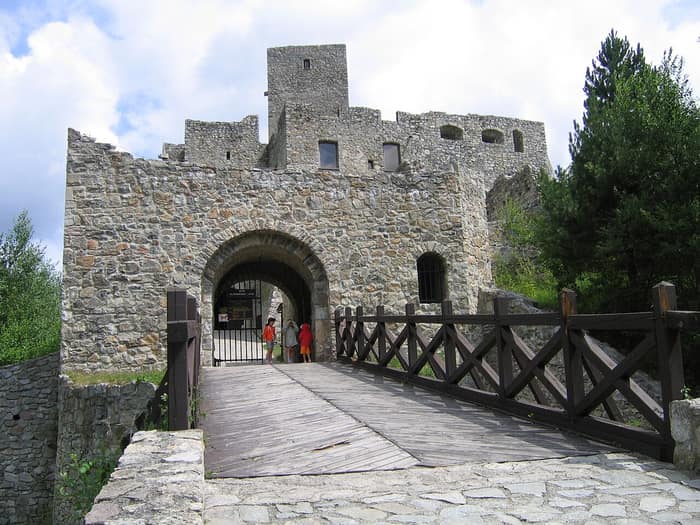
Strečno Castle
Strečno · cliff castle guarding the Váh gorge
26 km away
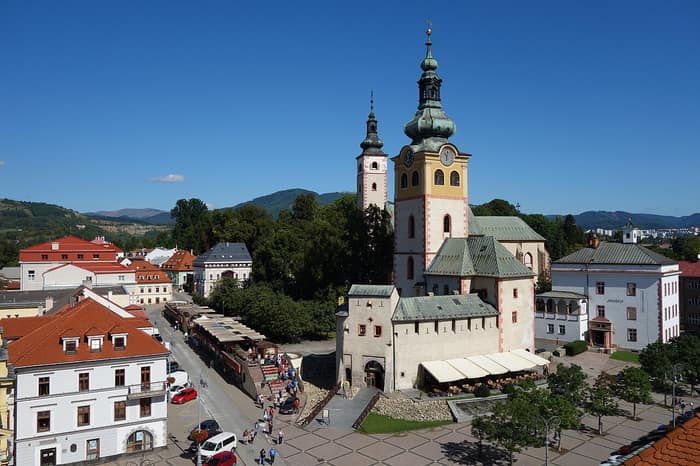
Banská Bystrica Castle
Banská Bystrica · walled church and barbican above the square
28 km away
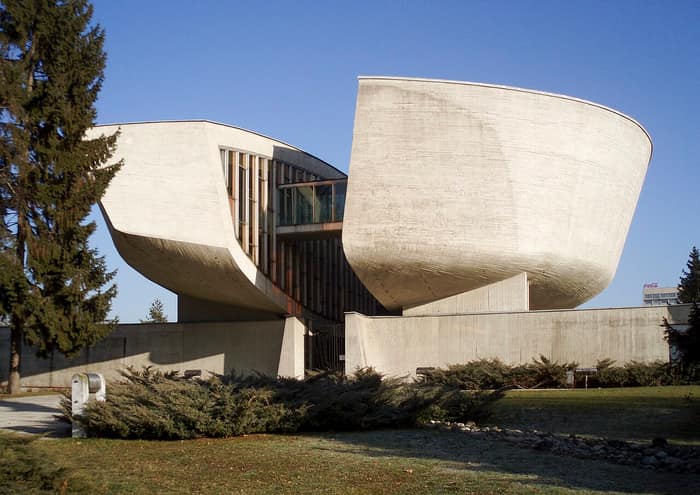
SNP Monument and Museum in Banská Bystrica
Banská Bystrica · brutalist memorial to the 1944 uprising
28 km away