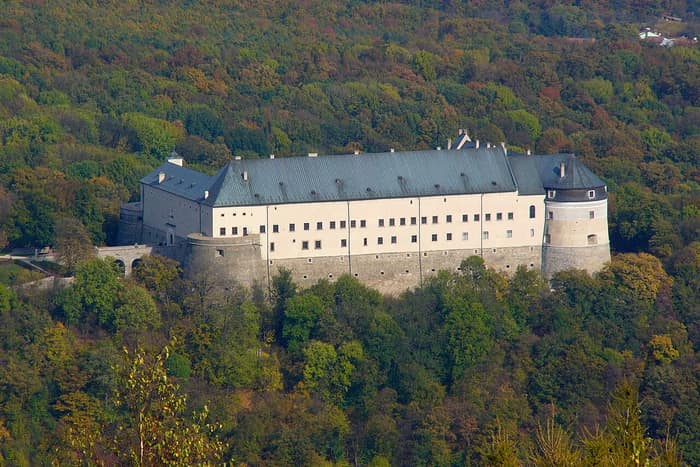
Červený Kameň Castle: a Fugger fortress turned Pálffy château
Červený Kameň Castle (Hrad Červený Kameň) rises on a quartz rock on the south-eastern slope of the Little Carpathians, above the village of Častá near Modra. It began as a 13th-century border castle, was rebuilt as a cannon fortress by the Fuggers and became a Renaissance and Baroque residence of the Pálffy family. Today it is a museum, and an easy day trip from Bratislava along the wine road.
A fortress built by Augsburg's banking family to store copper, wine and treasure was designed with ideas linked to Albrecht Dürer and later became a noble château.
The history of Červený Kameň Castle
By the middle of the 13th century a stone castle already stood on the site, part of the chain of border castles of the Kingdom of Hungary that stretched from Bratislava to Žilina. It guarded the road leading from the Danube towards Moravia. Over the centuries it passed through many noble hands, among them Matthew Csák of Trenčín, who acquired it in the 13th century, and later the Szentgyörgyi family and the Szapolyai brothers. In 1526, after the battle of Mohács, the Pálffy family sided with Ferdinand of Habsburg and stayed loyal to the dynasty for more than four hundred years.
The decisive change came in 1528, when the Augsburg merchant and banker Anton Fugger bought the estate. The Fuggers were partners of the Thurzo family in the copper trade of Central Slovakia, and they needed a safe place to store ore, wine and valuables. Between 1535 and 1557 the older castle was replaced by a new fortress with a square central courtyard, four low and broad corner bastions and huge storage cellars. The bastions held casemates and gun chambers with ingenious ventilation to carry away powder smoke, and the system is linked to the theories of the Nuremberg artist Albrecht Dürer. Italian master builders worked on it, and the work took about twenty years.
In the 1580s the castle passed to the Pálffy family through the marriage of Nicholas II Pálffy to Maria Magdalena Fugger, and in 1588 he bought out the remaining share. The Pálffys turned the stern fortress into a splendid Renaissance château, adding two storeyed residential wings and a ground-floor wing to the original south-western one. In July 1683 Imre Thököly's cavalry occupied the castle, which opened its gates, but it was soon retaken by a ruse. In 1701 it was spared from the demolition order for castles issued by Emperor Leopold, because of the family's loyalty to the Habsburgs.
Fires damaged the castle several times, including one in 1758, but the Pálffys always rebuilt it. Around 1750 a Baroque entrance portal and a stone bridge were added, and the interiors were enriched with art and a unique sala terrena with stucco decoration. The family owned Červený Kameň until 1945, when the state expropriated it. After the Second World War it was restored several times and, after rebuilding from 1992, it again presents the living culture of the nobility between the 16th and 20th centuries. Today it is part of the Slovak National Museum.
Curiosities about Červený Kameň Castle
- A local legend says twelve wise men chose the hill of Kukla for the castle, but good fairies lifted the half-built walls overnight and carried them to the neighbouring hill where it stands today.
- The castle is built on a huge quartz rock, which is still visible as the floor of the cellars.
- The Slovak name means Red Stone, and the Hungarian name Vöröskő is its literal match. The German name was Bibersburg, earlier Rotenstein.
- The cellar defences are linked to a system based on ideas of the Nuremberg artist Albrecht Dürer, one of the first fortifications of its kind in the region.
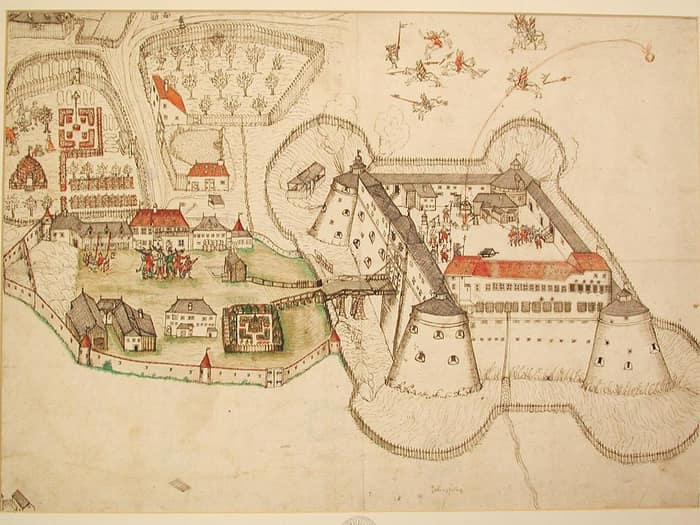
- A pen drawing of the castle from around 1570, kept in the university library in Salzburg, shows it under its German name Pibersburg.
- The Pálffys kept the castle until 1945, and it was spared from the imperial demolition order of 1701 thanks to their loyalty to the Habsburgs.
Tours near Červený Kameň Castle
Experiences in the area that you can book online with Viator:


Visiting Červený Kameň Castle
- The museum, part of the Slovak National Museum, shows the history of aristocratic living from the 16th to the 20th century, and is known as a museum of furniture.
- In the cellars you can see the fortifications and cannon bastions of the Fugger fortress, and a former knights' hall holds a collection of hunting and historical weapons.
- Look out for the Baroque entrance portal and stone bridge, and the sala terrena with its stucco ornaments.
- The castle stands on the wine road of the Little Carpathians, so it combines well with a visit to the nearby village of Častá and the surrounding vineyards.
- Opening hours and exhibitions change through the year, so check the current opening hours before you go.
Opening hours, access and conditions can change. Check before you go.
Map: where Červený Kameň Castle is
Photos of Červený Kameň Castle
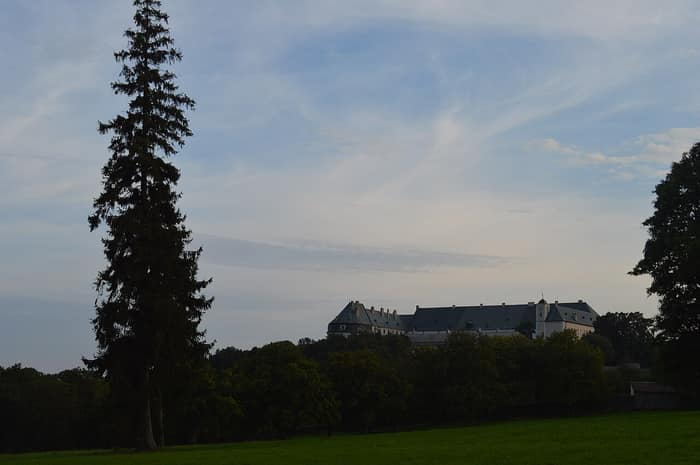
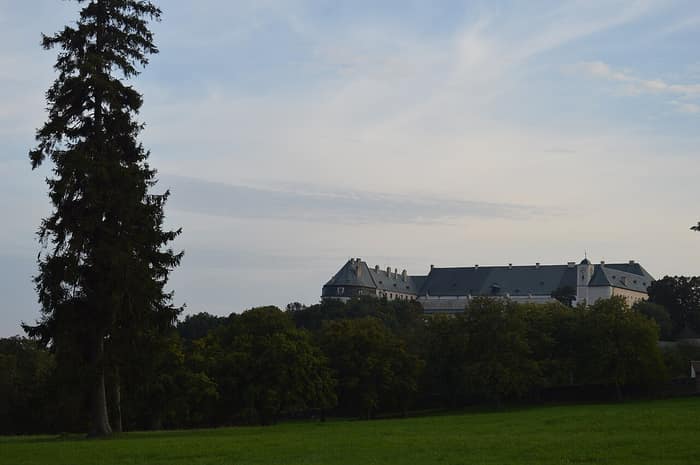
Questions
What is Červený Kameň Castle?
It is a Renaissance fortress and château in the Little Carpathians near Častá, now a museum. It was built in the 16th century by the Fuggers and later owned by the Pálffy family.
Where is Červený Kameň Castle?
It stands on the south-eastern slope of the Little Carpathians, just south of the village of Častá and near Modra, north-east of Bratislava.
Who built Červený Kameň Castle?
A first stone castle was built in the 13th century. The present fortress was built from 1535 to 1557 by the Fugger family of Augsburg, and the Pálffys then turned it into a château.
What can you see inside?
The museum presents aristocratic living between the 16th and 20th centuries, with furniture, a collection of hunting and historical weapons in the former knights' hall, and the fortified cellars.
Who owned the castle until the 20th century?
The Pálffy family owned it until 1945, when it was taken over by the state.
Is there a legend about the castle?
Yes. It says that fairies moved the castle overnight from the hill of Kukla to its present rock.
Also nearby
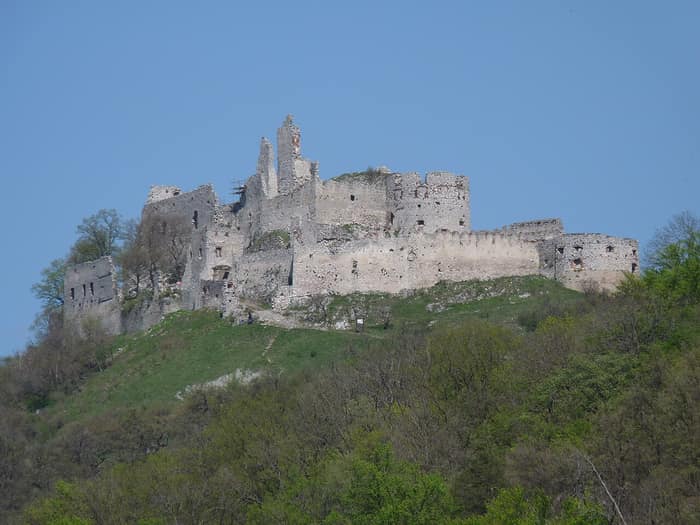
Plavecký Castle
Plavecké Podhradie · ruin that once housed a printing press
12 km away
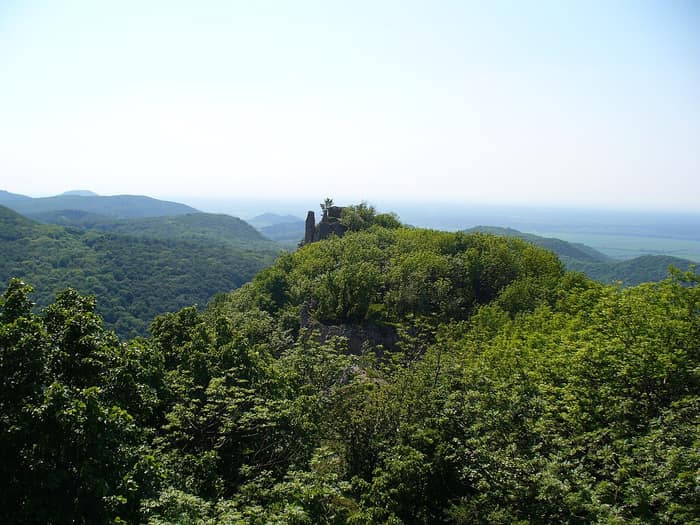
Ostrý Kameň Castle
Buková · ruined fort on the old trade road to Prague
15 km away

Biely Kameň
Svätý Jur · Gothic castle ruin hidden in the forest
18 km away
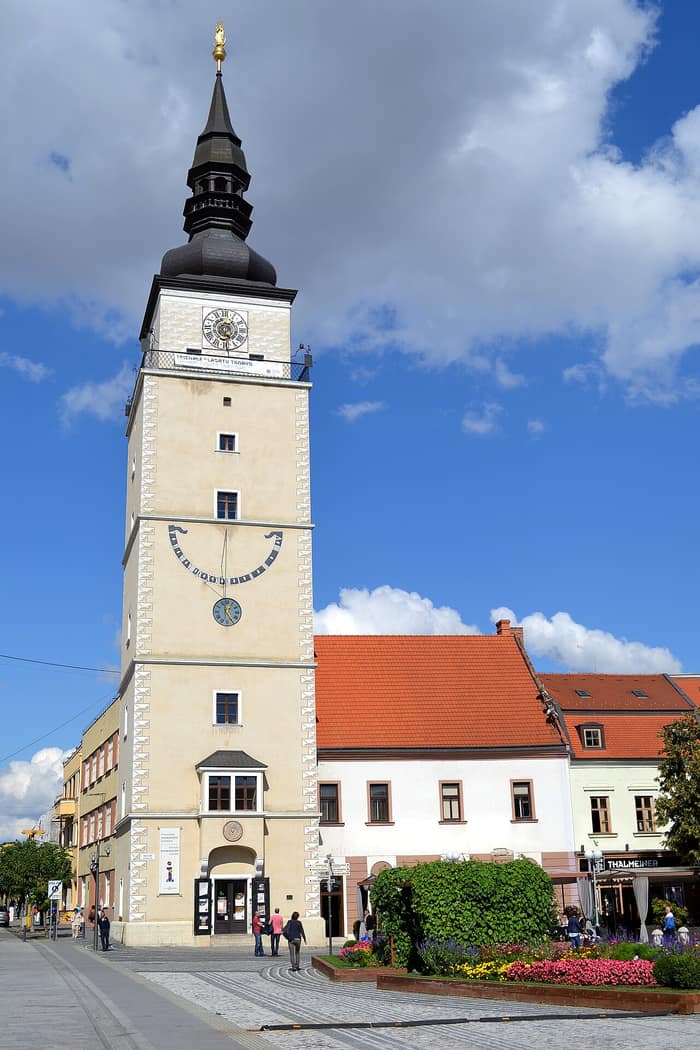
City Tower (Trnava)
Trnava · Renaissance tower topped by a Madonna with two faces
19 km away