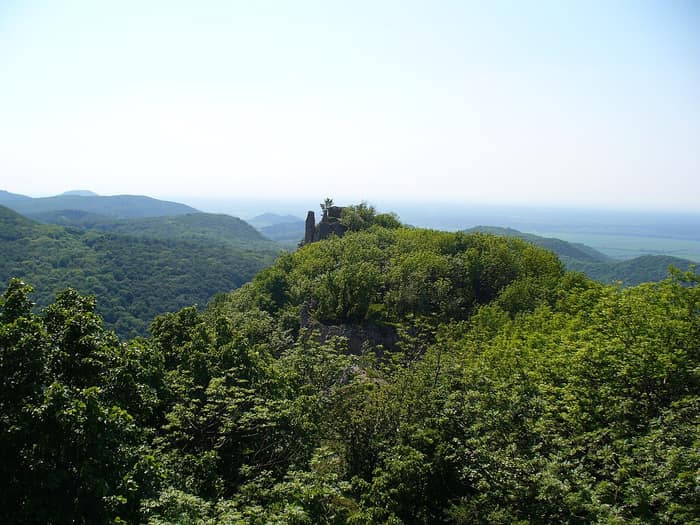
Ostrý Kameň Castle: a ruined border fort in the Little Carpathians
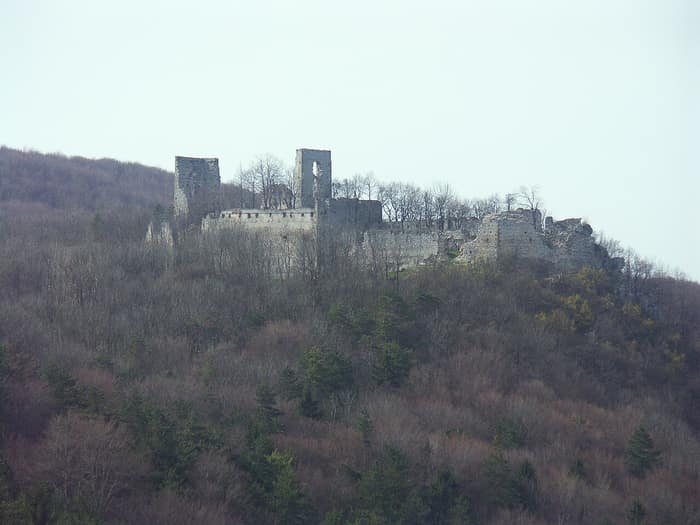
Ostrý Kameň Castle (German Scharfenstein, Hungarian Éleskő) is a ruin on a steep spur of Záruby, the highest peak of the Little Carpathians, above the village of Buková in the Trnava region. Founded in the 13th century to guard the old Czech Road, it is today a quiet forest ruin with a rock-cut moat and fragments of bastions, a good target for a hike.
A fort named for its sharp rock guarded the trade road from Buda to Prague, until the road moved to Bratislava and the castle was left to trees, robbers' legends and rare plants.
The history of Ostrý Kameň Castle
Ostrý Kameň was built in the 13th century and appears in written records for the first time in 1273. It was a royal border fort on the western edge of the Kingdom of Hungary, and its special task was to protect the long-distance trade route running from Buda through western Slovakia into the Czech lands, known as the Czech Road, or Via Bohemica. The road crossed the Little Carpathians through the depression of Bukovská brázda, right below the castle. According to the German Wikipedia, the route was officially fixed around 1335–1336 by the Hungarian king Charles I and the Bohemian king John, and it avoided Vienna in order to weaken Austria. Hungarian kings protected it with a chain of border castles, and merchants were meant to travel freely and safely, without tolls on the road.
The original castle was a small fortress at the top of the rock ridge, protected by steep drops that gave it its name. An oblong residential building joined to a prismatic tower with the entrance gate formed its core, and a moat cut into the rock separated it from the rest of the ridge. A forecastle with outbuildings and a water cistern were added gradually. At first the castle was royal property, but in 1366 the king gave it to Nicholas of Seč, and in 1394 King Sigismund granted it to the well-known commander Stibor of Stiboríc. Later owners included the Thurzo and Forgách families and, from the 15th century, the counts of Svätý Jur and Pezinok. From the middle of the 15th century the castle was extended to the north-west.
At the turn of the 15th and 16th centuries the castle became the hereditary property of the brothers Imre and Márton Czobor, and by then it served less as a lookout than as the economic and defensive centre of a large estate. A massive new fortification was built in front of the moat, and as the Ottoman threat grew, a second forecastle with a circular corner bastion was added; more forecastles followed in the second half of the 16th century. The grounds held residential buildings, storerooms, a bakery, a forge and a chapel. When Gáspár Czobor died in 1539, leaving debts to the Bakič and Révay families, a bitter dispute over the castle began, complicated by marriages and by the money the Bakič family had invested in the building. It ended only in 1554 after the direct intervention of Emperor Charles V, and four years later the three families divided the estate.
The castle's decline began in the early 18th century. In 1704 a large battle of Rákóczi's insurgents took place near the castle, which was probably damaged in the fighting, and around the same time the Czech Road was rerouted through Bratislava, so the fort lost its purpose. Frequent lawsuits between the owners did not help. At the end of the 18th century the estate passed to the Pálffy family, who moved its seat to Moravský Svätý Ján, and with nobody interested in repairs the castle slowly became a ruin. Robbers were active along the neglected road, and one of the legendary figures was a man called Hrajnoha.
Curiosities about Ostrý Kameň Castle
- The name means “sharp stone” in Slovak, and the German name Scharfenstein and the Hungarian Éleskő refer to the same rock ridge on which the castle stands.
- The castle stands on Záruby, the highest peak of the Little Carpathians, and lies inside the Záruby national nature reserve.
- The Czech Road it guarded is said to have been laid out to bypass Vienna, with merchants guaranteed free passage and no tolls.
- A dispute over the ownership of the castle between three noble families dragged on until Emperor Charles V himself intervened in 1554.
- In the first half of the 18th century the neglected road was haunted by robbers, one of whose legendary leaders was called Hrajnoha.
- The castle area and the rocks around it are an important site of relict flora, plants that survive from earlier climatic periods.
Tours near Ostrý Kameň Castle
Experiences in the area that you can book online with Viator:


Visiting Ostrý Kameň Castle
- The ruin lies in forest above Buková, and the General Štefánik Trail runs beside it, so the castle works well as a stop on a hike through the Little Carpathians.
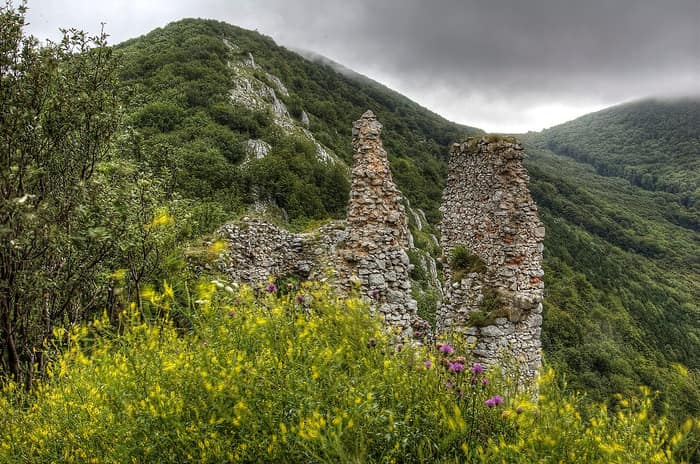
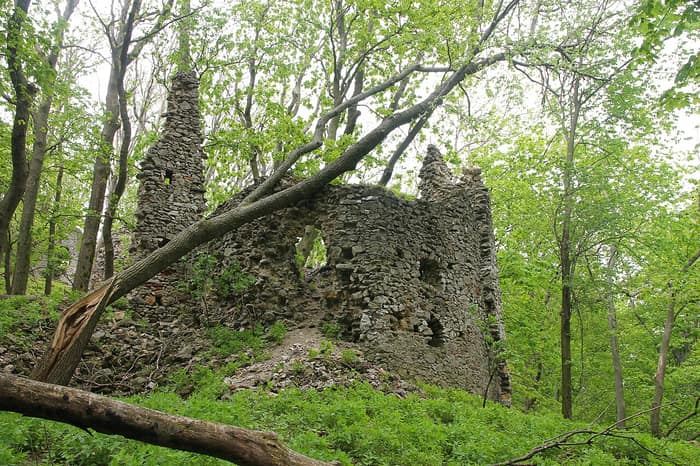
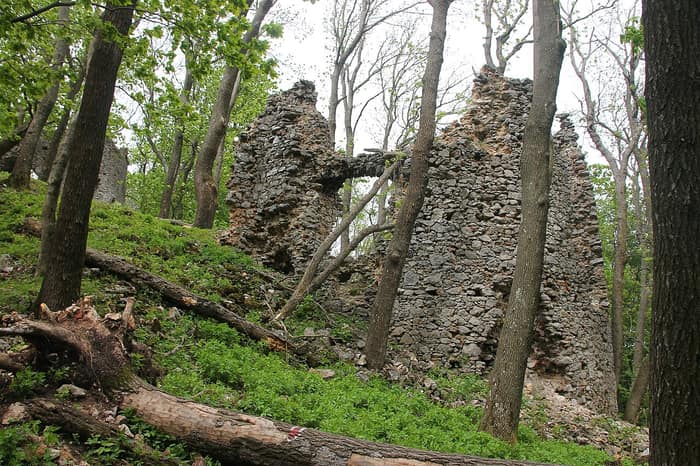
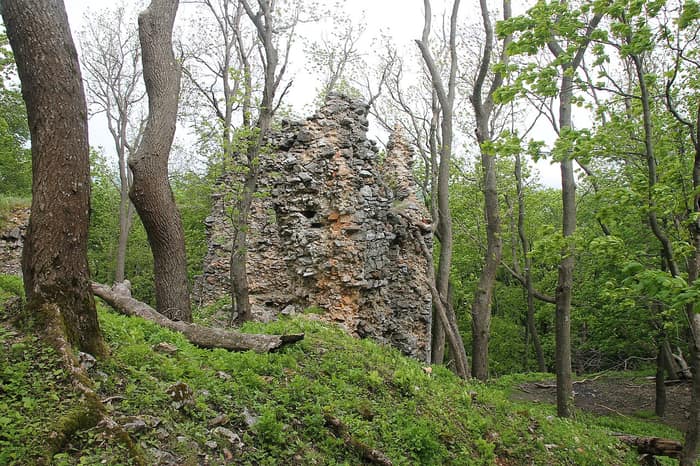
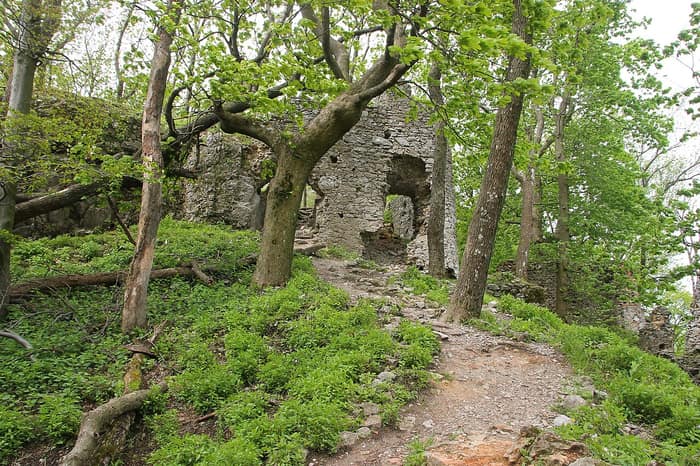
- Look for the rock-cut moat that separates the castle from the ridge and for the fragments of walls of three bastions; a Renaissance double console and a keyhole-shaped loophole are among the few surviving architectural details.
- The walls are heavily overgrown and the buildings are crumbling, so take care and stay on safe ground. The area is a protected nature reserve.
- From the former tower, castles such as Plavecký hrad were probably visible. Plavecký hrad is about 9 km away and is also described on this site.
- No visitor facilities are described in the sources, so check route and conditions before you go.
Opening hours, access and conditions can change. Check before you go.
Map: where Ostrý Kameň Castle is
Photos of Ostrý Kameň Castle
Questions
Where is Ostrý Kameň Castle?
The ruin stands on a steep spur of Záruby, the highest peak of the Little Carpathians, above the village of Buková in the Trnava region of western Slovakia, at about 576 m above sea level.
How old is Ostrý Kameň Castle?
It was built in the 13th century and is first mentioned in 1273. It began to decay after the early 18th century, when the Czech Road it guarded was rerouted.
Why was the castle built here?
It was a royal border fort protecting the Czech Road, a medieval trade route from Buda to Prague that crossed the Little Carpathians in the valley right below the castle.
What can you see at Ostrý Kameň today?
Overgrown remains of walls, the rock-cut moat and fragments of three bastions survive, together with a few Renaissance details such as a double console and a loophole.
What does the name Ostrý Kameň mean?
It means “sharp stone”. The name, like the German Scharfenstein, refers to the rock on which the castle was built.
Can you hike to Ostrý Kameň Castle?
Yes, the ruin lies on the General Štefánik Trail near Buková. Check the current route and conditions locally before you set off.
Also nearby
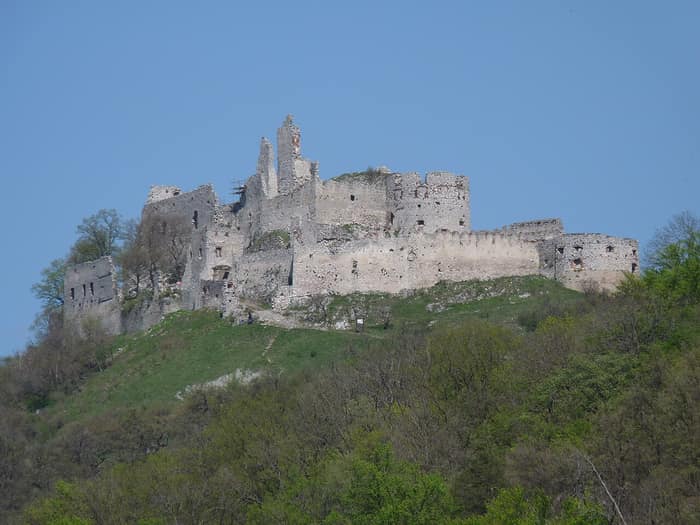
Plavecký Castle
Plavecké Podhradie · ruin that once housed a printing press
8.5 km away
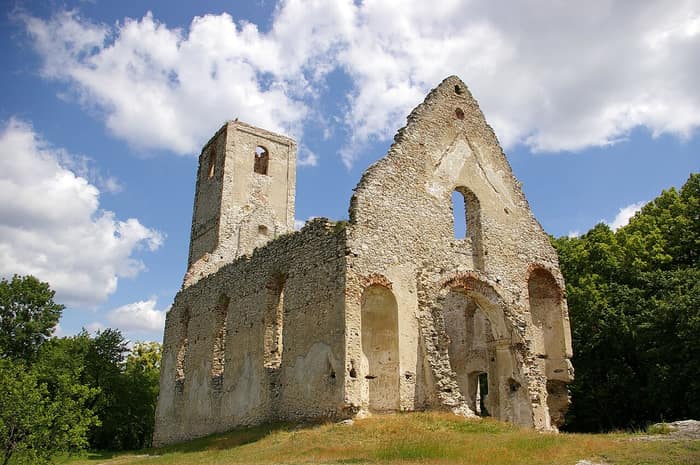
Church and Monastery of St Catherine of Alexandria (Katarínka)
Dechtice · ruined monastery reached only on foot
12 km away
Dobrá Voda Castle
Dobrá Voda · Gothic ruin named after its springs
15 km away
Červený Kameň Castle
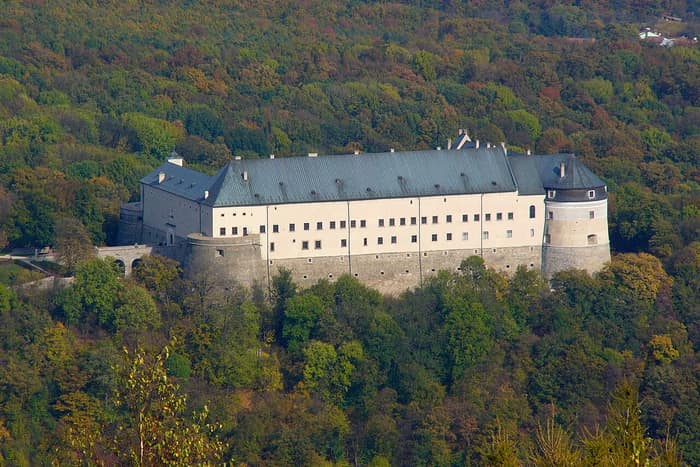
Častá · Renaissance fortress built by the Fuggers of Augsburg
15 km away