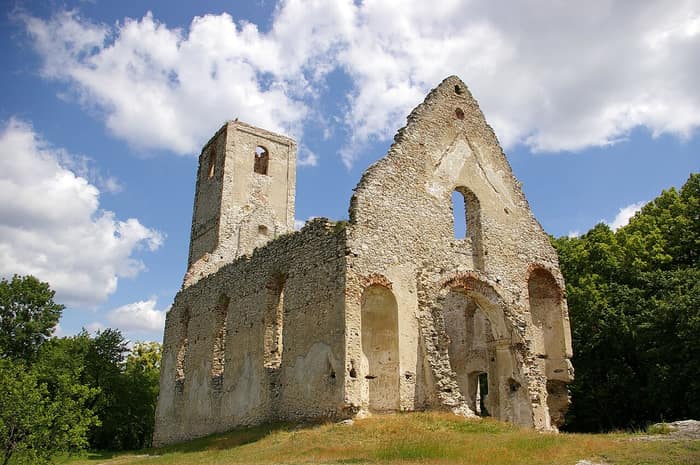
Katarínka: Franciscan monastery ruins in the Little Carpathians
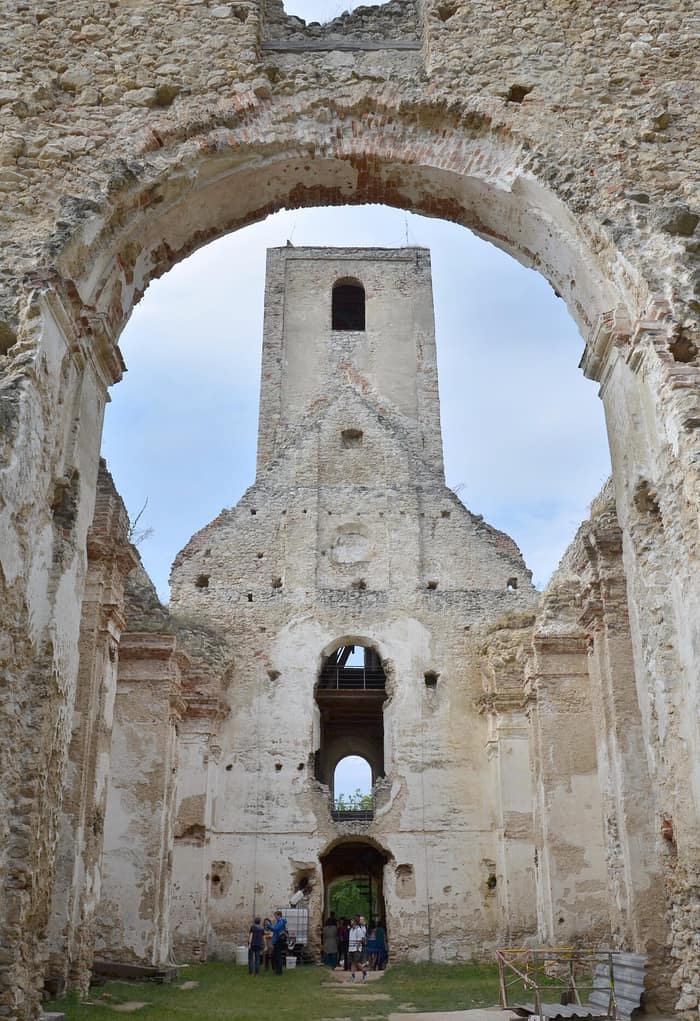
Katarínka, the Church and Monastery of St Catherine of Alexandria, is a ruined Franciscan complex deep in the forests of the Little Carpathians in western Slovakia, about 3 km west of Dechtice and some 20 km north of Trnava. Its roofless church walls and 30-metre tower can be reached only on foot or by bike, which makes it one of the quietest hidden gems in Slovakia.
Abandoned after 1786 and left to decay, this monastery is now being saved by summer volunteers working in a medieval spirit, and its 30-metre tower rises from a forest that no car may enter.
The history of Katarínka monastery
The story of Katarínka begins with a chapel. In the first third of the 15th century, in the reign of Sigismund of Luxembourg, a Gothic stone chapel stood on a rocky spur above the Dubovský creek. According to tradition, St Catherine of Alexandria appeared to a shepherd in the late 16th century and, in 1617, to a ploughman from Dechtice named Ján Manca. At the same time a young nobleman, Ján Apponyi, is said to have lived as a hermit in a cave beside the chapel; when his family forced him to go home, he died the next day.
On 21 December 1618 Count Krištof Erdődy, owner of the domain, issued the foundation charter for a Franciscan monastery on the spot, and in 1619 the first twelve friars moved in. The complex was built in early Baroque style with late Gothic elements by the Italian builder Pietro Spazzo. The first decades were violent. In 1645 the monastery was plundered and burnt during the uprising of the Hungarian nobility led by György I Rákóczi. From 1646 the founder's son Gabriel Erdődy and his wife Judita Amade rebuilt and enlarged it, so that the small church of 1618 became the chancel of the new one. In 1663 the Ottomans attacked, and imperial soldiers who followed killed noblemen who had sought refuge there; in 1683 the troops of Imre Thököly damaged it again. Each time it was restored.
In the 18th century the monastery grew into a popular place of worship and burial. Noble families, among them the Erdődys and the Apponyis, built crypts here, and nobles and villagers alike gave generous gifts. A pilgrimage in 1697 ended in tragedy when soldiers tried to recruit boys by force and the crowd killed one of them; the church was consecrated again in January 1701. In 1710 the well-known Franciscan writer Benignus Smrtník, author of the Slovak-language book Kunšt dobre umríti, died here during a cholera epidemic.
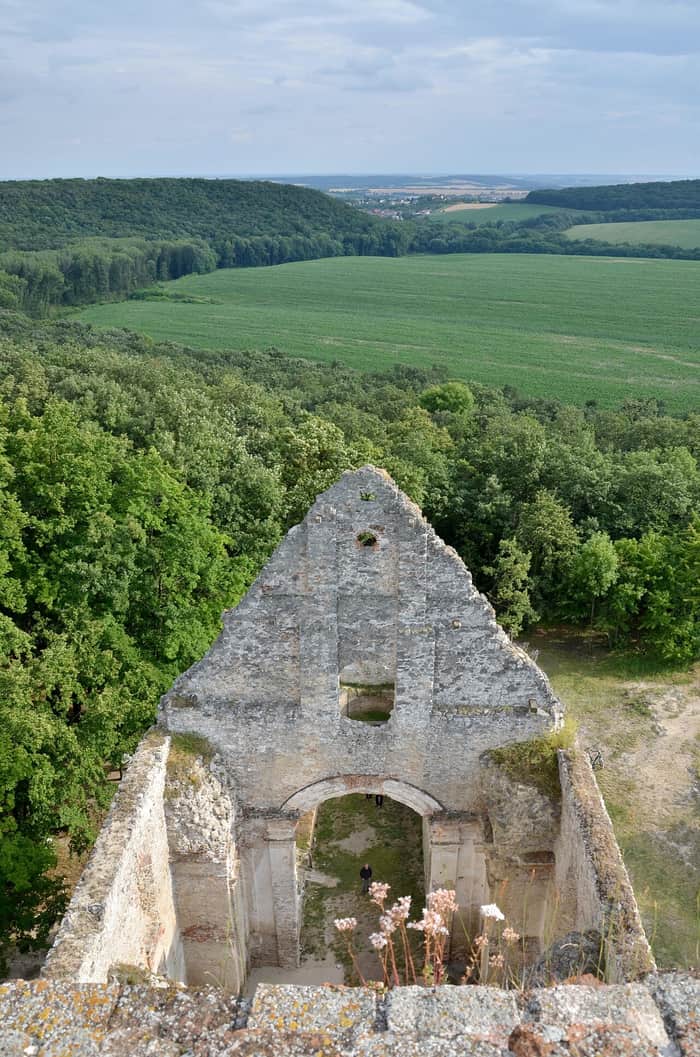
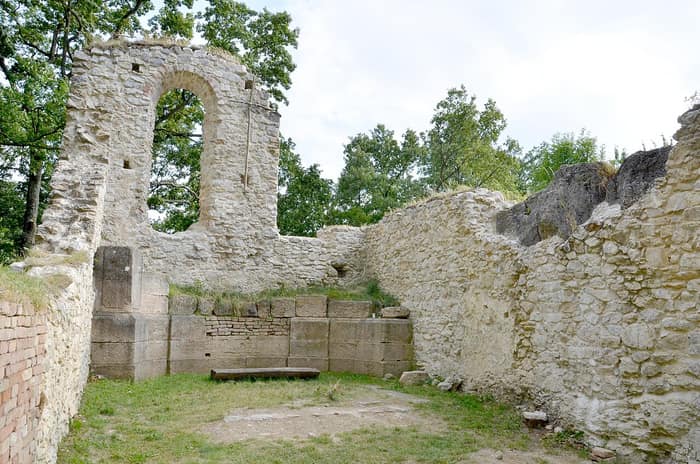
Emperor Joseph II ended this on 22 July 1786, when his decree abolished the monastery together with 738 others that neither cared for the poor nor educated the young. The inventory was passed to nearby churches and monasteries, and much of it was lost or stolen. Seven disabled former soldiers from Trnava lived in the empty buildings from 1788 to 1792, and in 1793 thieves plundered the crypts. In 1797 Jozef Erdődy bought what was left in honour of the ancestors buried there, but the buildings slowly fell into ruin. Rescue began in 1995, when young volunteers took up the work, and conservation started in 1996. Since then they have secured the 22-metre gable, the 30-metre tower and the 12-metre side walls, explored the crypt and the Gothic chapel, and found a great Baroque altar with a statue of St Catherine under the rubble.
Curiosities about Katarínka
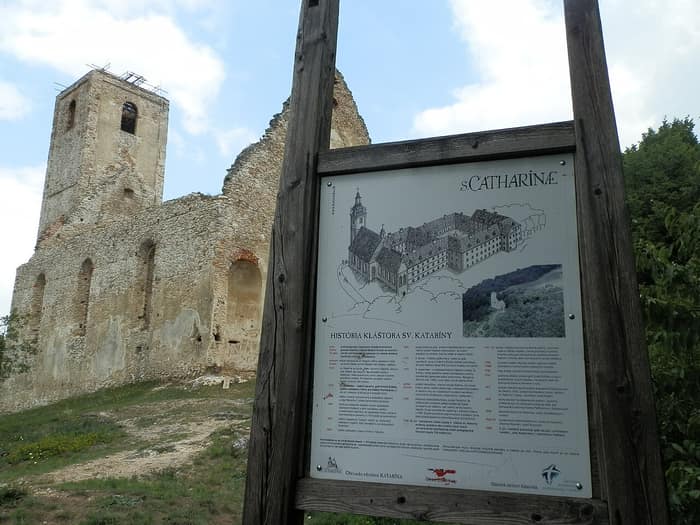
- There is no road to the ruins: beyond the edge of the Little Carpathians Protected Landscape Area the way is open only on foot or by bike, and a sign at the forest edge bans motor vehicles.
- Tradition says that St Catherine appeared to a ploughman from Dechtice in 1617 and that the young nobleman Ján Apponyi lived here as a hermit in a cave and died the day after his family took him home. These are traditions, not documented events.
- The Franciscan Benignus Smrtník, who died here in 1710, wrote religious books in Slovak, among them Kunšt dobre umríti (The Art of a Good Death).
- In 1782 the parish priest of Naháč, Juraj Fándly, complained that most of his parishioners preferred the monastery church to their own; in his 1789 book Dúwerná zmlúva mezi mníchom a diáblom, described as the first work written in Bernolák's literary Slovak, he voiced his indignation.
- The rescue project works as two-week summer camps held in medieval spirit: volunteers have hewn oak beams by hand and even built a hand-made windlass, in the manner of historic hoists, to lift heavy loads into the tower.
- Near the forester's lodge next to the monastery, a small exhibition covers the narrow-gauge forest railway of the Little Carpathians, whose Smolenice–Dobrá Voda branch ran close by until 1960; it includes a short track with vintage vehicles.
Tours near Church and Monastery of St Catherine of Alexandria (Katarínka)
Experiences in the area that you can book online with Viator:


Visiting Katarínka
- The ruins lie about 3 km west of Dechtice in the Katarínka nature reserve. Marked trails lead from Naháč (blue, about 40 minutes), from Dechtice (yellow, about 1 hour 20 minutes) and from Dobrá Voda (blue, about 1 hour 20 minutes); the times are estimates.
- It is possible to drive as far as the edge of the forest. Beyond it motor vehicles are banned, so wear sturdy shoes and plan to walk or cycle.
- What remains are church walls up to 12 metres high, the 22-metre gable, the 30-metre tower and parts of the monastery. The site is also a conservation work area, and the tower is being prepared as a lookout.
- Next to the monastery a small exhibition on the Little Carpathians forest railway is worth a few minutes. The trail continues from here to the ruins of Dobrá Voda Castle.
- Other places on this site within about 20 km include Dobrá Voda Castle, Ostrý Kameň Castle, the Štefánik Mausoleum and the City Tower in Trnava. Check local information before you go.
Opening hours, access and conditions can change. Check before you go.
Map: where Church and Monastery of St Catherine of Alexandria (Katarínka) is
Photos of Church and Monastery of St Catherine of Alexandria (Katarínka)

Questions
Where is Katarínka and how do you get there?
Katarínka stands in the Little Carpathians about 3 km west of Dechtice, close to Naháč and Dobrá Voda. Beyond the edge of the protected landscape area the ruins can be reached only on foot or by bike.
Can you drive to the monastery of St Catherine?
Not all the way. You can drive to the edge of the forest, but a sign bans motor vehicles beyond that point. From Naháč the marked walk takes about 40 minutes.
Who founded the monastery at Katarínka?
Count Krištof Erdődy, owner of the domain, issued the foundation charter on 21 December 1618, and the first twelve Franciscans settled here in 1619. It was built on the site of an older Gothic chapel.
Why is the monastery in ruins?
Emperor Joseph II abolished it in 1786 together with hundreds of other monasteries. Its furnishings were moved or lost, and the empty buildings gradually decayed.
What is being done to save the ruins?
Since 1995 young volunteers have taken part in summer camps in medieval spirit. They conserve the walls, the gable and the tower, while archaeological, historical and geophysical research continues.
What else is there to see near Katarínka?
Beside the monastery stands a small exhibition on the Little Carpathians narrow-gauge forest railway. A trail also leads on to the ruins of Dobrá Voda Castle.
Also nearby
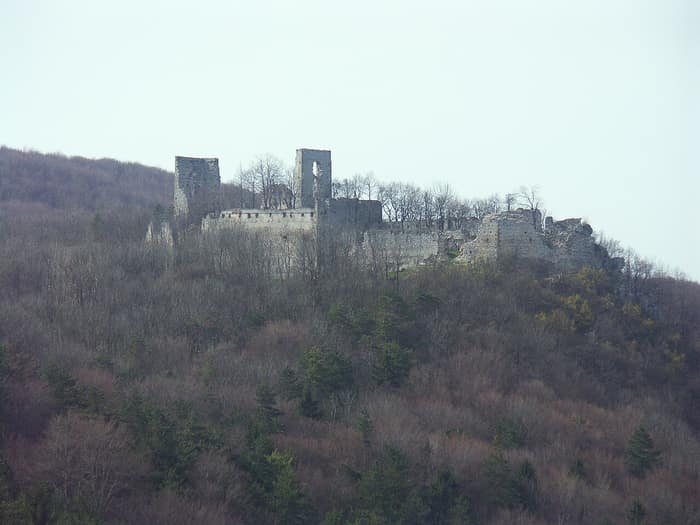
Dobrá Voda Castle
Dobrá Voda · Gothic ruin named after its springs
6 km away
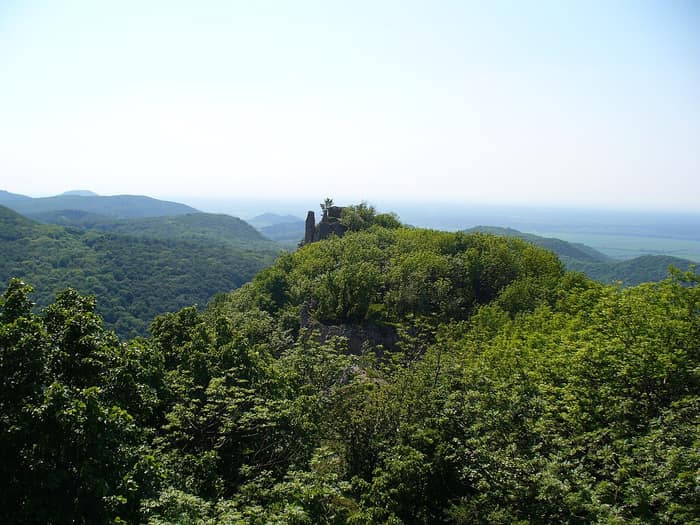
Ostrý Kameň Castle
Buková · ruined fort on the old trade road to Prague
12 km away
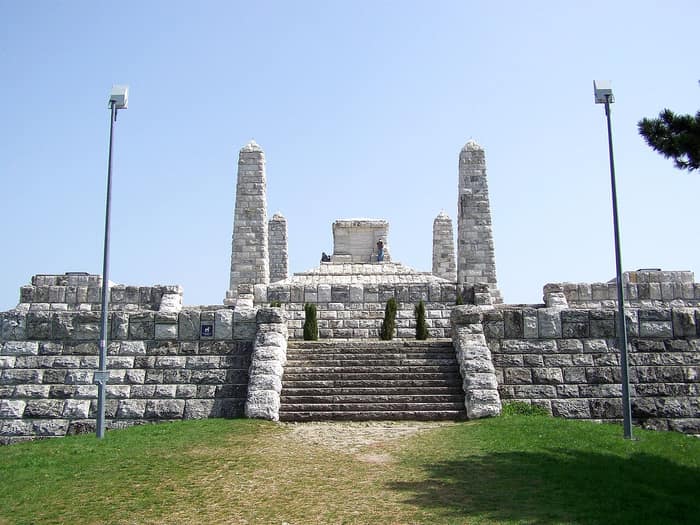
Mausoleum of Milan Rastislav Štefánik
Bradlo · Jurkovič's white travertine tomb with four obelisks
14 km away
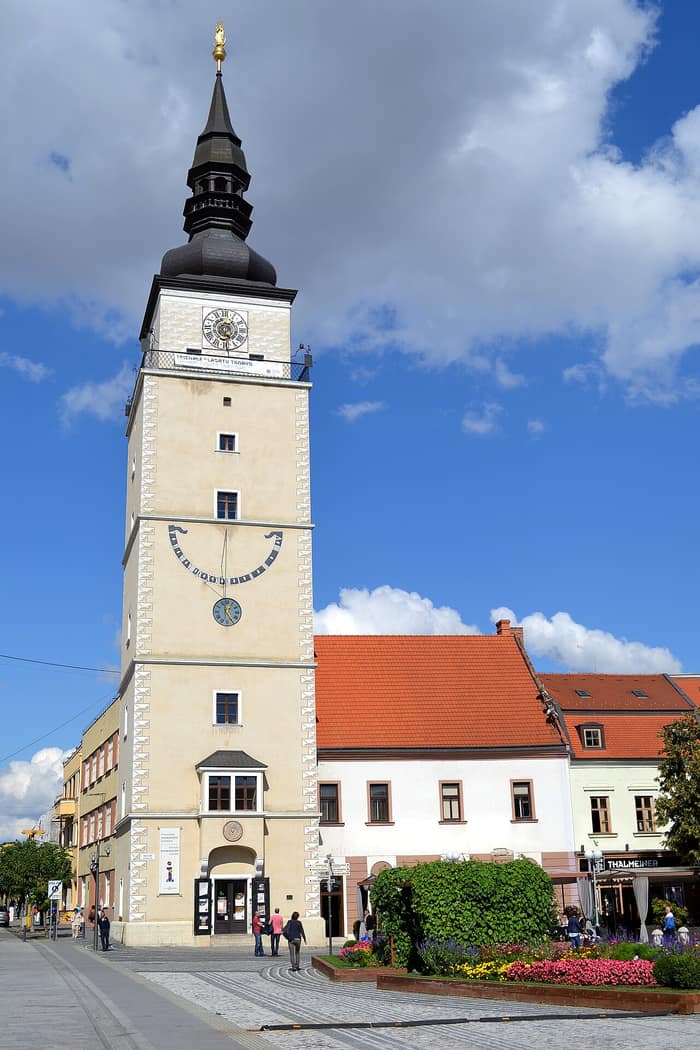
City Tower (Trnava)
Trnava · Renaissance tower topped by a Madonna with two faces
20 km away