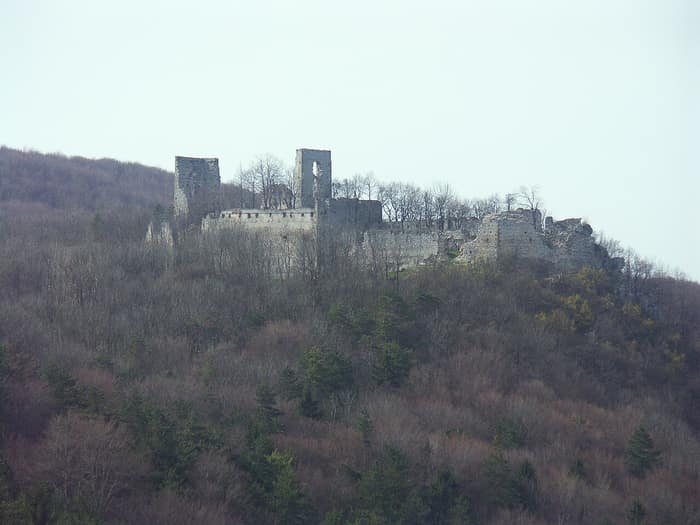
Dobrá Voda Castle: a forest ruin above the springs
Dobrá Voda Castle (Dobrovodský hrad) is a Gothic ruin in the central Little Carpathians, on a rocky spur at 320 metres above the village of Dobrá Voda in the Trnava district. It once guarded a route across the mountain ridge and grew into a large stronghold with an upper castle, a lower castle and four gates. Today it is a quiet, overgrown ruin that rewards walkers who like atmospheric places off the main tourist trail.
A castle named after the springs around it was retaken by a king in 1390, struck by lightning in 1762 and used as a prison: today Dobrá Voda lies wrapped in forest.
The history of Dobrá Voda Castle
Dobrá Voda Castle was built in the 13th century on a rocky spur, on the site of an older hillfort, beside one of the routes that cross the ridge of the Little Carpathians. Sources differ on the exact decade. One version credits the Aba family, another places the work in the first quarter of the century, and the first written record appears in the early 1260s as Dobrawoda. Its position near the Czech Road destined it to be a guard castle. The oldest core was an elongated building with a palace, a square tower at each narrow end and, at the south-eastern side, a further section ending in a chapel.
The castle began as a royal property and kept changing hands in the turbulent decades around 1300. In 1316 Matthew III Csák took it, as he did many castles in the region. In the 1380s it was pledged to Moravian lords, and in 1390 King Sigismund won it back. In 1394 he gave it to his loyal supporter Stibor of Stiborice. A few years later, in 1403, the castellan joined a plot of discontented magnates and prelates against Sigismund, and the royal army had to reconquer the castle. After the Stibor line died out in 1434, the castle returned to the crown and in 1436 passed to the Országh family, who held it until 1567. Under them a large bastion was added on the western side.
When the Országh family died out, the castle passed through several hands. King Maximilian pawned it to the Croatian nobleman Ján Choron of Deveč. Through marriage and purchase, it then went to Krsto Ungnad, who bought it from King Rudolph in 1583. His daughter Anna Mária married Tamás Erdődy, a hero of the wars against the Ottomans, and the castle became an Erdődy possession. Because of the constant Ottoman threat, the owners had the defences strengthened: a forecastle, a cannon bastion, a simple barbican and an extensive lower castle with cannon bastions were built. The road to the upper castle ran through four gates linked by serpentine stretches, so that every section could be defended from higher ground. The last known enlargement dates from 1657.
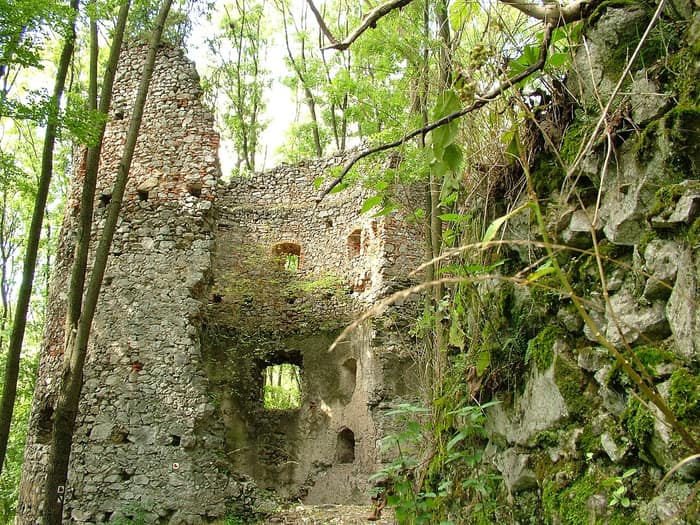
The decline began in the later 17th century. The Erdődy family owned and lived in many manor houses elsewhere, and Dobrá Voda was gradually abandoned. During Francis II Rákóczi's War of Independence at the start of the 18th century the castle was badly damaged. After repairs, a fire started by lightning destroyed it in 1762, leaving only a prison for a time. Hungarian sources still mention prisoners held here around 1830. In the 19th century the estate belonged to the Pálffy family and the castle slowly became a ruin. Today only parts of the walls and the remains of several buildings survive, and the forest has reclaimed the hilltop.
Curiosities about Dobrá Voda Castle
- The name means “good water”: the village and castle are named after the many springs in the area, and a 20th-century monograph counted 42 known springs around the village.
- The castle appears in old documents under several names: Bona Aqua in Latin, Dobrawoda, Jókő in Hungarian and Guttenstein or Gutstein in German.
- According to a local legend, the castle was built by the lover of a girl who had cured the king with water from the local spring. It is a legend, not a documented fact.
- The Blava stream, which drives mills lower down, rises from a spring in the rock beside the village church.
- A tradition recorded in the early 20th century says that villagers once captured a Czech commander fleeing from King Matthias, and that the king rewarded the village with the status of a market town.
- The ruin lies inside the Slopy nature reserve, part of the Little Carpathians Protected Landscape Area, and covers an area of about 8,500 square metres.
Tours near Dobrá Voda Castle
Experiences in the area that you can book online with Viator:


Visiting Dobrá Voda Castle
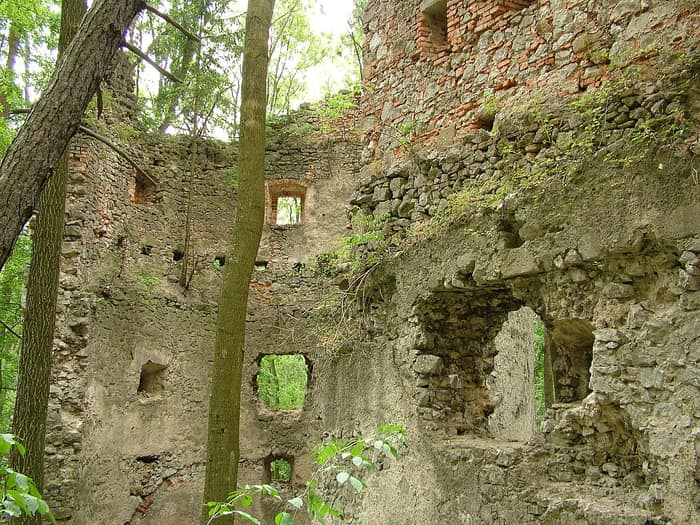
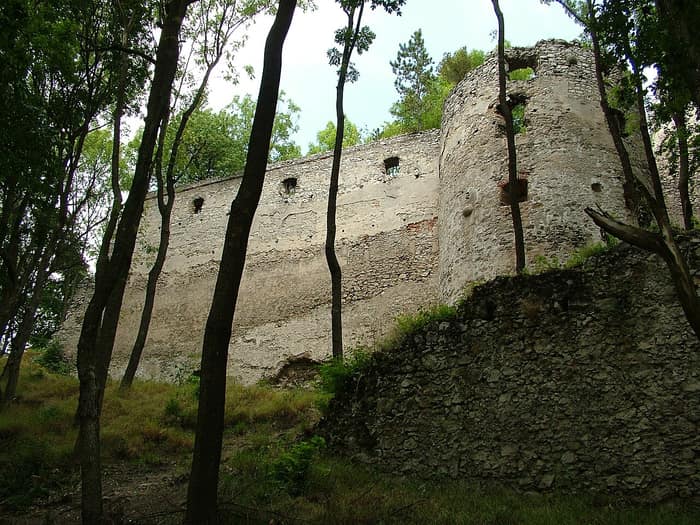
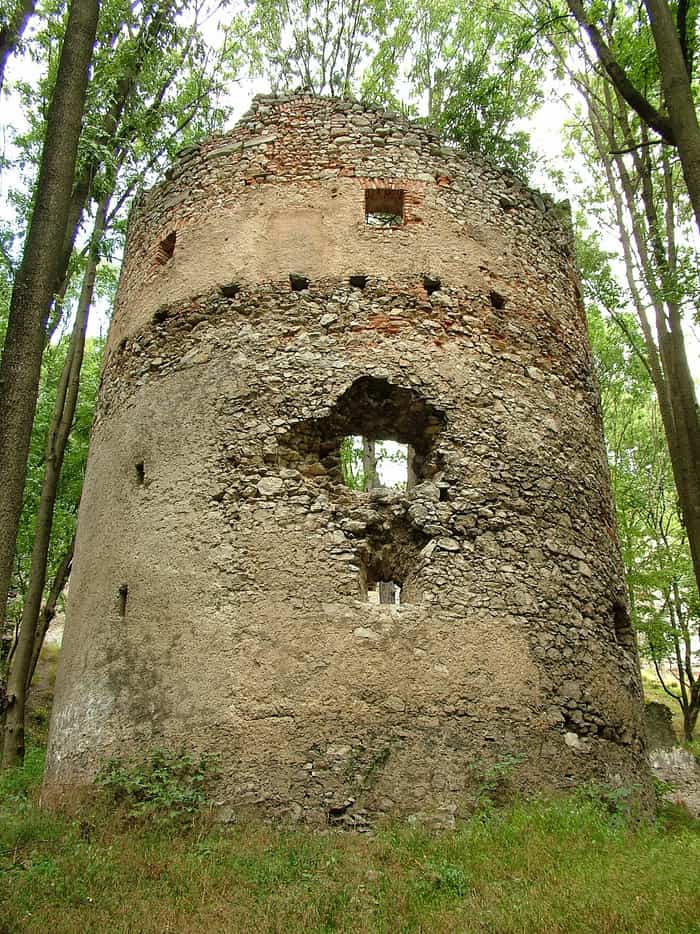
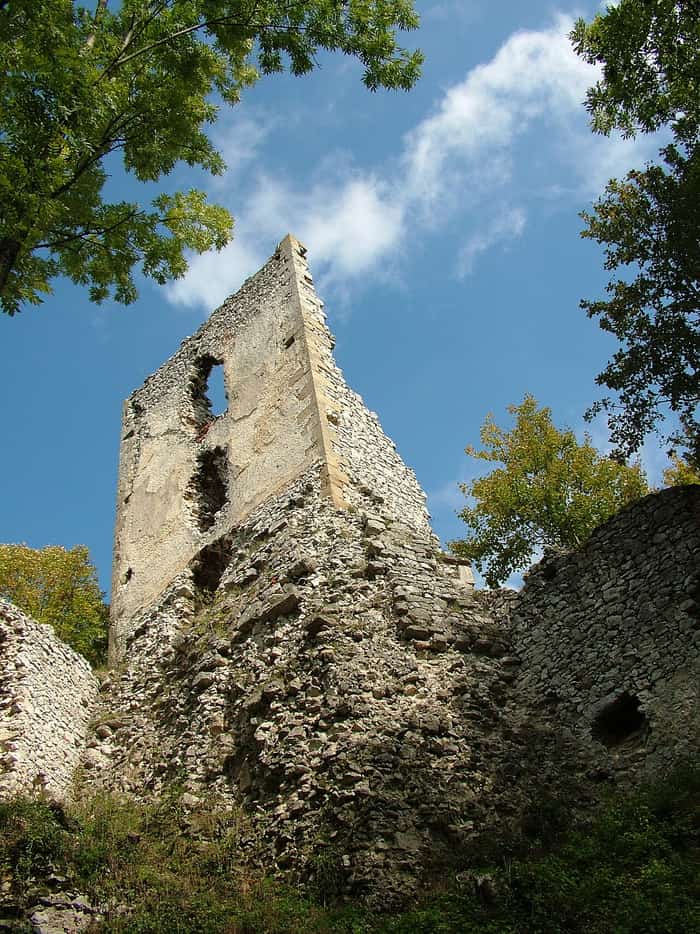
- What remains is a ruin: parts of the walls with fortifications and traces of the palace, towers, chapel and a cistern with a preserved sink, partly hidden by self-seeded trees and shrubs.
- The setting is the real attraction. The ruin sits in the forested hills of the central Little Carpathians, in a protected nature area, so wear sturdy shoes and keep to safe ground among the old walls.
- The sources used here do not describe a marked trail or any visitor facilities; check current access conditions locally before you set out.
- In the village itself, look for the springs that gave the place its name, including the one beside the parish church.
- Other places on this site nearby include the church and monastery of St Catherine of Alexandria (about 6 km), the Štefánik Mausoleum (about 8 km), Ostrý Kameň Castle (about 15 km) and Čachtice Castle (about 21 km).
Opening hours, access and conditions can change. Check before you go.
Map: where Dobrá Voda Castle is
Photos of Dobrá Voda Castle
Questions
Where is Dobrá Voda Castle and how do you get there?
Dobrá Voda Castle stands on a hill above the village of Dobrá Voda in the Little Carpathians, about 25 km north of Trnava. The village is the starting point; check local conditions for the way up.
How old is Dobrá Voda Castle?
It was built in the 13th century on the site of an older hillfort and first appears in written records in the early 1260s. Later owners expanded it until the 17th century.
Why is it called Dobrá Voda?
The name means “good water” and comes from the many springs around the village and castle. In Hungarian the place is called Jókő and in German Guttenstein.
What happened to Dobrá Voda Castle?
It was abandoned by its owners in the later 17th century, damaged during Rákóczi's War of Independence and destroyed by a lightning fire in 1762. Only a prison remained for a time before it became a ruin.
What can you see at the ruins?
Surviving parts include sections of the walls, remains of the upper castle's towers and palace, a cistern with a well-preserved sink and the foundations of a probably Gothic chapel.
Which other sights are close to Dobrá Voda Castle?
Within about 25 km are the church and monastery of St Catherine of Alexandria, the Štefánik Mausoleum, Ostrý Kameň Castle and Čachtice Castle.
Also nearby
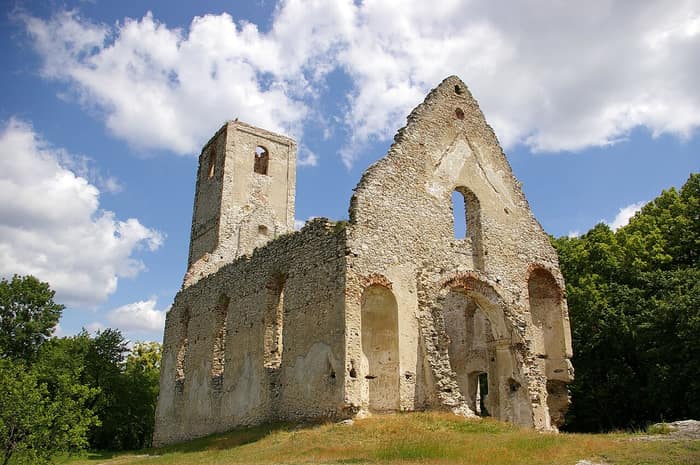
Church and Monastery of St Catherine of Alexandria (Katarínka)
Dechtice · ruined monastery reached only on foot
6 km away
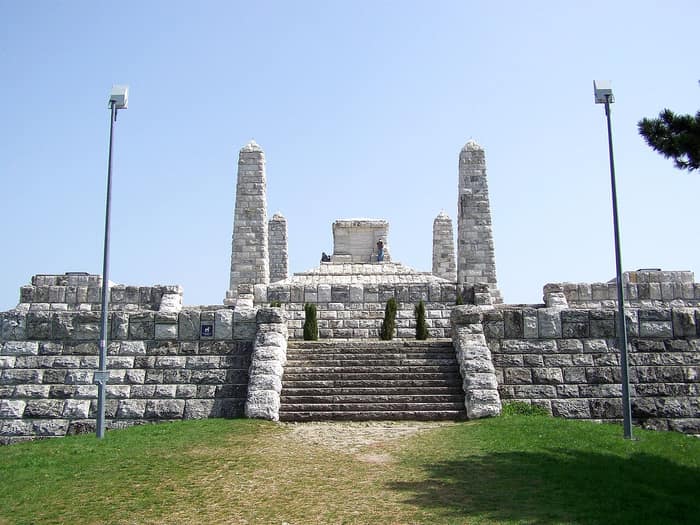
Mausoleum of Milan Rastislav Štefánik
Bradlo · Jurkovič's white travertine tomb with four obelisks
8 km away
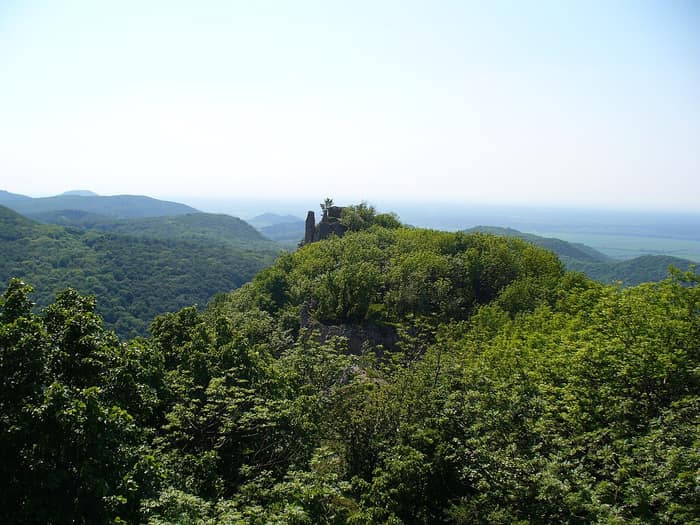
Ostrý Kameň Castle
Buková · ruined fort on the old trade road to Prague
15 km away
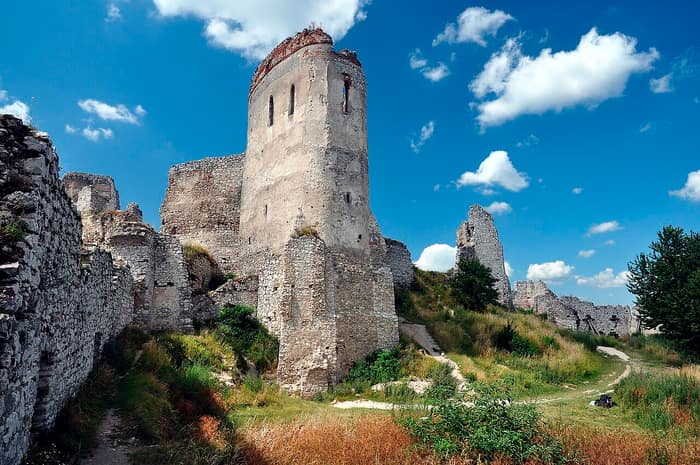
Čachtice Castle
Čachtice · hilltop ruins linked to Elizabeth Báthory
21 km away