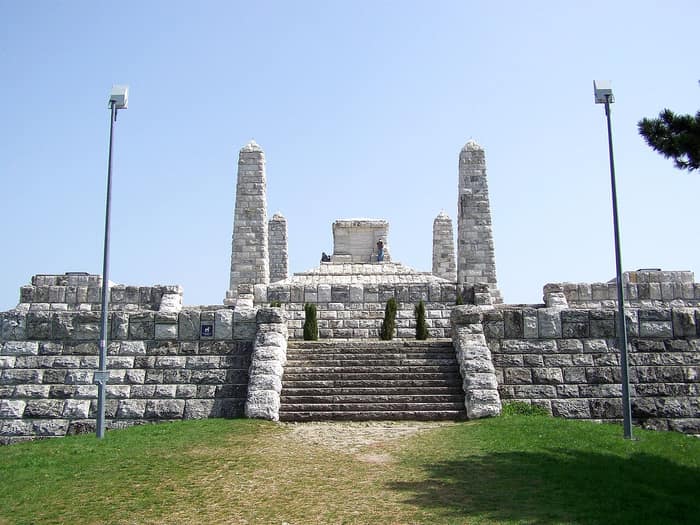
Mausoleum of Milan Rastislav Štefánik on Bradlo hill
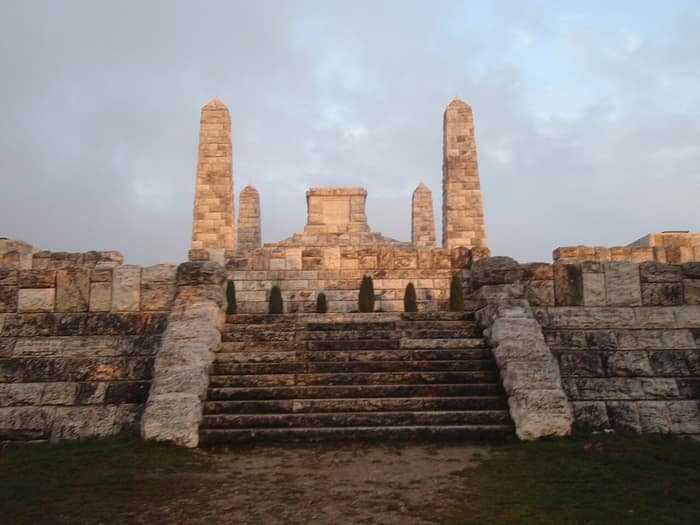
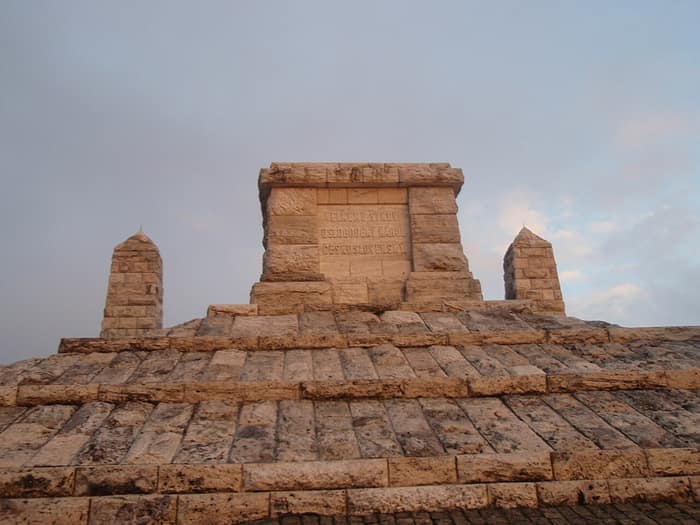
The Mausoleum of Milan Rastislav Štefánik (Mohyla Milana Rastislava Štefánika) crowns Bradlo hill, 543 m above sea level, in the Myjava hills of western Slovakia, close to Brezová pod Bradlom. Dušan Jurkovič designed this white travertine monument in the 1920s, and its terraces, stairs and four obelisks make it one of the most striking memorials in the country.
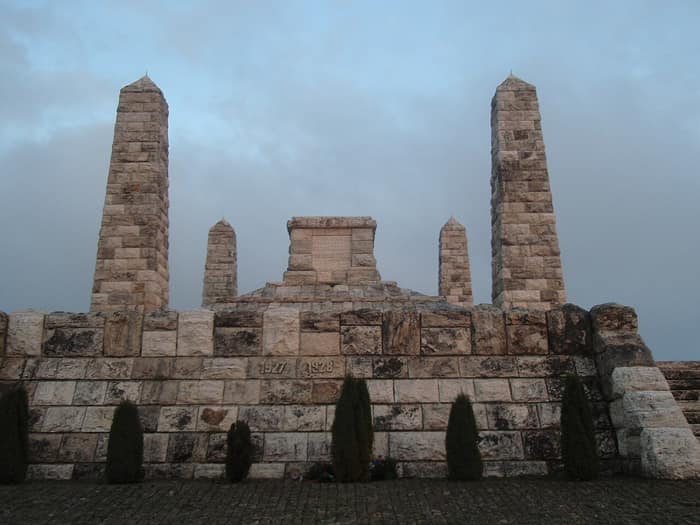
Four obelisks stand for the four people who died in a plane crash in 1919 and for the four countries where Štefánik worked. The stone came by rail from Spiš in 194 wagons.
The history of the Štefánik Mausoleum
Milan Rastislav Štefánik, a Slovak politician, general, aviator and astronomer, and one of the founding figures of Czechoslovakia, died on 4 May 1919 when an Italian aeroplane crashed near Ivanka pri Dunaji, close to Bratislava. Three Italian crew members died with him. The dead were buried a few days later on Bradlo, the hill above his native village of Košariská.
The architect Dušan Jurkovič began thinking about a monumental tomb almost as soon as the news of the crash arrived. During the First World War he had designed dozens of military cemeteries in the former Austrian province of Galicia, and that experience of shaping memorial places within a natural setting shaped his plan. He presented a first proposal in 1920, and in 1921 an association was founded to raise money through donations. Even with state support the project had to be revised and scaled down several times. A national collection was announced and raised about two million crowns.
The foundation stone was laid on 4 May 1924, five years after Štefánik's death. Building work began in July 1927, using travertine from the quarry at Dreveník near Spišské Vlachy in the Spiš region, which the state donated and which travelled to the site in 194 railway wagons. Between 150 and 200 workers laboured for 280 days, and the structure was finished in September 1928 at a cost of almost three million Czechoslovak crowns. The mausoleum was unveiled on 23 September 1928, shortly before the tenth anniversary of the republic, with senior state officials and diplomats present. The remains lie in a burial chamber about eight metres below the tomb.
During the Slovak State (1939–45), opponents of the regime are said to have lit fires here on the anniversary of Czechoslovakia as a sign of resistance. In 1947 Jurkovič drew up an extension with two further terraces to commemorate the airmen who fell in the Second World War, but after the communist takeover of 1948 Štefánik was officially downplayed and it was never built. Commemorations were forbidden apart from the years 1968 and 1969. The mausoleum became a national cultural monument in 1968 but was poorly maintained, and a gathering was only allowed again in 1988.
A major restoration ran from the late 1980s until 1996, and about 30 per cent of the travertine cladding had to be replaced. The original laurel wreaths on the tomb were so weathered that they were replaced with copies carved in Italian marble, because the travertine quarry was no longer in use. Scrub that had grown up around the monument was cleared to reopen the views over the hills. In 2009 the mausoleum was added to the European Heritage Label list, and a commemoration is held here every May.
Curiosities about the Štefánik Mausoleum
- The four obelisks, each about 12 metres high, symbolise the four victims of the plane crash and, at the same time, the four countries in which Štefánik worked.
- The monument measures about 96 metres by 70 metres; its lower terrace is 93 by 62 metres and its upper terrace 45 by 32 metres.
- Fire chambers at the corners of the lower terrace were designed to hold an eternal flame.
- The travertine came from Dreveník near Spišské Vlachy and was carried to Bradlo in 194 railway wagons.
- Inscriptions on the four plates of the tomb recall the minister and general, the plane crash near Bratislava, the two Italian soldiers who died with him and, on the fourth side, the dedication of the liberated Czechoslovak nation to its great son.
- The mausoleum appeared on the back of the 5,000-crown banknote of the Slovak koruna, which was in use from 1993 to 2008.
Tours near Mausoleum of Milan Rastislav Štefánik
Experiences in the area that you can book online with Viator:


Visiting the Štefánik Mausoleum
- A road of about 4 km runs from Brezová pod Bradlom up to a car park close to the monument; from there it is a short walk to the terraces.
- Walkers can arrive on marked trails: the red trail (part of the Štefánikova magistrála, a long-distance route of about 106 km) passes the mausoleum, and a yellow and then green trail comes up from Košariská.
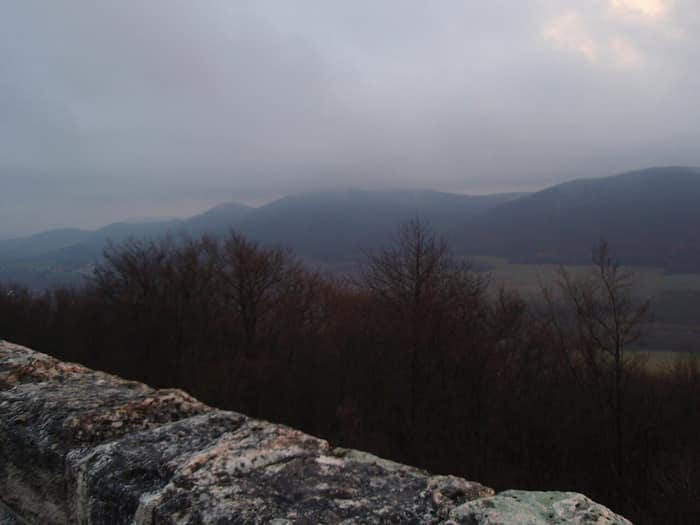
- Climb the stairs to the upper terrace for the obelisks and the tomb with its four inscribed plates, and for wide views over the surrounding hills.
- The site is a place of remembrance, so quiet and respectful behaviour is expected. Check the current opening conditions before you go.
- Other places on this site nearby include Dobrá Voda Castle (about 8 km) and Čachtice Castle (about 15 km).
Opening hours, access and conditions can change. Check before you go.
Map: where Mausoleum of Milan Rastislav Štefánik is
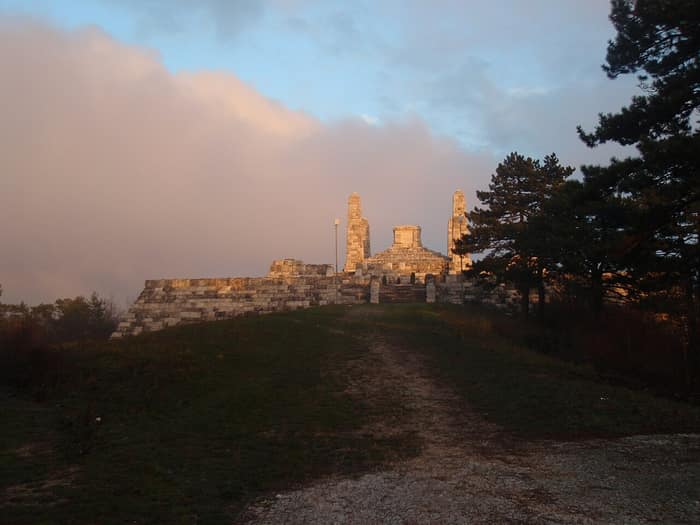
Photos of Mausoleum of Milan Rastislav Štefánik
Questions
Where is the Mausoleum of Milan Rastislav Štefánik?
It stands on the summit of Bradlo hill (543 m) in western Slovakia, belonging to the town of Brezová pod Bradlom and bordering the village of Priepasné. A road of about 4 km leads up from the town to a car park.
Who designed the Štefánik Mausoleum?
The Slovak architect Dušan Jurkovič designed it. He had earlier planned many military cemeteries in Galicia during the First World War. The monument was built in 1927–1928 from travertine.
Why does the monument have four obelisks?
The four obelisks symbolise the four people who died in the plane crash of 1919 and also the four countries in which Štefánik worked.
How do you get to the mausoleum on foot?
The red trail from Brezová pod Bradlom, part of the Štefánikova magistrála, leads to the monument. A yellow and then green trail climbs from the village of Košariská.
Who was Milan Rastislav Štefánik?
He was a Slovak politician, diplomat, general, aviator and astronomer, and one of the founders of Czechoslovakia. He died in a plane crash near Bratislava on 4 May 1919.
When was the mausoleum restored?
A large restoration took place from the late 1980s to 1996, including replacement of about 30 per cent of the travertine cladding. The monument has been a national cultural monument since 1968.
Also nearby
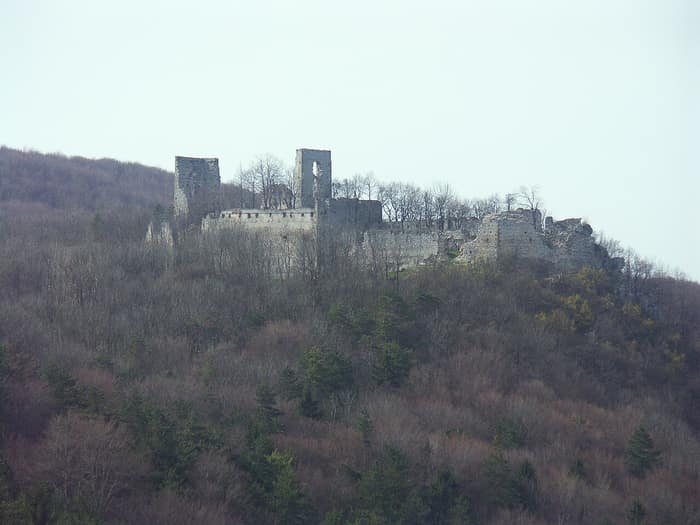
Dobrá Voda Castle
Dobrá Voda · Gothic ruin named after its springs
8 km away
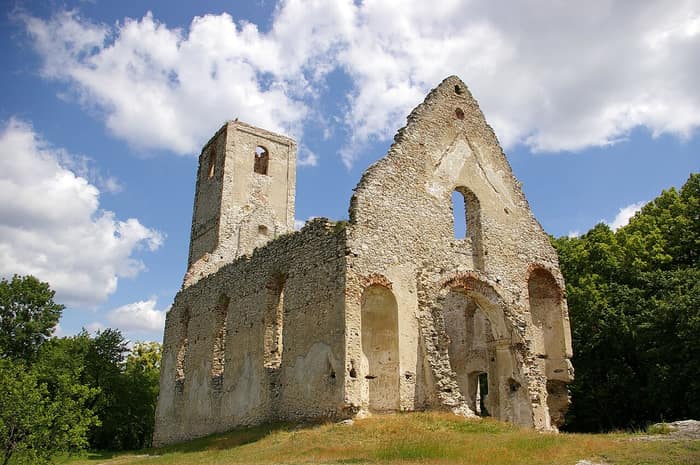
Church and Monastery of St Catherine of Alexandria (Katarínka)
Dechtice · ruined monastery reached only on foot
14 km away
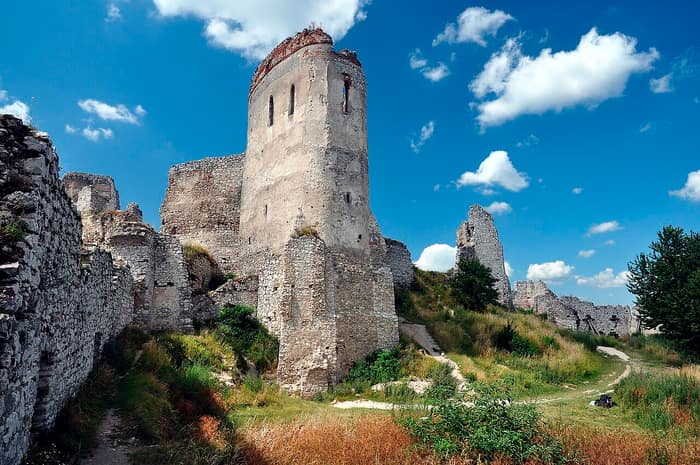
Čachtice Castle
Čachtice · hilltop ruins linked to Elizabeth Báthory
15 km away
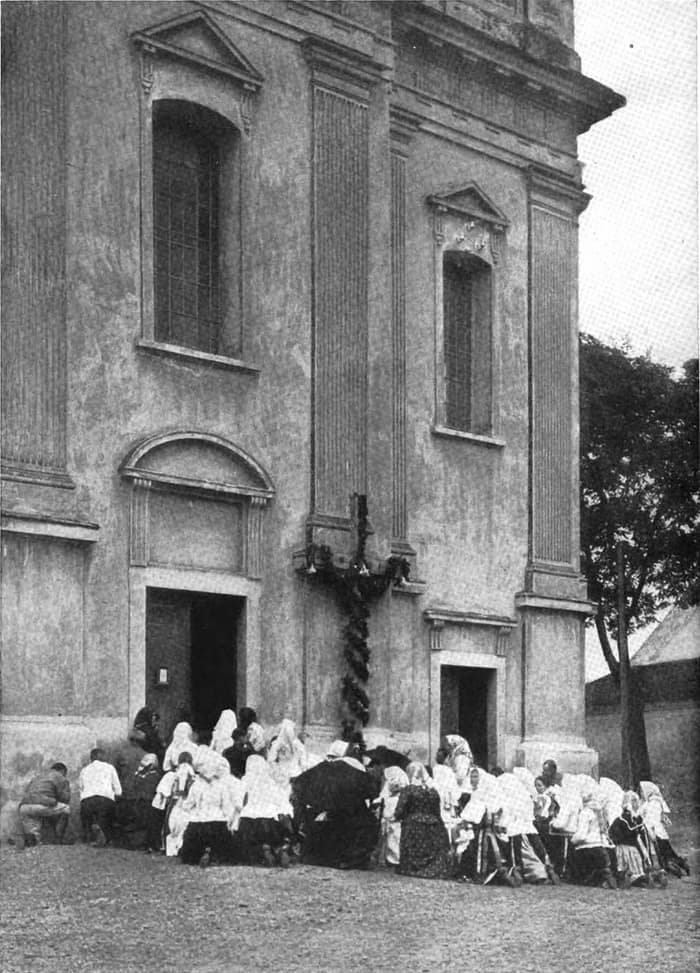
Church of St Stephen, Piešťany
Piešťany · Empire-style parish church of 1828–1832
22 km away