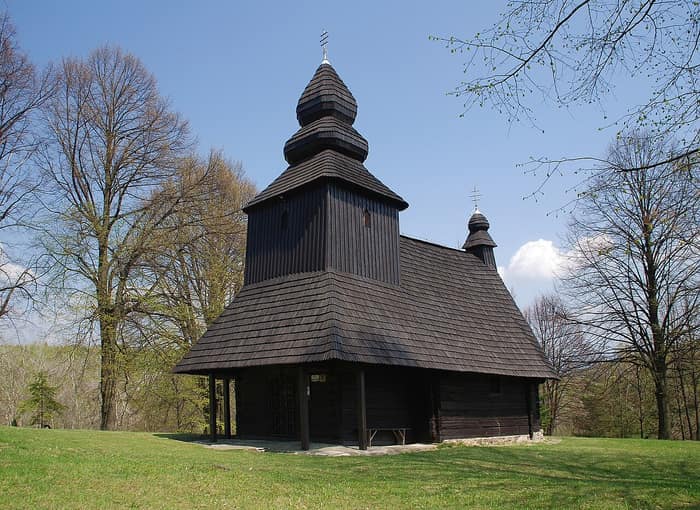
Ruská Bystrá wooden church: a log church in the Vihorlat hills
The Church of the Transfer of the Relics of St Nicholas in Ruská Bystrá is a wooden Greek Catholic church in the Sobrance District of eastern Slovakia, with the Vihorlat hills around it. Built in 1730, it is one of nine wooden churches and belfries inscribed by UNESCO in 2008 and one of the quietest corners of the Carpathian wooden-church heritage.
A tiny village of barely a hundred people keeps a log church from 1730 that is on the UNESCO World Heritage List, with bare, uncovered beams and an iconostasis whose Calvary sits unusually high, close to the ceiling.
The history of the wooden church of Ruská Bystrá
Ruská Bystrá is a small village in the Sobrance District of eastern Slovakia, first mentioned in historical records in 1405. Its Greek Catholic parishioners, who follow the Byzantine rite in union with Rome, built their wooden church in 1730 on a rise in the village, during the reign of the Holy Roman Emperor Charles VI. It is dedicated to St Nicholas, more precisely to the feast of the transfer of his relics, when his remains were taken from Myra to Bari.
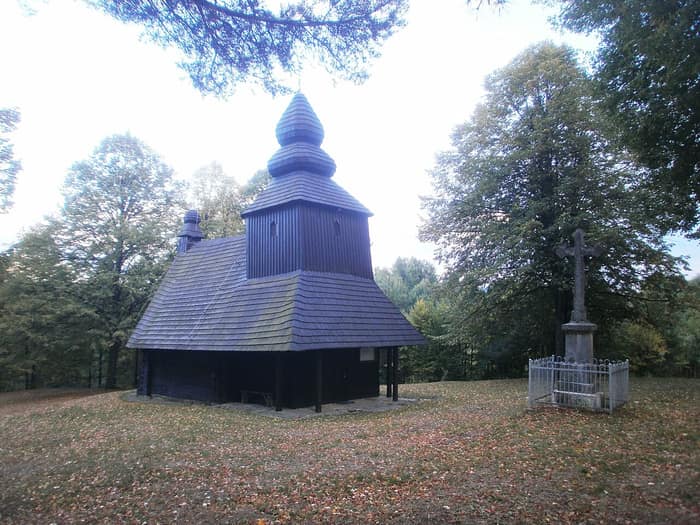
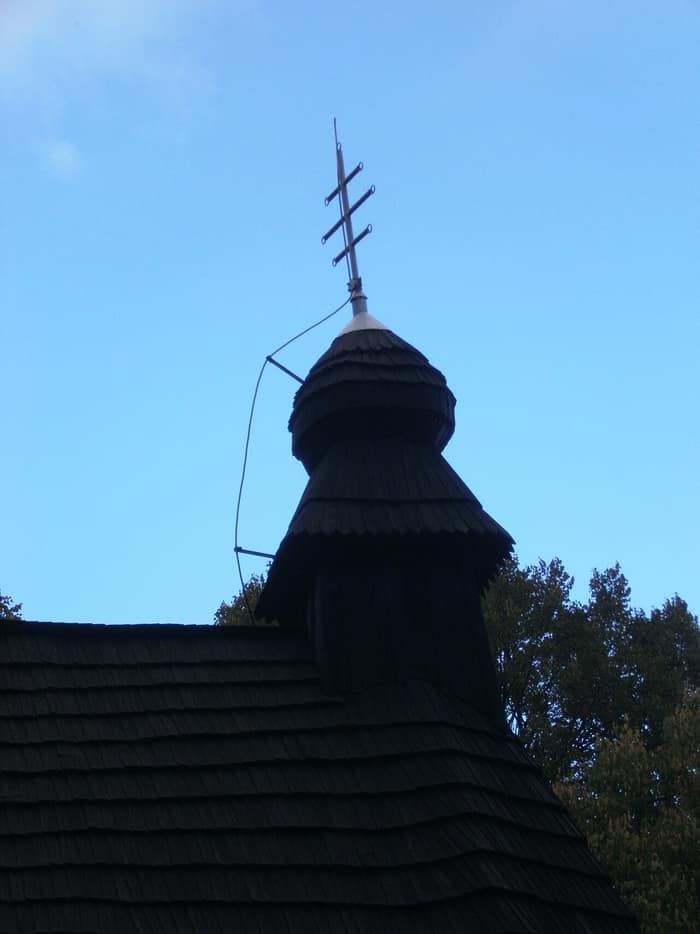
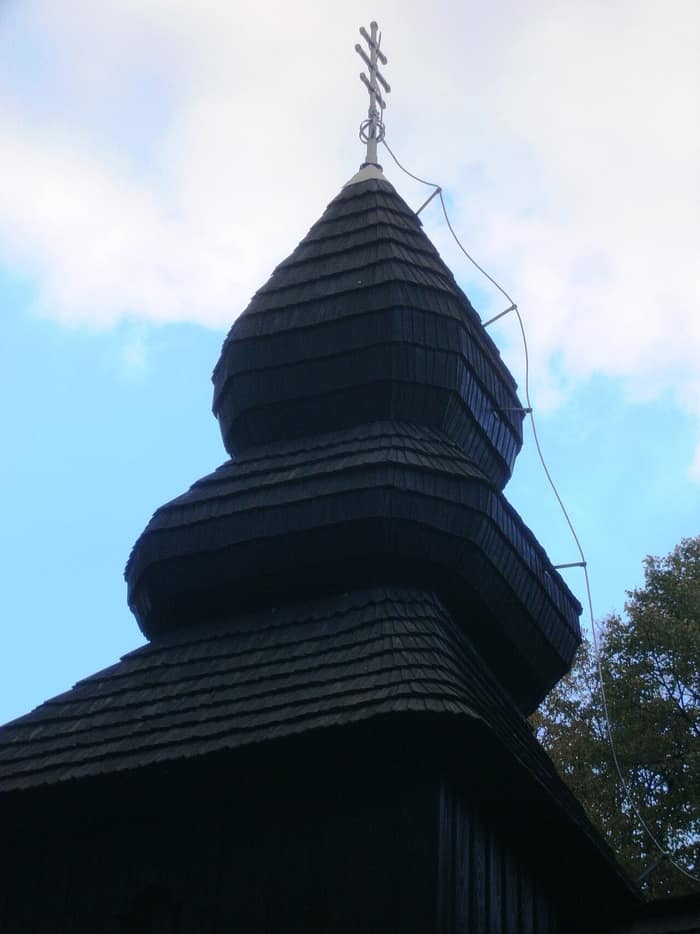
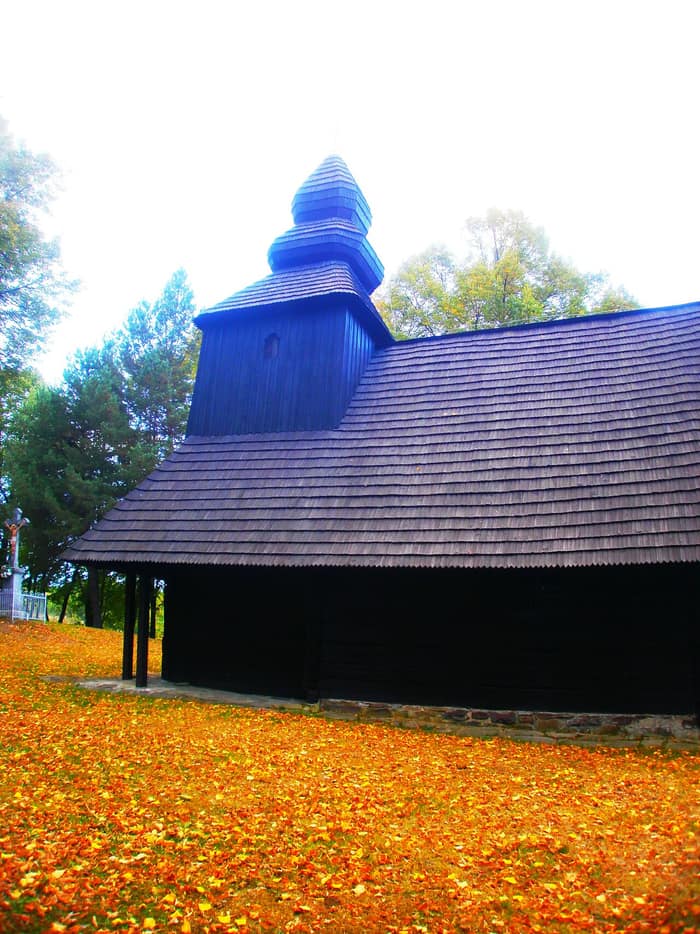
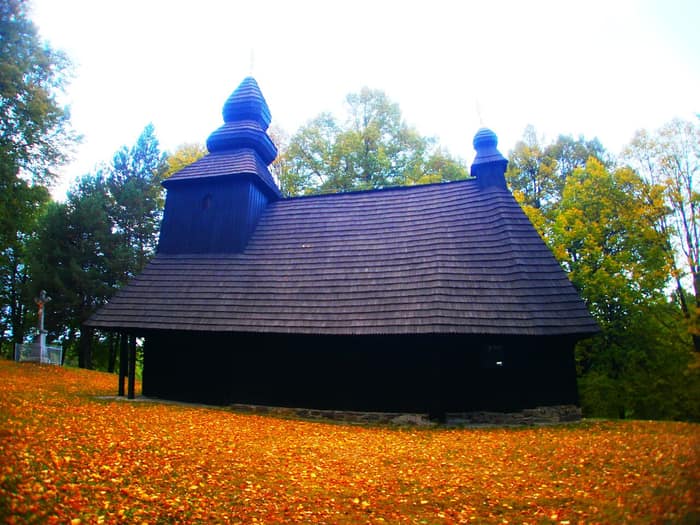
The builders used hand-hewn coniferous logs joined at the corners with carpenter's notches. The lowest beams, treated with black paint against wood-boring insects, rest on a stone foundation. The plan consists of three squares in a row from east to west: the smallest, in the east, holds the sanctuary with a small two-light window, the largest is the log nave, and the third, at the west end, carries the bell tower on posts. The tower is not of log construction but is clad outside with vertical boards, and it is crowned by a tent roof with an octagonal shingle finial and a forged iron cross. A shingle roof covers the whole church, and its lowest row of shingles has toothed edges.
Inside, a Baroque wooden iconostasis of five tiers separates the sanctuary from the nave. In the first row stand icons of the Mother of God Hodegetria and of Christ the Teacher, with St Nicholas and, unusually, St Paraskeva on the side wall. The second row of feasts has the Last Supper in the centre, the third row shows the apostles around Christ the High Priest, and above the Old Testament prophets the Calvary closes the whole structure. The German Wikipedia adds that the iconostasis originally came from another church and had to be adapted to the space. On the altar stands a valuable icon of the Crucifixion, which has been fully restored.
The twentieth century brought changes of confession. According to the Polish Wikipedia, the church was turned over to the Orthodox in the 1950s and was later returned to the Greek Catholics. A thorough renovation, mostly inside, was completed in 1989, and repairs in 2002 replaced some structural elements and part of the shingle covering. In 1968 the church was declared a national cultural monument of Slovakia, together with 26 other churches, as a group of wooden churches of eastern Slovakia.
On 7 July 2008 the World Heritage Committee, meeting for its 32nd session in Quebec, inscribed the church with eight other wooden buildings as the Wooden Churches of the Slovak part of the Carpathian Mountain Area. The nine buildings in eight locations date from the 16th to the 18th century; three of them are Greek Catholic churches, in Bodružal, Ruská Bystrá and Ladomirová.
Curiosities about the wooden church of Ruská Bystrá
- Unlike the Greek Catholic churches of Bodružal and Ladomirová, its log walls are not covered outside with boards or shingles, so the dark timber is visible.
- The ceiling is not a rising log vault in the shape of a truncated pyramid, as in many other churches, but a flat surface of straight boards.
- St Paraskeva, an unusual choice, has an icon in the first row of the iconostasis, on the side wall of the nave.
- The Calvary crowning the iconostasis sits unusually on the ceiling; the German Wikipedia says it had to be curved for lack of space.
- The shapes at the top of the tower flow from one geometric form to another, instead of the usual bulbous domes with clear geometry.
- A hiking path marked in green leads to the church from the village of Remetské Hámre via the Pilníková meadow at 812 m; the climb takes about 3 hours 50 minutes.
Tours near Church of the Transfer of the Relics of St Nicholas, Ruská Bystrá
Experiences in the area that you can book online with Viator:


Visiting the wooden church of Ruská Bystrá
- The church stands on a rise in the middle of a very small village in the Vihorlat hills, so the visit is as much about the setting as the building.
- Walk around the outside to see the bare log walls on a stone foundation, the shingle roof with toothed edges and the post-built bell tower with its tent roof.
- The interior is known for its five-tier iconostasis and the restored Crucifixion icon on the altar. It is not clear from the sources when the church is open, so check locally before you go.
- Keen walkers can arrive on the green-marked path from Remetské Hámre via the Pilníková meadow; the Slovak Wikipedia gives about 3 hours 50 minutes for the ascent.
- Other wooden churches of the region mentioned in the sources include those of Šmigovec, Hrabová Roztoka and Inovce; on this site Jasenov Castle lies about 28 km away.
Opening hours, access and conditions can change. Check before you go.
Map: where Church of the Transfer of the Relics of St Nicholas, Ruská Bystrá is
Photos of Church of the Transfer of the Relics of St Nicholas, Ruská Bystrá
Questions
Where is the wooden church of Ruská Bystrá?
It stands on a rise in the village of Ruská Bystrá in the Sobrance District, Košice Region, in eastern Slovakia. The Vihorlat hills surround the village.
Is the church of Ruská Bystrá a UNESCO World Heritage site?
Yes. Since 7 July 2008 it has been inscribed with eight other wooden buildings as the Wooden Churches of the Slovak part of the Carpathian Mountain Area.
When was the church built?
It was built in 1730 by the local parishioners, during the reign of Emperor Charles VI. It is a log building on a stone foundation.
What can you see inside the church?
The main feature is a five-tier Baroque iconostasis separating the sanctuary from the nave, with icons of St Nicholas, the Mother of God, Christ the Teacher and St Paraskeva in the first row. A restored Crucifixion icon stands on the altar.
What makes it different from other Slovak wooden churches?
Its log walls are left uncovered outside, the ceiling is flat and the roof carries no decorative elements. It differs in this from the Greek Catholic churches of Bodružal and Ladomirová.
Which saint is the church dedicated to?
It is dedicated to St Nicholas, specifically to the transfer of his relics from Myra to Bari. The name of the church in Slovak is Chrám Prenesenia ostatkov svätého Mikuláša.
Also nearby
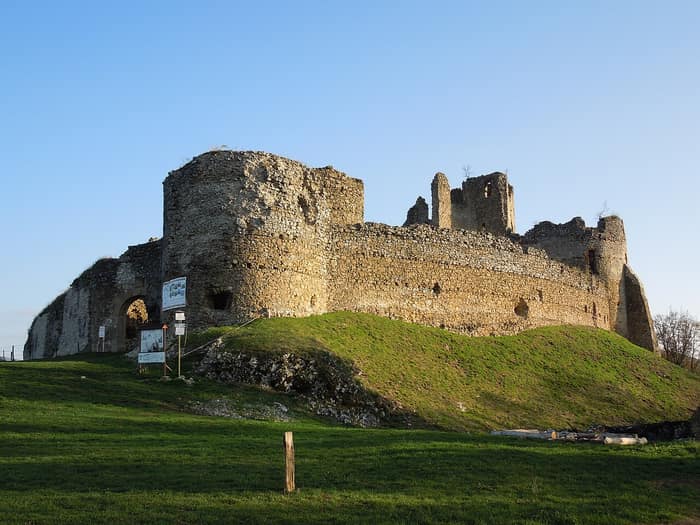
Jasenov Castle
Jasenov · ruined castle of counterfeiters and volunteers
28 km away
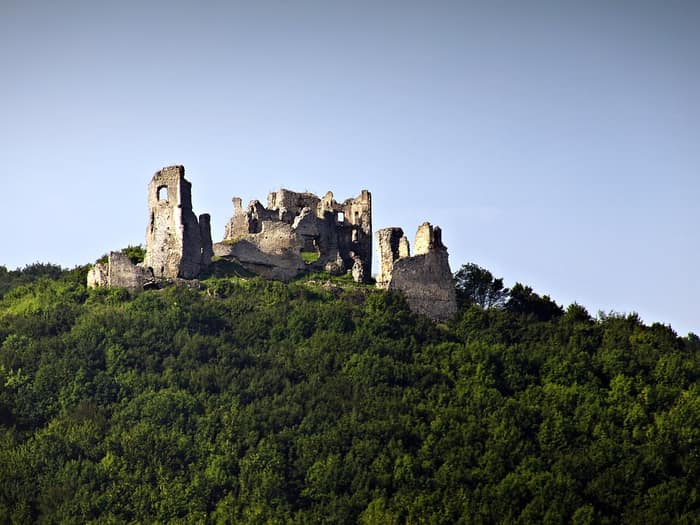
Brekov Castle
Brekov · limestone-hill ruin brought back by volunteers
34 km away
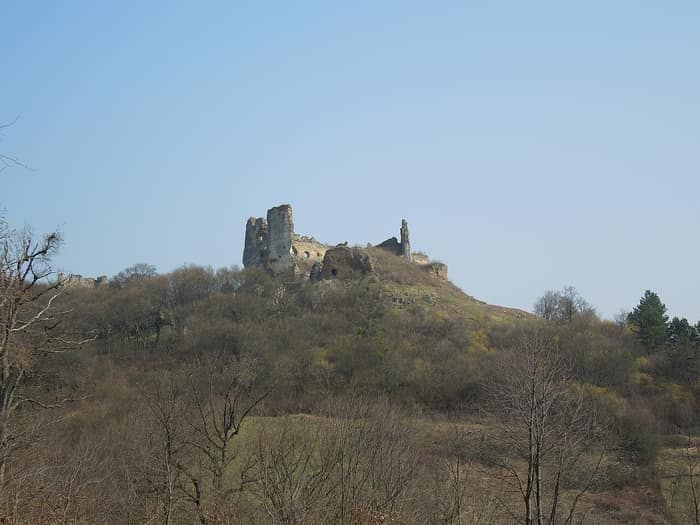
Čičava Castle
Sedliská · ruined hill castle with a legendary Book of Lies
41 km away
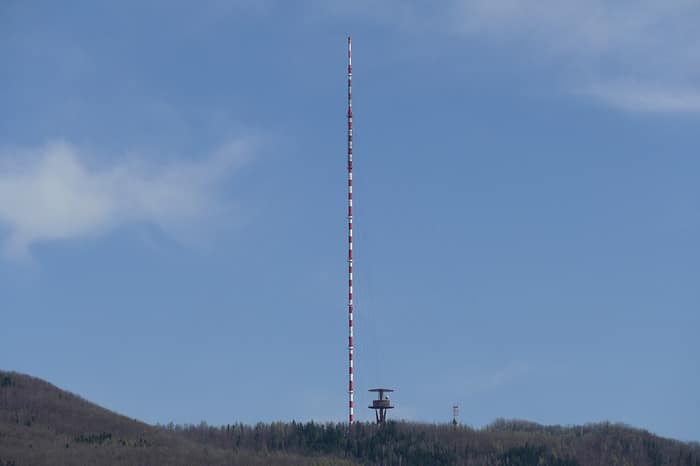
Dubník Transmitter
Slanské vrchy · 318 m mast, Slovakia's tallest structure
61 km away