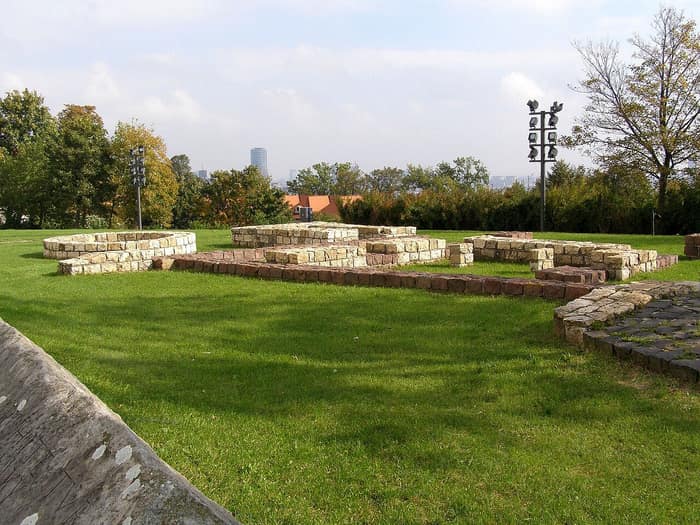
Great Moravian Basilica in Bratislava Castle: a 9th-century church
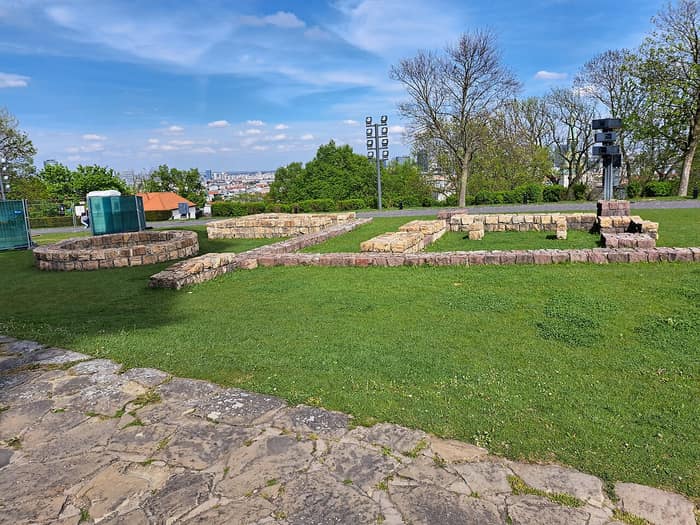
The Great Moravian Basilica in Bratislava Castle was a large stone church of the later 9th century on the castle hill above the Danube, in the heart of Bratislava. Only partial foundations survive, set out within the castle grounds and freely accessible, yet the building was among the largest Great Moravian churches ever found in Slovakia.
Bratislava's oldest large church was built of recycled Roman bricks, some stamped by the 14th legion, and its fresco fragments only came to light because later builders reused the old walls.
The history of the Great Moravian Basilica in Bratislava Castle
The steep hill on the left bank of the Danube has mattered since the earliest times. Archaeological finds show people living here some 4,500 years ago, and later came the Hallstatt and La Tène cultures and the Roman era. On the site of a Celtic oppidum, Slavic tribes began to settle around the turn of the 5th and 6th centuries. In the first half of the 9th century two principalities, the Moravian and the Nitra one, were united in 833 by Prince Mojmír I into a single state: Great Moravia. Among its most important centres in what is now Slovakia were Devín and Bratislava, then recorded as Brezalauspurch. The place was valuable because water routes and land roads crossed here.
Sometime in the second half of the 9th century a large stone church rose on what is today the eastern terrace of the castle acropolis. By analogy with similar buildings of the period it is assumed that its east end was formed by three apses. The surviving width of almost 13 metres means that it was a major church, probably a basilica. Excavations revealed foundations of three pairs of piers separating the central nave from the side aisles, and some reconstructions give it a length of nearly 20 metres. The builders used stone and bricks taken from an older Roman building, and some of the bricks carry the stamp of the 14th Roman legion. Plaster remains preserve red paint and parts of painted decoration, mostly plant motifs.
No written records tell what happened to the church, so the story is read from the ground. Around the beginning of the 10th century the basilica seems to have been destroyed, because younger structures of the 10th and 11th centuries overlie the foundations. First a tower of the hillfort's fortifications stood on the spot; later a church of St Saviour was built on the same place, probably as a sign of continuity. Bratislava was then the seat of an important priory. After the year 1200 a round charnel house with a diameter of 3.5 metres was added beside the church. In 1221 the priory moved from the castle to the foot of the hill, where a new church was built on the site of today's St Martin's Cathedral.
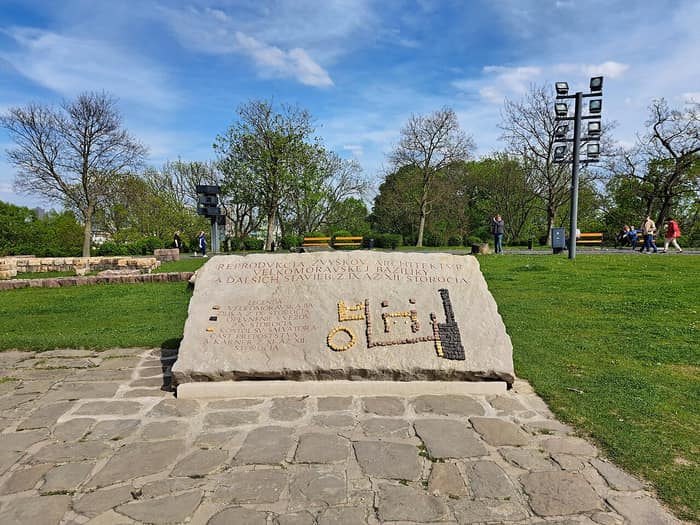
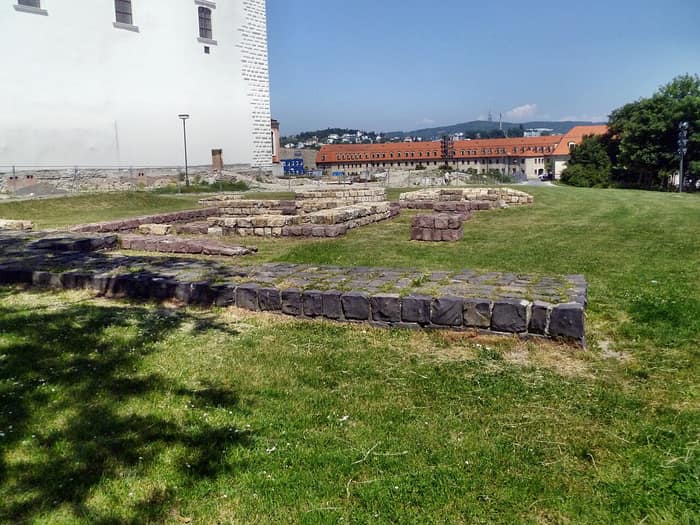
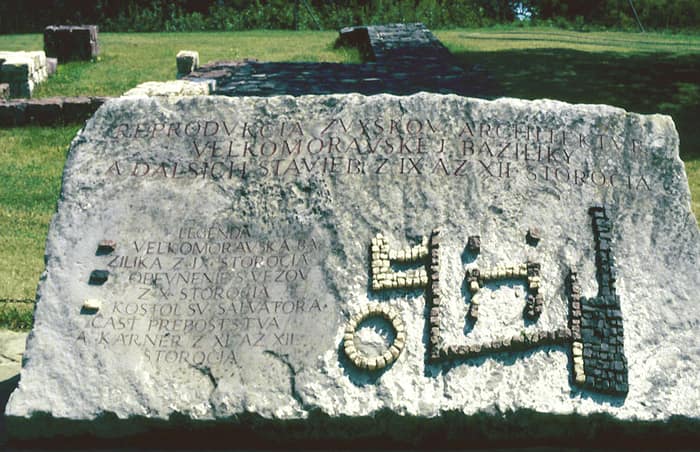
A cemetery around the basilica was used from the 9th to the 12th century, and the graves yielded hollow gilded bronze buttons with ornaments, silver earrings and other objects. The building itself was found in 1965. Its remains are now shown as partial foundations next to an information board, a few metres from the castle, within the castle grounds. They are the largest known Great Moravian church foundation in Slovakia and a rare tangible trace of the country's earliest statehood in the middle of its capital.
Curiosities about the Great Moravian Basilica
- The builders recycled stone blocks, bricks and roof tiles from an older Roman building, and some bricks bear the stamp of the 14th Roman legion.
- Its width of almost 13 metres makes it the largest Great Moravian church known on the territory of Slovakia.
- Fragments of painted plaster survived only because 11th-century builders reused wall remains from the basilica; the paintings mostly show plant motifs.
- The ruined foundations were later overbuilt by a tower of the hillfort and then by a church of St Saviour, apparently to keep the sacred spot in use.
- A cemetery around the church was used for some three centuries, from the 9th to the 12th century, and graves contained gilded bronze buttons and silver earrings.
- The Bratislava priory left the castle in 1221, and the new church built at the foot of the hill stood where St Martin's Cathedral is today.
Tours near Great Moravian Basilica in Bratislava Castle
Experiences in the area that you can book online with Viator:


Visiting the Great Moravian Basilica in Bratislava Castle
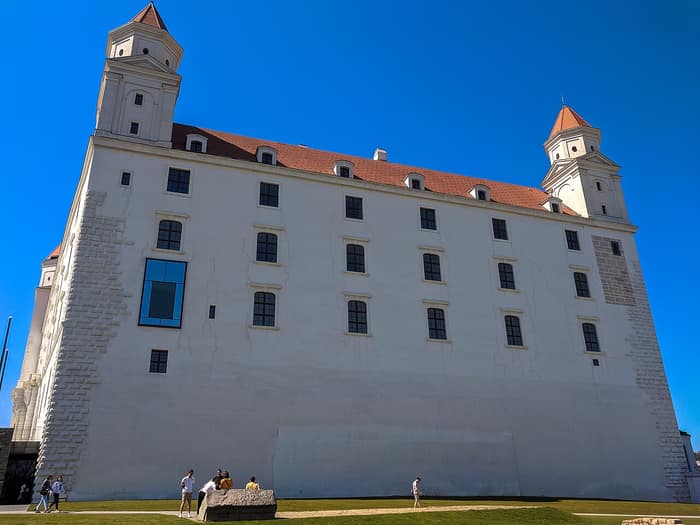
- The remains are presented as partial foundations a few metres from the castle building, within the castle area, and can be visited freely.
- An information board nearby describes the church, so no special preparation is needed; allow a short stop on a castle visit.
- Remember that only the ground plan is visible: the building stood on the south part of the eastern terrace of the acropolis.
- Other places in the immediate neighbourhood on this site include the Clarissine Church, the Holy Trinity Church in Podhradie and the Pálffy palaces. Check the current opening hours of the castle before you go.
Opening hours, access and conditions can change. Check before you go.
Map: where Great Moravian Basilica in Bratislava Castle is
Photos of Great Moravian Basilica in Bratislava Castle
Questions
What is the Great Moravian Basilica in Bratislava Castle?
It was a large stone church of the later 9th century on the castle hill, built during the Great Moravian period. Today partial foundations are shown inside the castle grounds.
Can you visit the basilica remains for free?
The remains lie a few metres from the castle building, within the castle area, and are described as freely accessible. An information board explains them.
How big was the Great Moravian basilica?
It was almost 13 metres wide, and some reconstructions give a length of nearly 20 metres. It was the largest Great Moravian church known in Slovakia.
What was the basilica built from?
The builders used bricks, stone blocks and roofing from an older Roman building. Some of the bricks bear the stamp of the 14th Roman legion.
What happened to the basilica?
It seems to have been destroyed around the beginning of the 10th century. A tower and later a church of St Saviour were built on the same spot, and the priory moved to the foot of the hill in 1221.
When was the basilica discovered?
The building was discovered in 1965. Its remains are now conserved as foundations and presented in the castle grounds.
Also nearby
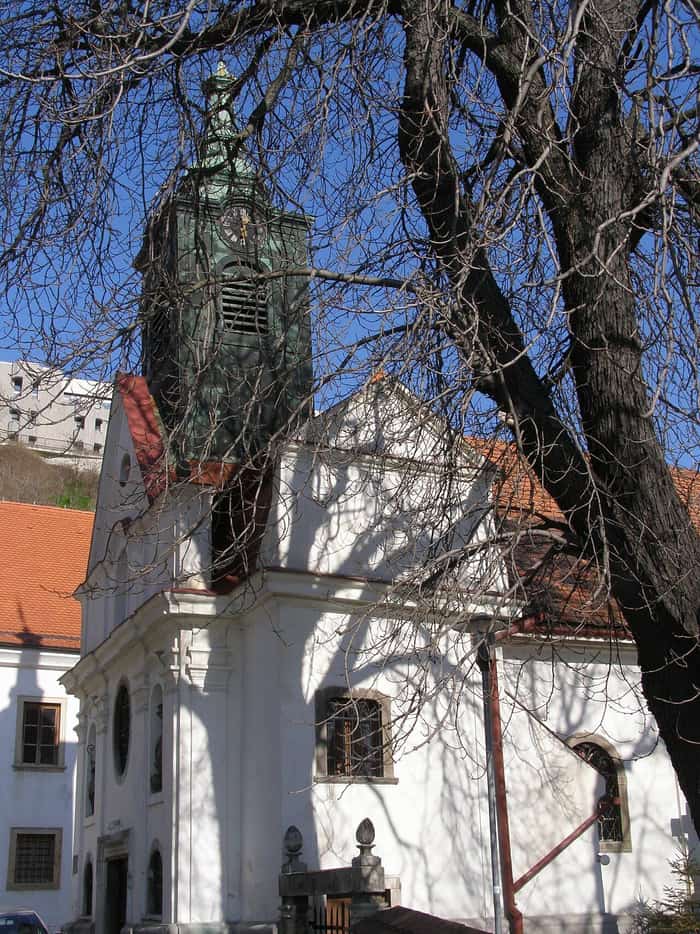
Holy Trinity Church, Podhradie
Bratislava · Baroque church that survived the Zuckermandel demolition
350 m away
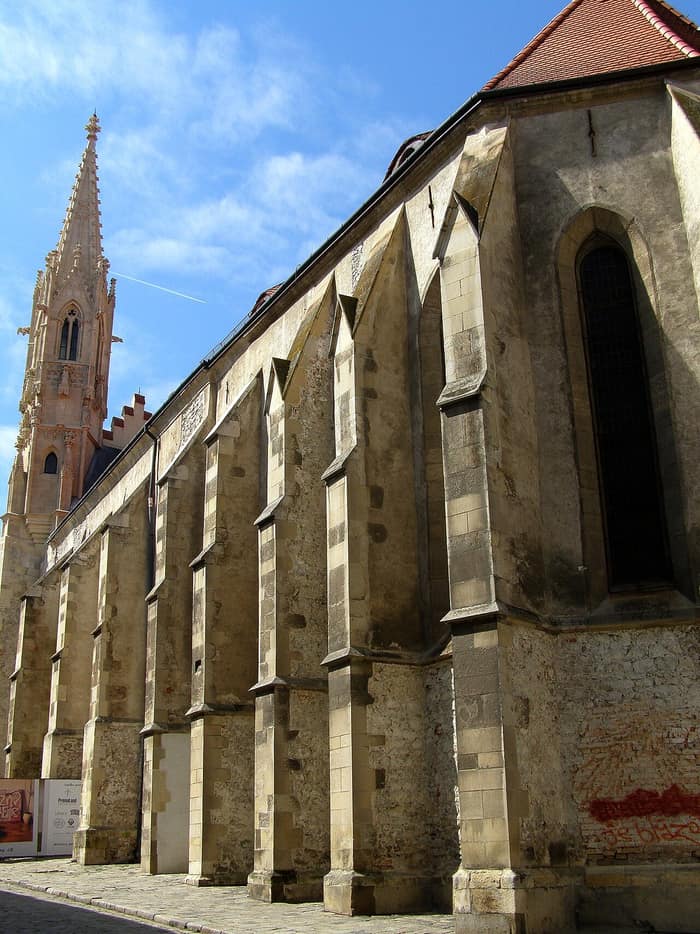
Clarissine Church
Bratislava Old Town · Gothic church whose tower rests on the nave corner
400 m away
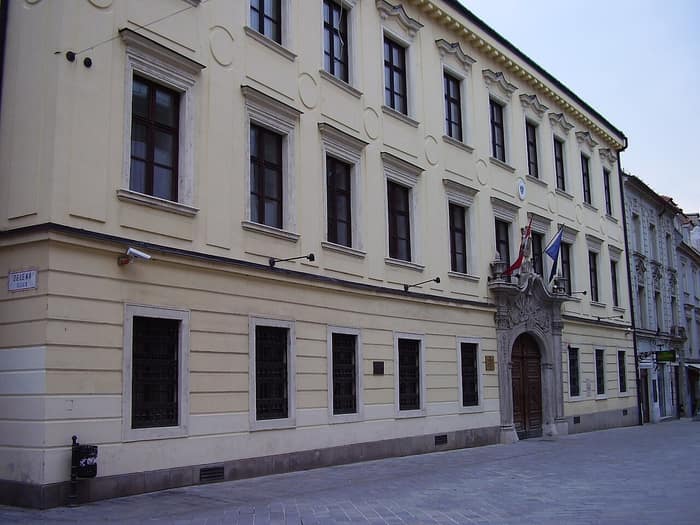
Pálffy Palace (Ventúrska)
Bratislava Old Town · Baroque palace, mint and Mozart legend
400 m away
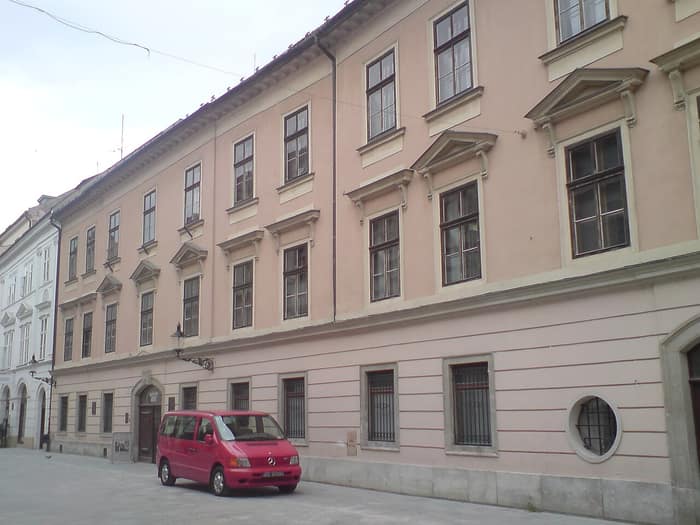
Johann Pálffy Palace
Bratislava · Classicist palace over Celtic and medieval remains
450 m away