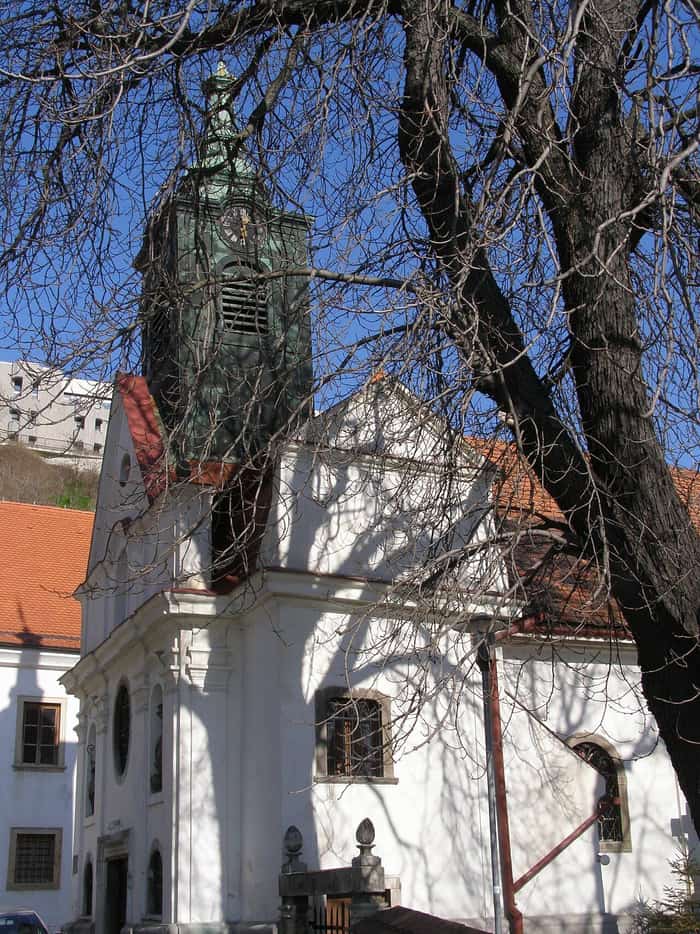
Holy Trinity Church in Podhradie: a Baroque survivor below the castle
Holy Trinity Church (Kostol Najsvätejšej Trojice) is a small Baroque church in Podhradie, the old district beneath Bratislava Castle on the Danube bank. Built between 1734 and 1738, it is one of the few original buildings left in the redeveloped area of Zuckermandel and is still used for worship. It is an easy and quiet detour for anyone exploring Bratislava's lesser-known churches.
A wooden chapel built in 1713 to give thanks for the end of a plague grew into a Baroque church. When the old quarter around it was demolished in the 1960s, it was one of the few buildings left standing.
The history of Holy Trinity Church in Podhradie
Around the middle of the 13th century two separate one-street settlements grew up on the southern slope of the castle hill in Bratislava. One took the name of the Vydrica stream valley from which its inhabitants had moved. The other, to the west, was called Zuckermandel. Both soon developed into town quarters and were lived in mostly by poorer people: fishermen, boatmen, merchants and craftsmen. Zuckermandel stretched from the Water Tower to the old Jewish cemetery near today's tunnel, and consisted essentially of one street, the Zuckermandl Hauptgasse, now called Žižkova.
In 1713 a plague epidemic ended in this part of the city, and in gratitude a wooden chapel was built at the eastern end of the street. Some twenty years later it gave way to a new brick church and parish house, probably as a result of the evangelisation efforts of Imre Esterházy, Archbishop of Esztergom and primate of Hungary. The foundation stone was laid on 15 April 1734 and blessed by Bishop Jozef Berényi, the primate's vicar. The church was consecrated on 18 May 1738. The plans were drawn by Kitler and Gratzl, and the budget was 25,000 zlatých. According to the Hungarian art historian Pál Voit, the notable Austrian Baroque architect Franz Anton Pilgram may also have had a hand in the design.
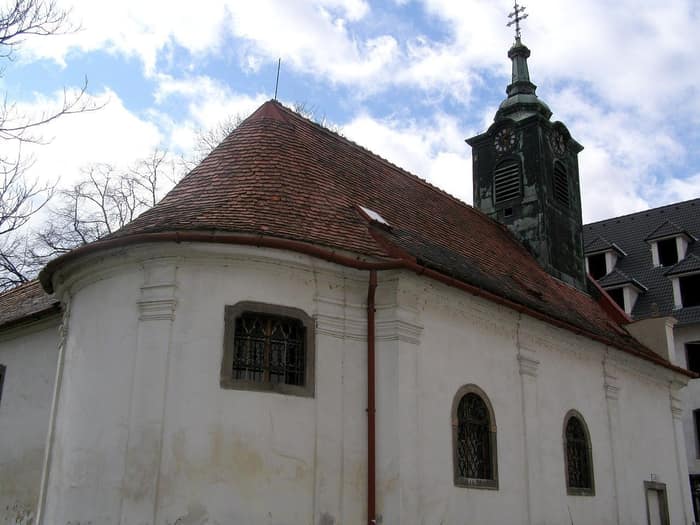
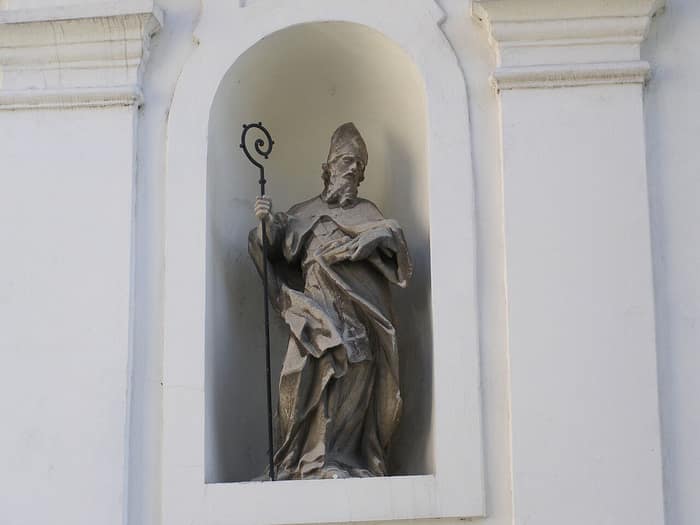
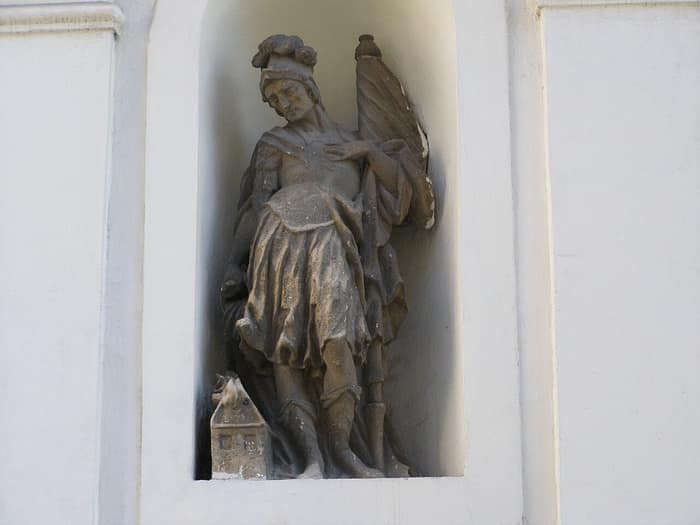
The church follows the traditional east–west orientation. Its most notable feature is the west façade with the main entrance, finished by an attic and a pediment and crowned by a small square tower with clocks on all four sides. Two niches beside the portal hold statues of St Nicholas, patron of boatmen, and St Florian, patron of firefighters. Inside is a single nave with a small presbytery and an organ gallery. The main altar consists of an altar table and a sculpture of the Holy Trinity, flanked by statues of St Roch and St Sebastian, both patrons against the plague, which are thought to come from the workshop of Georg Raphael Donner. A two-storey parish building of the 19th century joins the church at a right angle and forms a small courtyard with it.
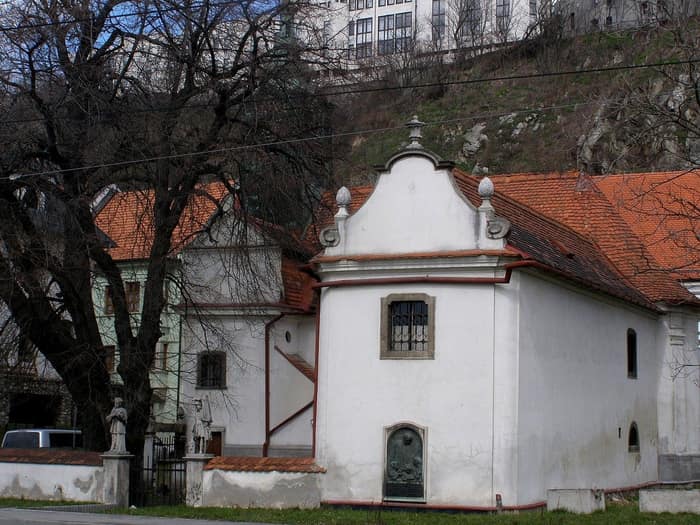
One of the best-loved priests here was Karol Scherz, who took over the parish in 1855 and became known for his charity. He is said to have saved more than 50 people during floods and fires. After he died following an accident with a horse-drawn carriage in 1888, many people of Bratislava mourned him, and in 1908 a bronze memorial plate by the sculptor Alojz Rigele was placed on the parish wall. In the 1960s most of old Zuckermandel was demolished, and the church survived as one of its few remaining buildings. Today it is a filial church of the Parish of St Martin, and since 2017 it has been entrusted to the Sovereign Military Order of Malta.
Curiosities about Holy Trinity Church
- The church began as a wooden chapel in 1713, built to give thanks for the end of a plague epidemic in Podhradie.
- It is sometimes confused with the Old Cathedral of Saint John of Matha and Saint Felix of Valois in Bratislava, because the Slovak names of the two churches are so similar.
- The two side statues at the main altar show St Roch and St Sebastian, both patrons against the plague, a reminder of why the church was founded.
- The façade niches hold St Nicholas, patron of boatmen, and St Florian, patron of firefighters, fitting for a district of fishermen and boatmen.
- Two red banners hang on the side walls, donated by the guilds of fishermen and boatmen; the boatmen's banner shows St Nicholas and the Holy Trinity.
- The big bell was named after the Holy Trinity in 1761, and the small one after St Roch. The tower clock shows the time in all four directions.
Tours near Holy Trinity Church, Podhradie
Experiences in the area that you can book online with Viator:


Visiting Holy Trinity Church in Podhradie
- Look first at the west façade: pilasters divide it into regular fields, and the niches, the tympanum with a small crucifix and the tower with clocks give the plain building its character.
- In the courtyard, a low shingle-roofed wall with a small gate flanked by statues of St John of Nepomuk and St Florian encloses a stone cross. The bronze plate for Karol Scherz is on the south wall of the parish building.
- The interior is simple: a marble font, a tabernacle with openings decorated with a monstrance motif, a painting of Saints Cyril and Methodius and the guild banners of the fishermen and boatmen.
- The church is still active, so respect services when visiting. Check the current opening hours before you go.
- The Great Moravian Basilica in Bratislava Castle, the Church of St Elisabeth, the Clarissine Church and the Esterházy Palace are all within about 1 km.
Opening hours, access and conditions can change. Check before you go.
Map: where Holy Trinity Church, Podhradie is
Photos of Holy Trinity Church, Podhradie
Questions
Where is Holy Trinity Church in Podhradie?
It stands in Podhradie, the historic district below Bratislava Castle next to the Danube bank, in the area of the former Zuckermandel quarter.
When was Holy Trinity Church in Podhradie built?
It was built between 1734 and 1738, replacing a wooden chapel of 1713. The foundation stone was laid on 15 April 1734 and the church was consecrated on 18 May 1738.
Why was the church built?
A wooden chapel was erected in 1713 in thanks for the end of a plague epidemic in this part of Bratislava. It was later replaced by the brick Baroque church.
Who designed Holy Trinity Church?
The plans were created by Kitler and Gratzl. The Hungarian historian Pál Voit suggested that the Austrian Baroque architect Franz Anton Pilgram contributed to the project.
What happened to the area around the church?
Most of the old Zuckermandel quarter was demolished in the 1960s, and the church is one of the few buildings that survived. The area has since been redeveloped.
Is Holy Trinity Church still in use?
Yes, it is an active Roman Catholic church and a filial church of the Parish of St Martin. Since 2017 it has been entrusted to the Sovereign Military Order of Malta.
Also nearby
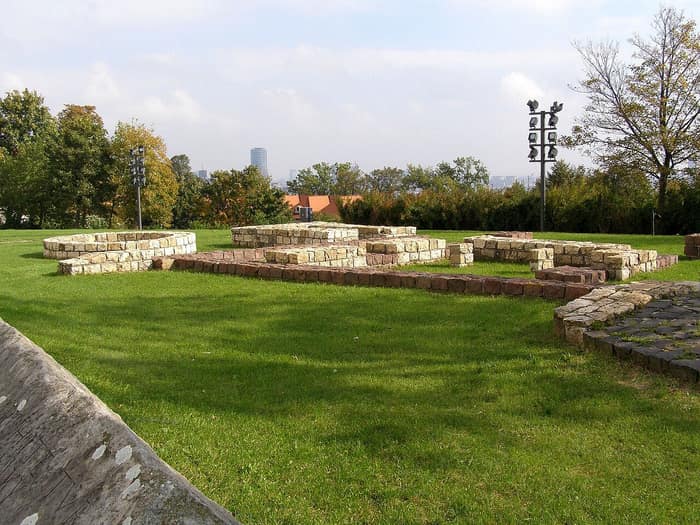
Great Moravian Basilica in Bratislava Castle
Bratislava · 9th-century church built from Roman bricks
350 m away
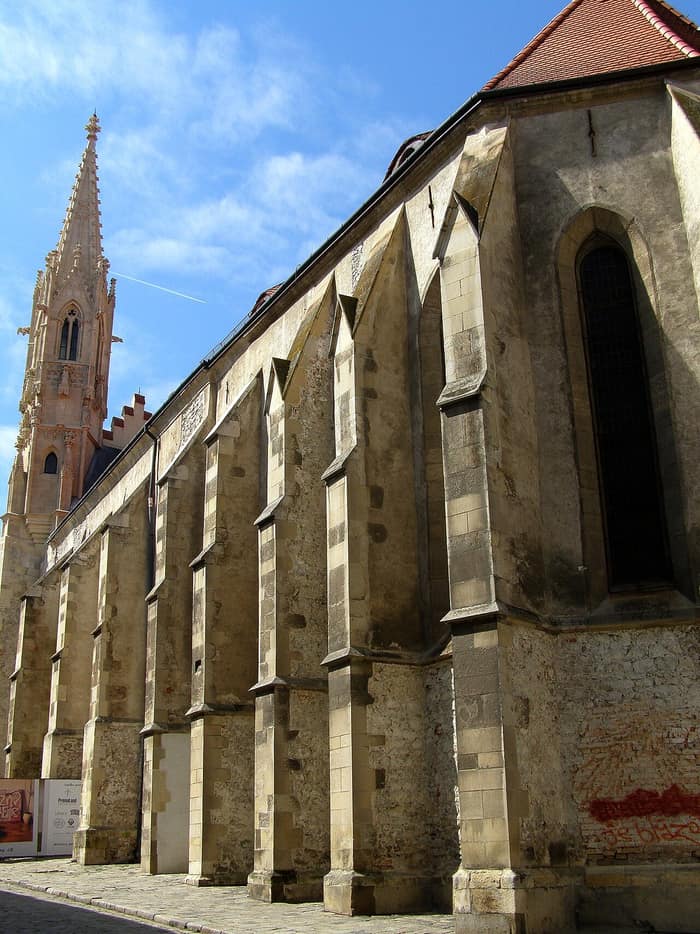
Clarissine Church
Bratislava Old Town · Gothic church whose tower rests on the nave corner
700 m away
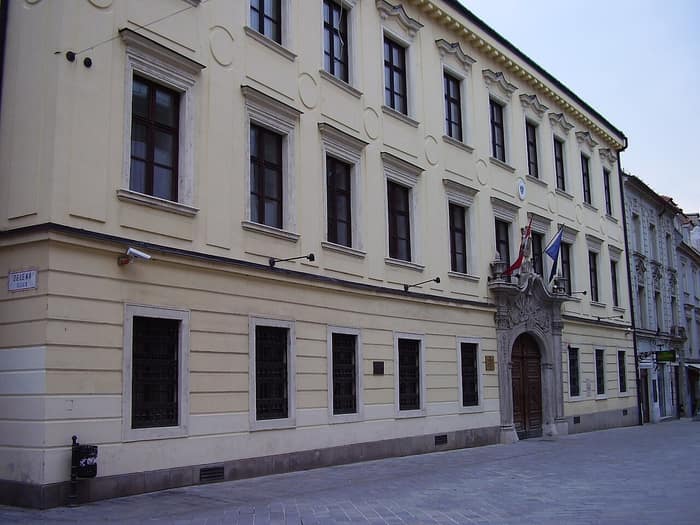
Pálffy Palace (Ventúrska)
Bratislava Old Town · Baroque palace, mint and Mozart legend
750 m away
Johann Pálffy Palace
Bratislava · Classicist palace over Celtic and medieval remains
750 m away