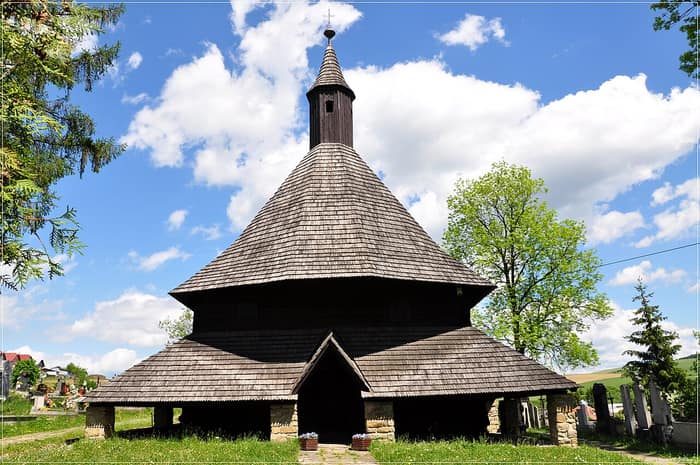
Church of All Saints in Tvrdošín: a Gothic wooden church in Orava
The Church of All Saints (Kostol Všetkých svätých) stands at the town cemetery of Tvrdošín in the Orava region of northern Slovakia. This Roman Catholic Gothic log church from the 15th century is the oldest surviving building in the town and one of the Wooden Churches of the Slovak part of the Carpathian Mountain Area on the UNESCO World Heritage List.
A wooden church of red spruce logs, more than 500 years old, holds services only around All Saints' Day, yet it carries a UNESCO listing and a painted ceiling with 49 rosettes.
The history of the Church of All Saints in Tvrdošín
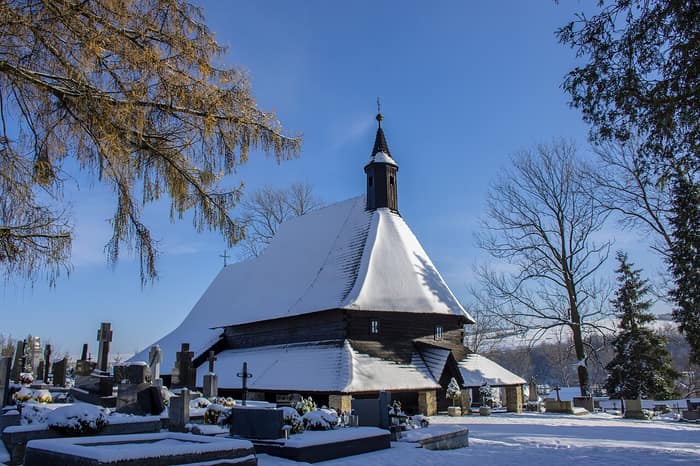
The first written record of a parish in Tvrdošín dates from 1395, and the wooden church was built in the second half of the 15th century, although some sources place it as early as the end of the 14th century. It is a Gothic log building made of red spruce, with a rectangular chancel that is smaller than the nave and a sacristy attached. Its steep shingled roof carries a small octagonal turret topped by a conical cap, and prominent covered galleries, later supported on masonry pillars, run around the walls. According to German Wikipedia, the church was renewed around the middle of the 16th century.
After the church was taken over by Protestants, it was rebuilt between 1650 and 1654 in Renaissance style. A new entrance with a Renaissance portal was cut through the south wall, and the door to the sacristy received a similar portal. The nave was given a painted coffered ceiling with 49 rosettes decorated with field and garden flowers (1653–54), while the chancel vault shows a starry sky and the four evangelists. A pulpit with the figures of the four evangelists dates from 1654, and a painting of St George fighting the dragon from about 1653. The church also holds nearly life-size figures of saints and painted stalls.
The Gothic altar did not survive intact. Only one wing, with fragments of paintings of the apostle Peter and John the Baptist from the early 16th century, remains in the church, and the central 15th-century picture, the Lamentation of Christ, was taken in 1919 to a museum in Budapest. The Baroque main altar, made in the late 17th or early 18th century, now shows All Saints. Smaller repairs followed in 1899, 1927, 1952, 1966 and 1971, and a thorough restoration took place in the late 20th century. That work was honoured with the Europa Nostra award in the 1990s.
On 7 July 2008 the church, together with seven other monuments, was inscribed on the UNESCO World Heritage List as part of the Wooden Churches of the Slovak part of the Carpathian Mountain Area. It is also a national cultural monument. Today it serves worshippers only once or twice a year, around All Saints' Day on 1 November and All Souls' Day on 2 November, which keeps its interior and its medieval atmosphere remarkably well preserved.
Curiosities about the Church of All Saints in Tvrdošín
- The church is used for services only around All Saints' Day on 1 November and All Souls' Day on 2 November.
- The nave ceiling has 49 painted rosettes, decorated with field and garden flowers, made in 1653–54.
- Its central Gothic picture, the Lamentation of Christ, has been in a museum in Budapest since 1919.
- Polish Wikipedia notes that it is the only monument in Slovakia to have received both a Europa Nostra award and a place on the UNESCO World Heritage List.
- The walled cemetery around the church has a Baroque gate with a small shingled turret, a Renaissance tombstone of Gaspar Kod from 1555 and two round stone structures from the 17th century.
- In the church hangs a painting of St George on horseback fighting the dragon, made around 1653.
Tours near Church of All Saints, Tvrdošín
Experiences in the area that you can book online with Viator:


Visiting the Church of All Saints in Tvrdošín
- The church stands at the town cemetery of Tvrdošín, surrounded by a wall with a Baroque gate. The steep shingled roof, the small turret and the covered galleries around the walls are easy to appreciate from outside.
- Services take place only around All Saints' Day, so the interior is not open on a regular basis. The sources do not say whether it can be visited at other times, so ask locally or check before you go.
- If you can get inside, look for the painted ceiling with its 49 rosettes, the 1654 pulpit with the evangelists, the painting of St George and the painted stalls.
- In the cemetery you can see the Renaissance tombstone of Gaspar Kod from 1555.
- Other places on this site nearby are the Most Holy Trinity Church in Tvrdošín (about 1 km), Orava Castle (about 17 km), Havránok (about 26 km) and Likava (about 31 km).
Opening hours, access and conditions can change. Check before you go.
Map: where Church of All Saints, Tvrdošín is
Photos of Church of All Saints, Tvrdošín
Questions
Where is the Church of All Saints in Tvrdošín?
It stands at the town cemetery of Tvrdošín in the Orava region of northern Slovakia. Orava Castle is about 17 km away.
Is the wooden church in Tvrdošín a UNESCO site?
Yes. On 7 July 2008 it was inscribed on the UNESCO World Heritage List together with seven other wooden churches in the Slovak part of the Carpathians.
How old is the Church of All Saints in Tvrdošín?
It was built in the second half of the 15th century, although some sources date it to the end of the 14th. It was rebuilt in Renaissance style in the 17th century.
Can you go inside the church?
Services are held there only around All Saints' Day (1 November) and All Souls' Day (2 November). Check locally whether the interior can be seen at other times.
What is special about the interior?
The nave has a painted coffered ceiling with 49 rosettes of flowers, and the chancel vault shows a starry sky. There is also a 1654 pulpit with the evangelists and a painting of St George and the dragon.
What happened to the original Gothic altar?
Only one wing with fragments of paintings of Peter and John the Baptist remains in the church. The central picture, the Lamentation of Christ, was taken to a museum in Budapest in 1919.
Also nearby
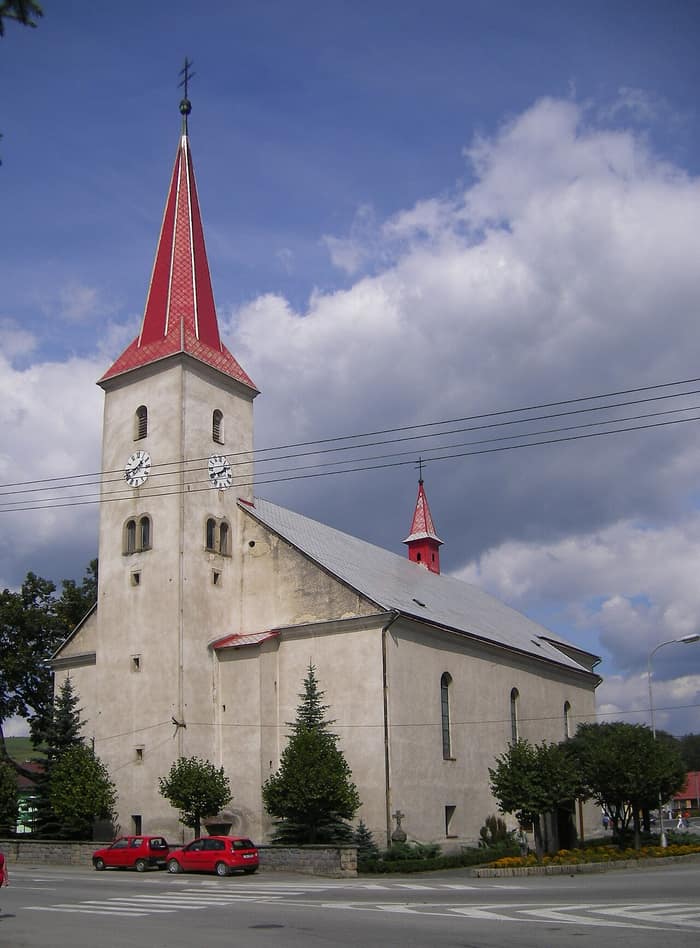
Most Holy Trinity Church, Tvrdošín
Tvrdošín · Baroque church with a tower older than its walls
500 m away
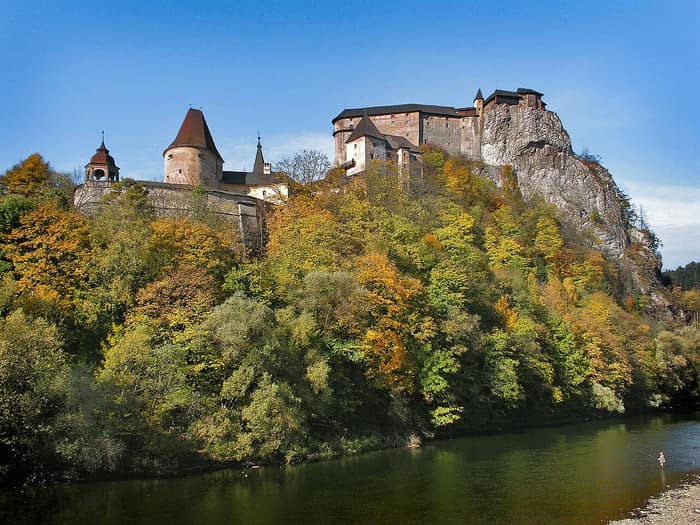
Orava Castle
Oravský Podzámok · rock castle that played Nosferatu's home
17 km away
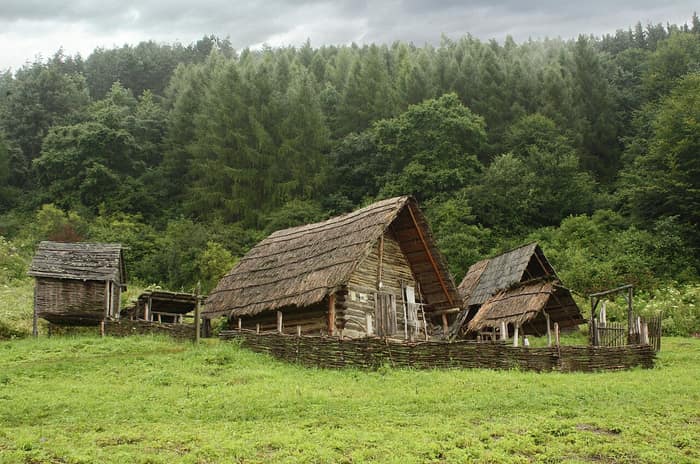
Havránok
Liptov · Celtic hillfort and shrine brought back to life
26 km away
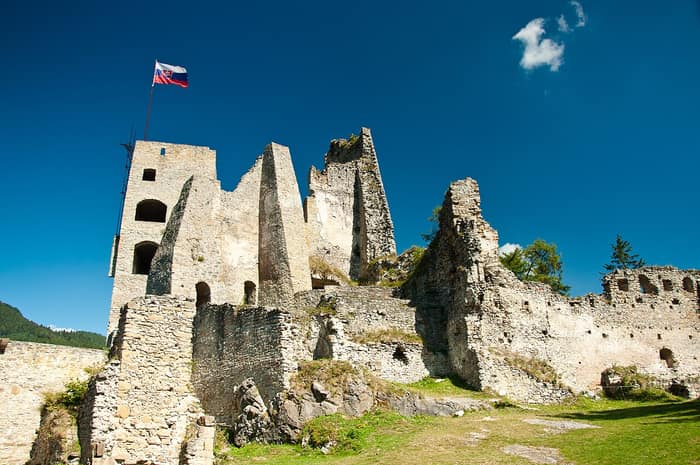
Likava Castle
Likavka · Liptov's biggest castle, Hussite prize and county prison
31 km away