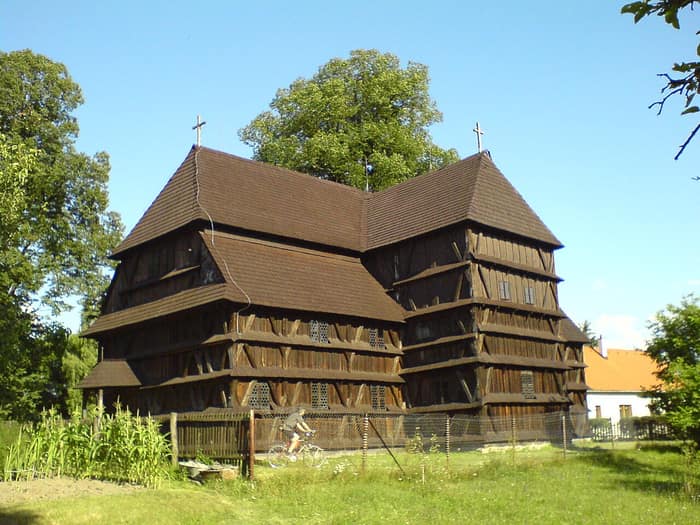
The wooden articular church of Hronsek, a UNESCO timber church
The wooden articular church of Hronsek is a Lutheran church in the village of Hronsek in central Slovakia, on the left bank of the Hron river, about 10 km from Banská Bystrica. Built in 1725–1726 as one of the few surviving articular churches, it has been on the UNESCO World Heritage List since 2008 and impresses with its cross-shaped plan, wooden interior and remarkable acoustics.
Built of wood, without a tower, on a marshy riverbank: the rules of 1681 were meant to keep Lutheran churches fragile, yet the church of Hronsek stands almost three centuries later with 1,100 seats.
The history of the Hronsek articular church
The name of the church refers to the articles No. 25 and No. 26 adopted by the Diet of Sopron in 1681. The Habsburg king and Holy Roman Emperor Leopold I needed concessions to the Hungarian nobility to calm their rebellion and stabilise his realm, after a decade of harsh Counter-Reformation policy against Protestants. The articles granted limited religious freedom to Lutherans and allowed them to build 38 churches. The conditions were strict: the land was assigned by the authorities, often in swampy places outside the town walls; the churches had to be made of wood; and they were not supposed to have bell towers. Of the 38 articular churches only five have survived: Hronsek, Istebné, Leštiny, Paludza and Kežmarok.
Until 1726 Lutheran services in Hronsek were held in the local Renaissance manor house. When this space was no longer enough for believers from the wide surroundings, a new articular church was decided. Hronsek was chosen to serve the northern part of Zvolen county, while a similar church in Ostrá Lúka served the south. Habsburg officials interpreted the Sopron rules as strictly as possible, and the site they selected lay by the Hron river among marshes, yet the church was never flooded. Another demand was that every worshipper must have a seat. Construction began on 23 October 1725 and was finished in the autumn of 1726; the name of the designer is not known.
The result is a cross-shaped timber-frame church about 8 metres high, built of oak and coniferous wood and joined with traditional carpentry joints and wooden pegs. The interior vault resembles an upturned boat, and the benches rise like an amphitheatre, giving 1,100 seats. Colonnades with Ionic ornament and canopies over the entrances are unusual elements that recall Scandinavian architecture, which has led to the assumption that craftsmen from Norway or Sweden took part. In the 18th century the interior was completed: the baptismal font dates from 1726, the Baroque organ by Martin Podkonický of Banská Bystrica from 1764 and the six interchangeable altar paintings by Samuel Mialovič from 1771. A separate wooden bell tower was built at the same time as the church.
In 1847 the poet Andrej Sládkovič married Júlia Senkovičová in this church. In 1990 extensive damage from wood-boring insects, fungi and rot was discovered, which endangered the structure. Surveys and restoration plans began in 2005, and the organ, paintings and wooden structures were restored. On 7 July 2008 the church and its bell tower were inscribed on the UNESCO World Heritage List, together with other wooden churches of the Slovak Carpathians. By 2023 the church was restored and open to the public.
Curiosities about the Hronsek church
- A bell tower was normally forbidden for articular churches, yet Hronsek has a separate wooden bell tower, built in 1726, which was an exception for a new Lutheran house of prayer.
- A rooster, a symbol of Christian vigilance, stands on one roof gable, while the other three are topped with oak crosses.
- The altar holds six paintings by Samuel Mialovič from 1771 which are rotated according to the church calendar.
- The Baroque organ by Martin Podkonický of Banská Bystrica dates from 1764; unusually, its gallery sits behind the altar.
- The wooden vault and amphitheatre-style seating give the church such good acoustics that it is used for classical music concerts.
- The poet Andrej Sládkovič married Júlia Senkovičová here on 15 September 1847.
Tours near Wooden articular church of Hronsek
Experiences in the area that you can book online with Viator:




Visiting the church in Hronsek
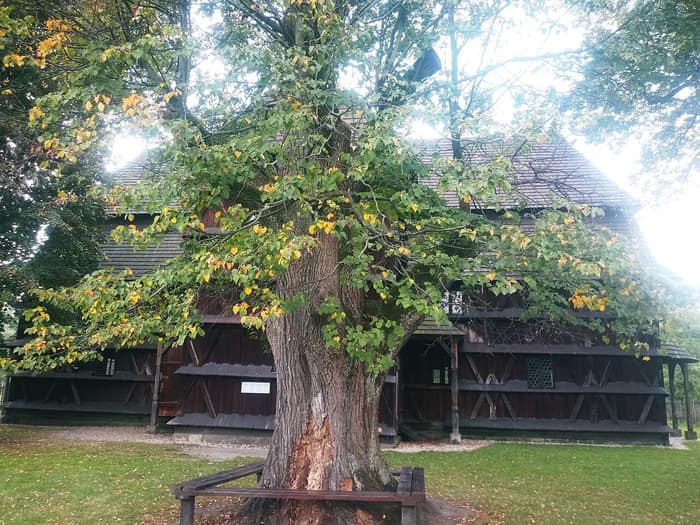
- Look for the wooden structure from outside first: the shingled roof, the five entrances, the 30 windows and the quiet yard shaded by old linden trees.
- Inside, notice the barrel vault, the oak columns with Ionic ornament, the amphitheatre-like galleries, the six altar paintings and the 1764 organ.
- The separate wooden bell tower stands near the church, built at the same time in 1726.
- The church is listed by UNESCO and used for services and concerts, so access may be limited at times. Check the current opening hours before you go.
- It combines well with the nearby places on this site: Zvolen Castle, Banská Bystrica Castle and the SNP Monument and Museum in Banská Bystrica, each about 9–10 km away.
Opening hours, access and conditions can change. Check before you go.
Map: where Wooden articular church of Hronsek is
Photos of Wooden articular church of Hronsek
Questions
Where is the wooden articular church of Hronsek?
It stands in the village of Hronsek in central Slovakia, on the left bank of the Hron river. The village lies about 10 km from Banská Bystrica and about 9 km from Zvolen.
What does articular church mean?
Articular churches were built by Lutherans under articles 25 and 26 of the Diet of Sopron of 1681. They had to be made of wood, stand on land assigned by the authorities and were not supposed to have bell towers.
Is the Hronsek church a UNESCO site?
Yes. On 7 July 2008 the church and its bell tower were inscribed on the UNESCO World Heritage List as part of the wooden churches of the Slovak part of the Carpathian Mountain Area.
How many people fit inside the Hronsek church?
The church has 1,100 seats, arranged amphitheatre-style on the floor and galleries, so the altar is well visible from everywhere.
When was the church built?
Construction began on 23 October 1725 and was finished in the autumn of 1726. The designer is not known.
What is special inside the church?
Highlights include the wooden vault shaped like an upturned boat, six interchangeable altar paintings by Samuel Mialovič from 1771 and a Baroque organ from 1764. The acoustics suit classical music.
Also nearby
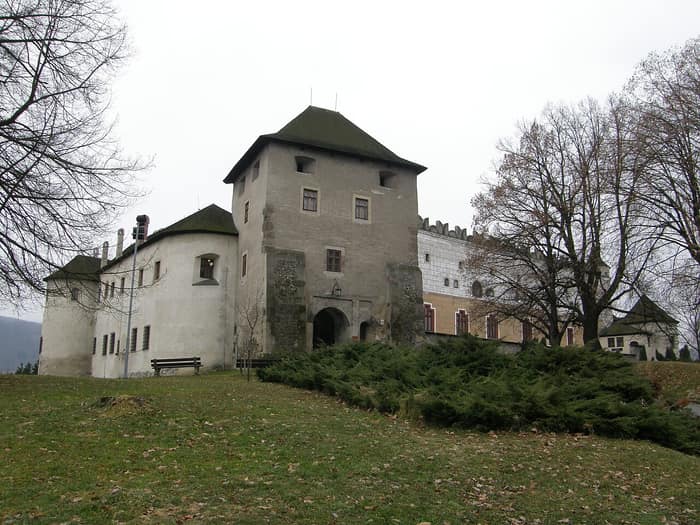
Zvolen Castle
Zvolen · Anjou hunting castle with a painted ceiling and Rubens
8.5 km away
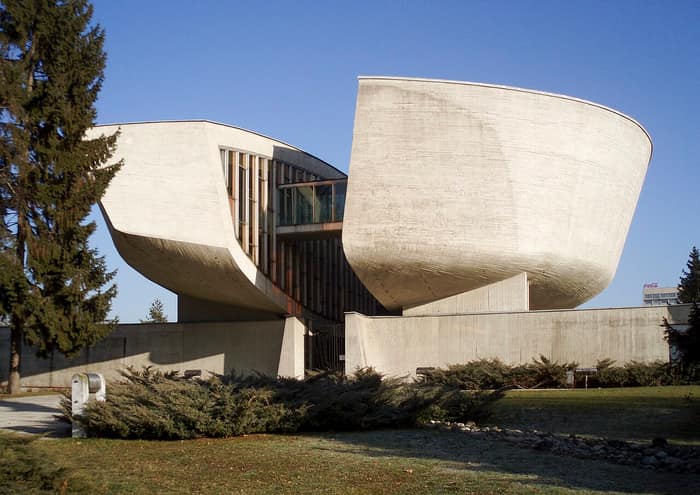
SNP Monument and Museum in Banská Bystrica
Banská Bystrica · brutalist memorial to the 1944 uprising
9.5 km away
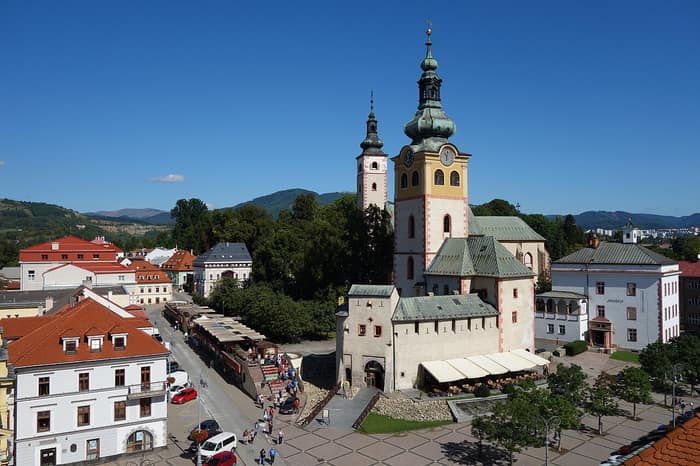
Banská Bystrica Castle
Banská Bystrica · walled church and barbican above the square
10 km away
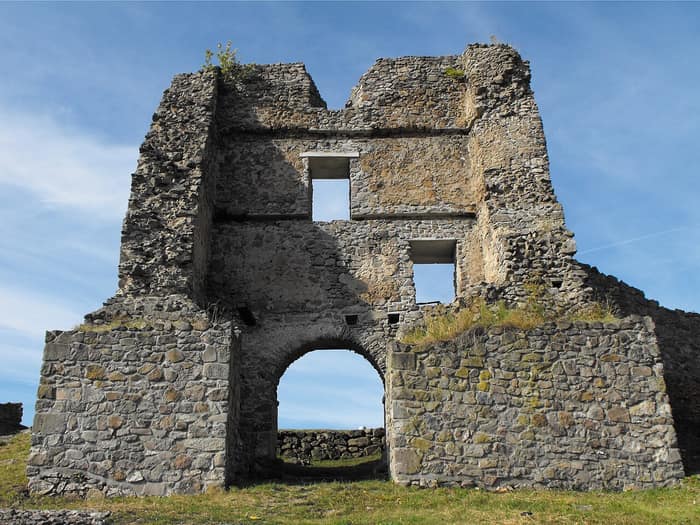
Pustý hrad
Zvolen · ruins of one of Europe's largest medieval castles
11 km away