Mária Valéria Bridge: the Danube bridge that waited 57 years
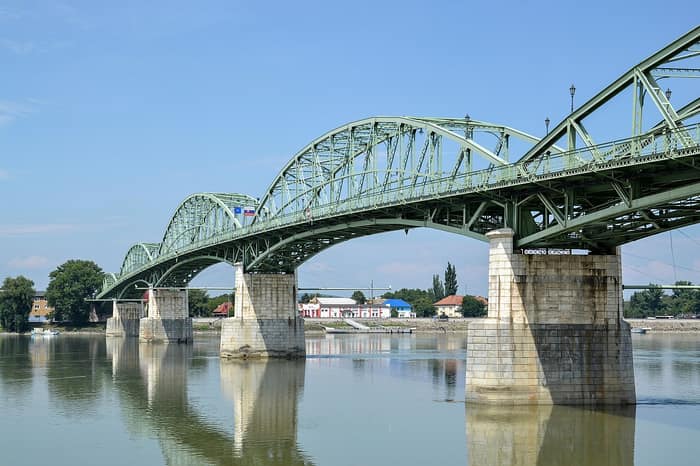
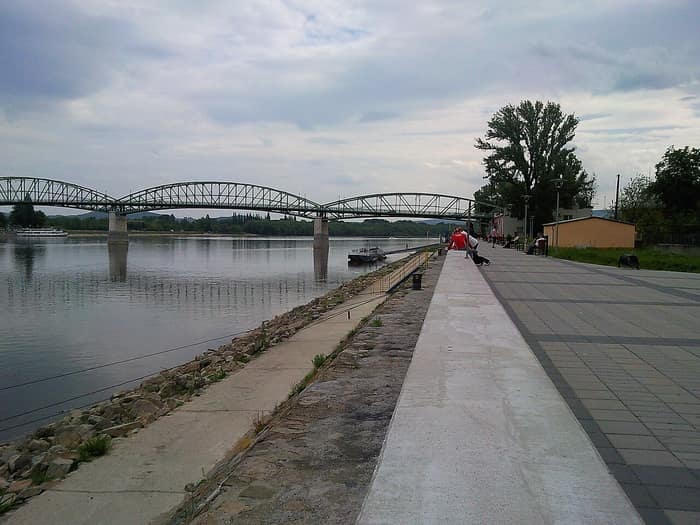
The Mária Valéria Bridge (Most Márie Valérie) spans the Danube for about 500 metres between Štúrovo in Slovakia and Esztergom in Hungary. A slender steel arch bridge designed by János Feketeházy, it has lived through two wars, a new border and decades of silence. Today it is a quiet link between the two towns and a good reason to stop in this corner of the Danube valley.
Opened in 1895, blown up in 1919 and again in 1944, this Danube bridge stood broken for 57 years because two neighbouring states could not agree to rebuild it.
The history of the Mária Valéria Bridge
People have been crossing the Danube here for a very long time. Slovak sources suggest that Roman legions probably forded the river near this spot during the campaigns of Marcus Aurelius, and after the Ottomans took Esztergom in 1543 a pontoon bridge linked the two banks for almost a century. It was destroyed in 1683, during the battle of Párkány, and later a flying bridge, a ferry guided along a long rope, ran from 1762, followed by another pontoon bridge. All of these were slow and at the mercy of floods and ice, so by the end of the 19th century a fixed bridge was needed.
The Hungarian engineer János Feketeházy, who also designed the Elisabeth Bridge between Komárno and Komárom, planned the new crossing. Building began in 1894, and the structure opened on 28 September 1895. It was named after Archduchess Marie Valerie, the youngest child of Emperor Franz Joseph and Empress Elisabeth. The bridge was a little under 500 metres long and consisted of five steel spans, the largest of them roughly 118 metres across, and it was built remarkably fast and light. It was sited about 120 metres upstream of the old pontoon bridge so that traffic could reach the centre of Esztergom by the shortest route.
After the First World War the Danube became the border between Hungary and the new Czechoslovakia. On 22 July 1919 Czechoslovak legionaries blew up a span on the Štúrovo side, and the crossing was closed. Czechoslovakia began repairs in 1922, and the bridge reopened in 1927. Its worst blow came on 26 December 1944, when retreating German troops destroyed it together with other Danube bridges in the area. For more than half a century the broken stumps stood in the river, and in Esztergom the bridge was nicknamed the stump bridge.
Talks on rebuilding began in 1964 but led nowhere under the communist governments. In the 1980s citizens of both towns formed a bridge committee, and in 1999 the two governments signed an agreement on reconstruction, with the European Union's PHARE programme covering half of the cost, 10 million euros. Work began in October 2000. The two surviving side spans were reinforced, while the three central spans were built anew, assembled on the bank and lifted into place from barges. The last arch, weighing 603 tonnes, was set in position on 27 July 2001, and the bridge reopened on 11 October 2001. Since both countries joined the Schengen Area in December 2007, there have been no border checks on the crossing.
Curiosities about the Mária Valéria Bridge
- For 57 years, from 1944 to 2001, Štúrovo and Esztergom stood face to face across the Danube without a bridge between them.
- In Esztergom the broken bridge was long called the stump bridge (Csonkahíd), after the stumps left in the river.
- The writer Patrick Leigh Fermor walked from the Hook of Holland to Constantinople in 1933 and 1934. His book A Time of Gifts ends on this bridge, and the sequel begins as he crosses into Esztergom.
- At one point it was suggested that the rebuilt bridge be renamed the Friendship Bridge to avoid recalling the Austro-Hungarian monarchy, but the idea was dropped.
- Since 2004 the bridge has hosted an artist-in-residence programme in which artists live and work for several months in Štúrovo as bridge guards.
- The rebuilt bridge is arched higher than the original to give ships more headroom, which rules out any railway traffic.
Tours near Mária Valéria Bridge
Experiences in the area that you can book online with Viator:


Visiting the Mária Valéria Bridge
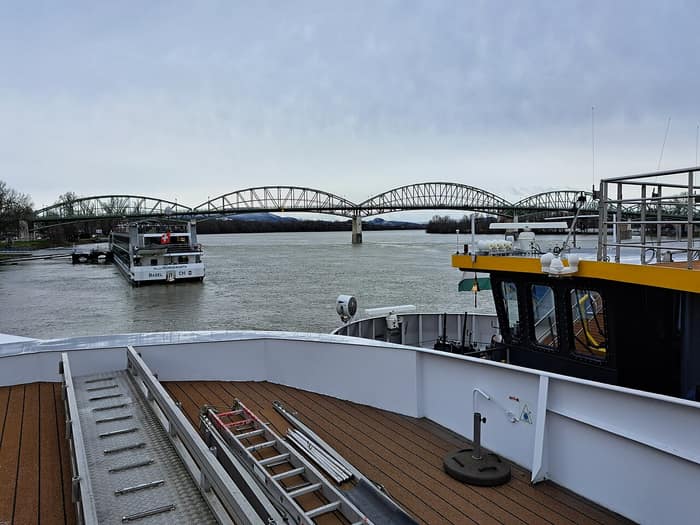
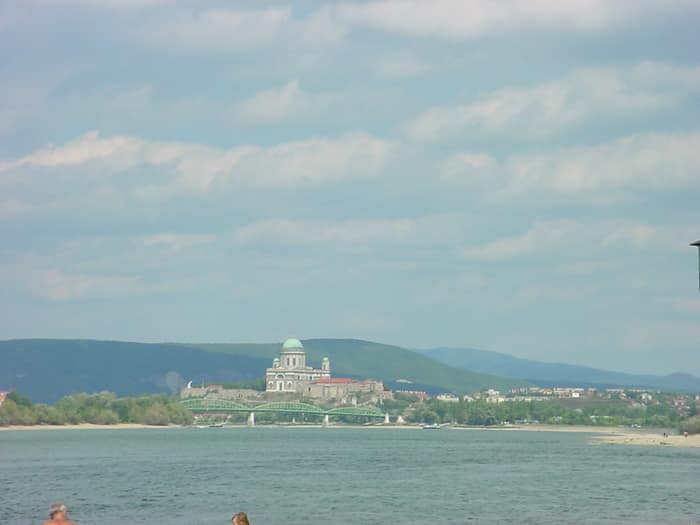
- The bridge is best seen from the Slovak waterfront at Štúrovo and from the Esztergom bank, where it appears together with the dome of Esztergom Basilica.
- The old and new parts can still be told apart: the two outer spans are original, the three central ones date from 2001.
- The crossing is open between Štúrovo and Esztergom, and there are no border controls for travellers inside the Schengen Area.
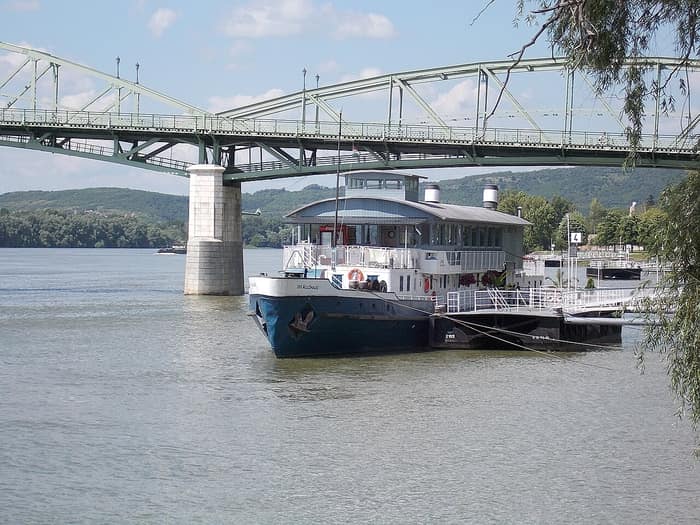
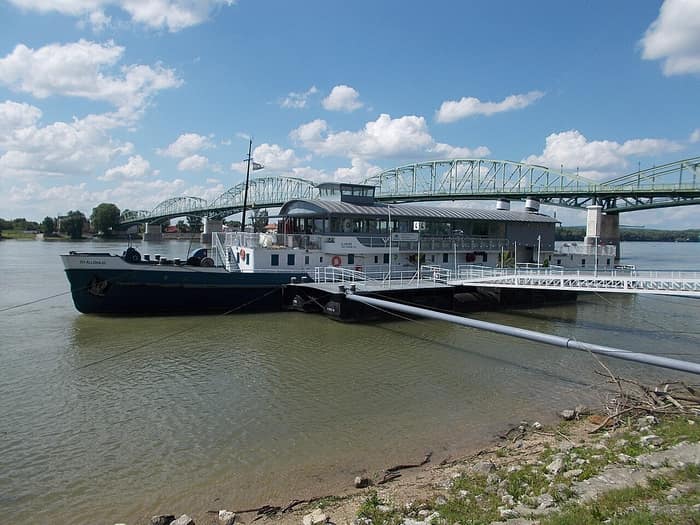
- The surroundings of the Hungarian town, with the Primate's Island and historic ships on the river, make an easy half-day excursion.
- Other places on this site within about 60 km include Castra Celemantia, Levice Castle, Monostor Bridge and Čabraď Castle.
Opening hours, access and conditions can change. Check before you go.
Map: where Mária Valéria Bridge is
Photos of Mária Valéria Bridge
Questions
Where is the Mária Valéria Bridge and what does it connect?
The Mária Valéria Bridge crosses the Danube between Štúrovo in Slovakia and Esztergom in Hungary. It is roughly 500 metres long.
Who was the Mária Valéria Bridge named after?
It is named after Archduchess Marie Valerie of Austria (1868–1924), the youngest child of Emperor Franz Joseph and Empress Elisabeth.
Why was the bridge missing for so long?
It was blown up by retreating German troops on 26 December 1944. Poor relations between the communist governments of Hungary and Czechoslovakia then delayed reconstruction for decades.
When did the Mária Valéria Bridge reopen?
After reconstruction financed partly by the European Union, it reopened on 11 October 2001, 57 years after its destruction.
Is there a border control on the bridge?
No. Since Slovakia and Hungary joined the Schengen Area in December 2007, border checks on the bridge have ended.
Who designed the Mária Valéria Bridge?
The Hungarian engineer János Feketeházy designed it, and it opened in 1895. He also designed the Elisabeth Bridge between Komárno and Komárom.
Also nearby
Castra Celemantia
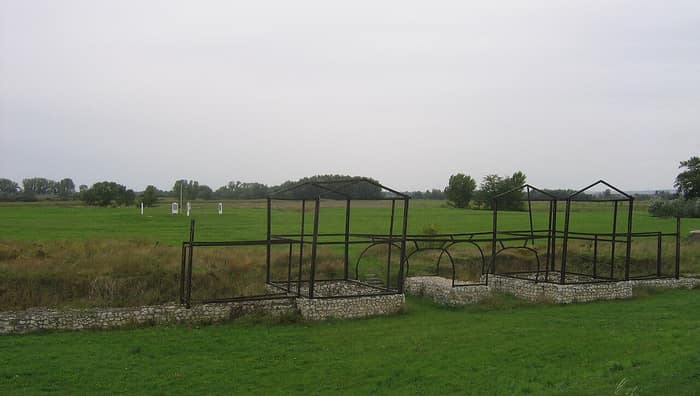
Iža · largest known Roman fort in Slovakia, UNESCO Danube Limes
40 km away
Levice Castle
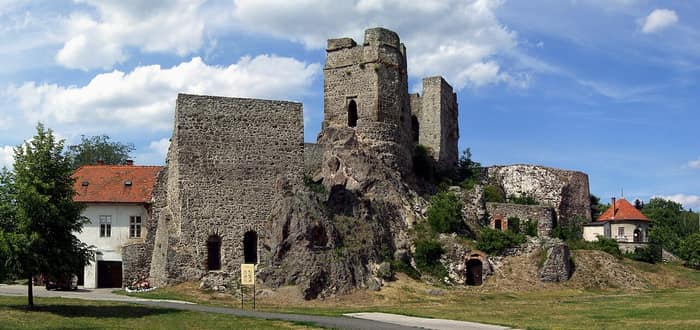
Levice · frontier castle of the Ottoman wars with a museum
48 km away
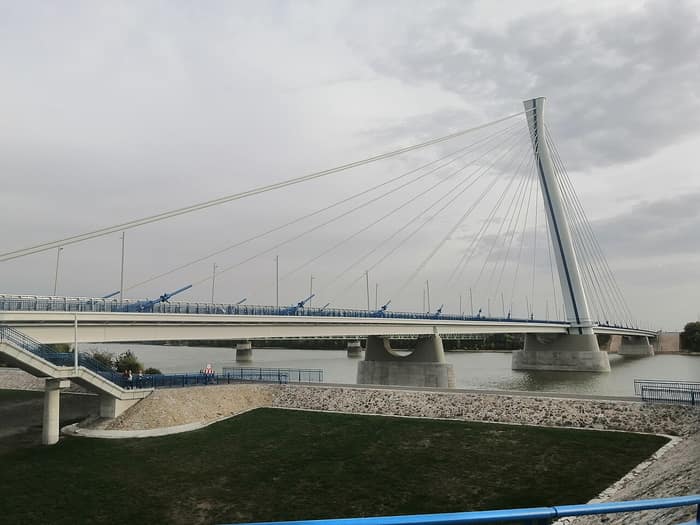
Monostor Bridge
Komárno · steel cable-stayed bridge over the Danube, opened 2020
48 km away
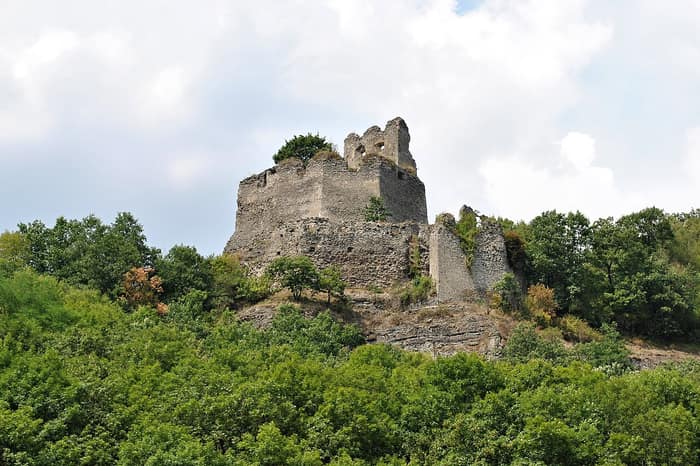
Čabraď Castle
Čabradský Vrbovok · ruined castle that the Ottomans never took
57 km away